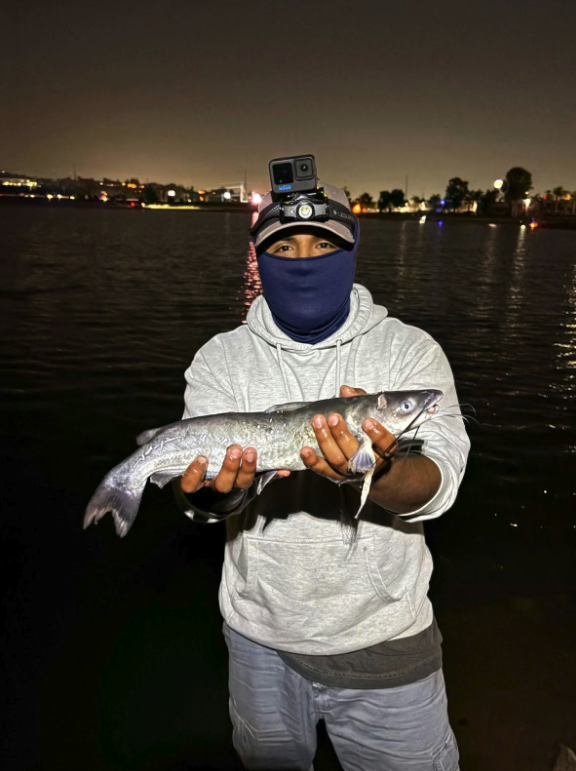
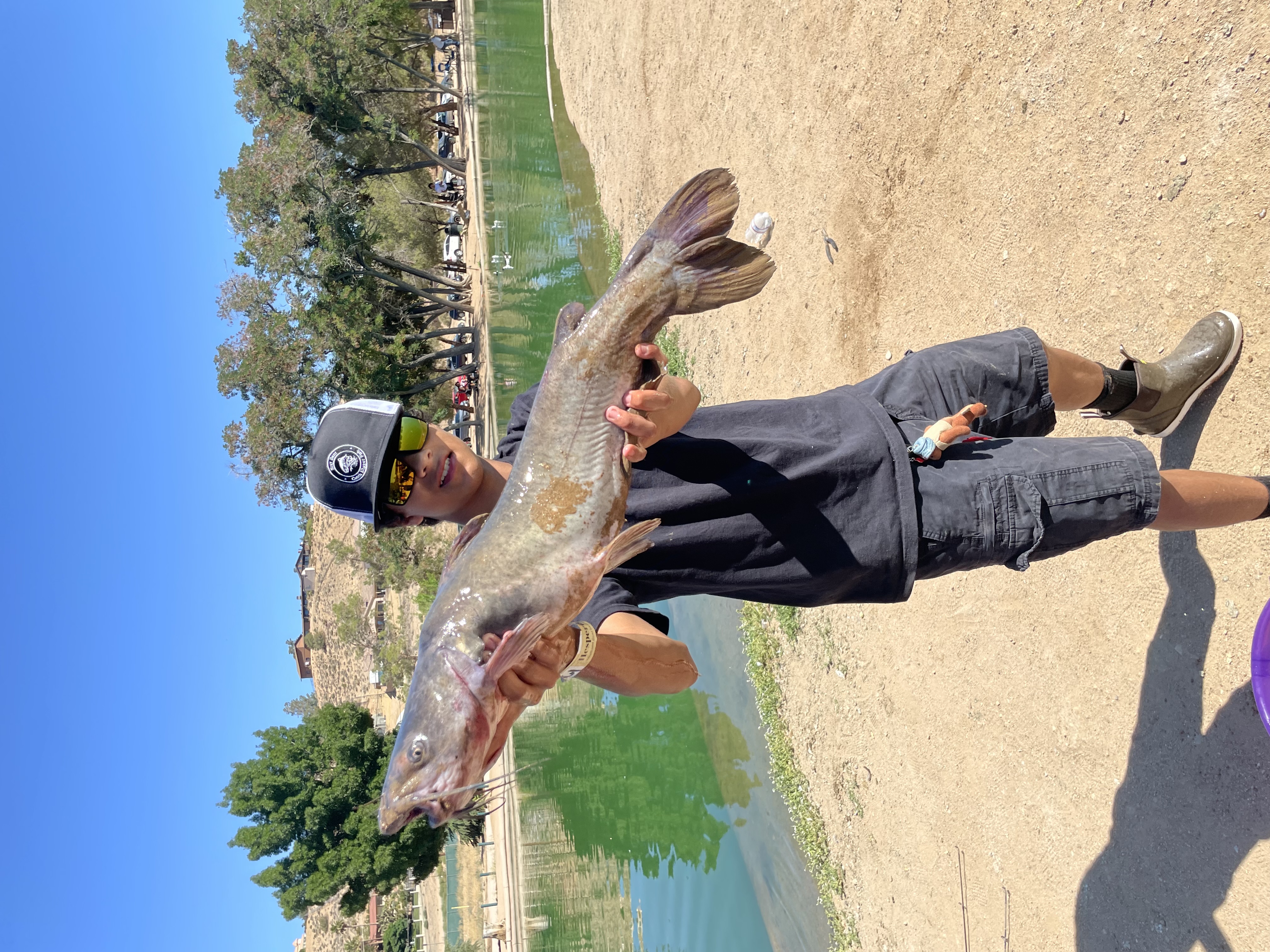
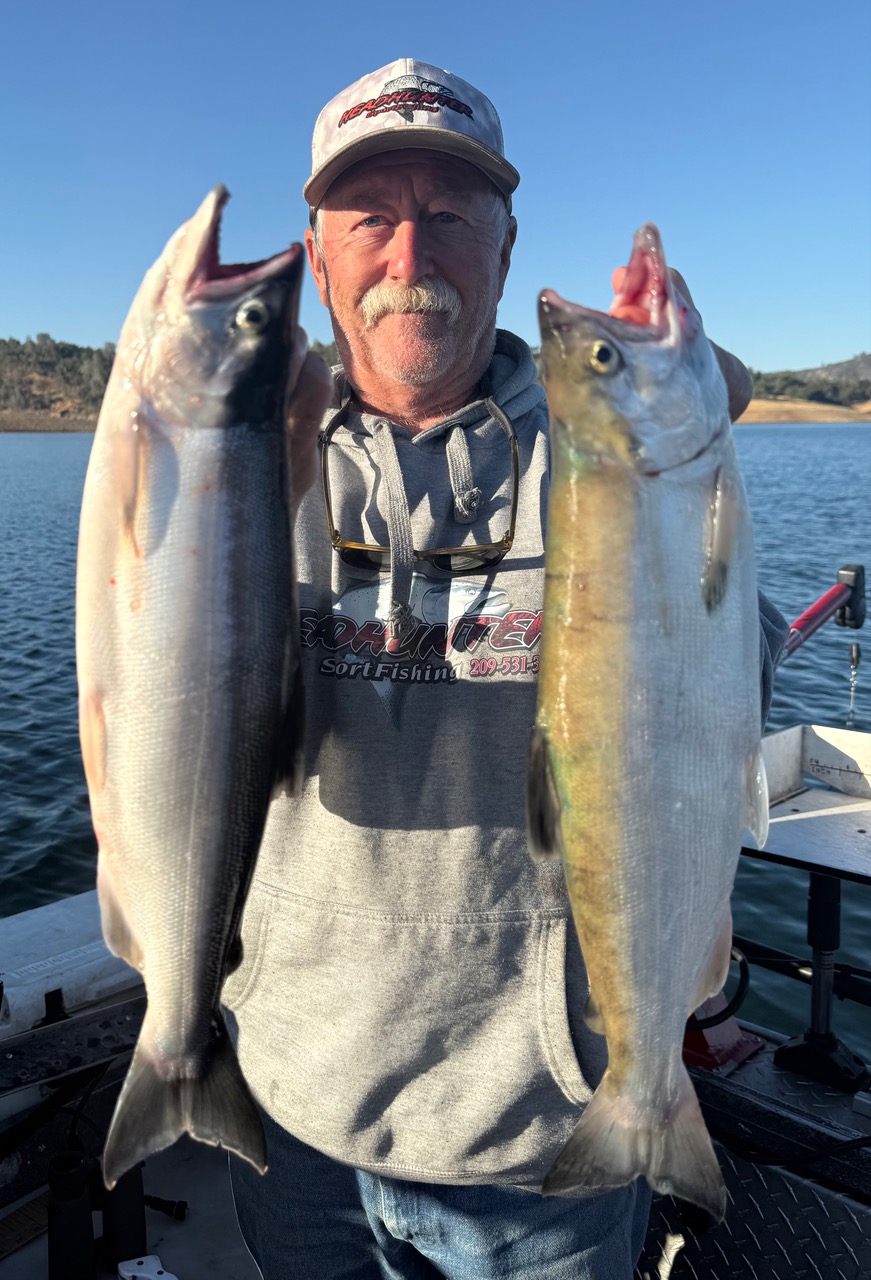
Summer All-Nighters: A Fishing Rite of Passage by Jack Naves Some memories never fade. A cool breeze. Waves lapping against the side of the boat. That river smell. The sound of the clicker going off. I’ll never forget spending nights on the Sacramento River near Clarksburg with my dad back in the eighties. In search of striped bass, we’d anchor out on the flats and spend the night enjoying great food, watching wildlife, and waiting for that lunker to come along. Those memories never fade; they are recalled anytime I am lucky enough to spend a night on the boat. Those opportunities are rare these days, but when they do happen, it takes me back to those nights on the river. I recently had the chance to introduce a couple of kids to all-night fishing at New Melones Lake in Angel’s Camp. On back-to-back weekends, I hauled the boat up the hill packed with sleeping bags, lanterns, and enough propane to grill up some delectable delights. The first outing was on Friday, July 25, with my son Adam. After launching the boat in the late afternoon sun, Adam and I trolled east in search of kokanee salmon. It started off slowly, but once we found the fish at 80-90 feet down, it was wide open. We limited out quickly on 15 to 17-inch footballs, incredible quality indeed! Next up, we ran to a cove on the west side of the lake and set up for all-night catfishing. We enjoyed grilled hot dogs and chips while soaking chicken livers for catfish. As the sun disappeared over the hills, a noisy flock on Canada Geese swam by. I think they were trying to let us know that we were not at the catfish hotspot. Before it was totally dark, I ran east to a cove near the Glory Hole Marina and set anchor for the night. I anchored in ten feet of water, hoping the wind would keep us straight. I forgot to bring my rear anchor, so the boat swayed in the northwest breeze throughout the evening. Adam had never caught a catfish, so he kept asking if we were really going to catch one. I assured him it was just a matter of time, but by 10:30 pm, we both had our bed rolls out and were getting sleepy. There were a lot of false alarms, as the swaying boat was dragging our baits along the bottom, making Adam think we kept getting bites. Suddenly he motioned, “Is that a fish?” I glanced up at his portside rod, figuring it was another false alarm. Under the dim glow of our lamps, I saw the rod tip stabbing towards the rear of the boat. “Yeah, grab it!” I uttered, and Adam sprang into action. ZZZZ – the fish was ripping line, and I coached him not to reel against the drag on the spinning reel to avoid line twist. Adam was too excited to listen and instead cranked on the big handle as the fish darted deeper and the reel sang out in protest. I coached him to pump up and reel down, and eventually saw a golden flash in the water illuminated by my headlamp. The fish made several additional runs into the darkness until I was finally able to net it. “It’s at least ten pounds” I remarked, while removing the 6/0 circle hook from the corner of its mouth. We took some quick photos and got a weight of just over thirteen pounds on the digital scale. “We’re gong to let the big ones go” I relayed to Adam, and quickly revived and released the big channel cat. It disappeared into the darkness from which it came. We caught a total of five channel catfish and one white catfish. I kept a twenty-incher for the fryer and released the rest. Three of the fish were over ten pounds. It was a solid night’s work, and a great introduction to night fishing for Adam. We reeled in the lines and got a few hours of sleep before dawn. First thing the next morning, we headed back to the kokanee grounds, rounding out limits in no time at all. Next, Adam wanted to fish for bass, so I ran above the bridge and started the next phase of our trip. The bass were not into our topwater offerings, but I was picking them off with a jig. Adam got into the action with a drop shot setup, landing both largemouth and spotted bass. We hit the road around 10:00 am with a fantastic trip under our belts. The very next weekend, I had the opportunity to repeat the same script, this time with Rj Sanchez and his son Gino. Like Adam, Gino kept asking if we were really going to catch a catfish, and this time it was close to midnight when Gino’s rod finally went off. He landed a beautiful eight-pound channel cat and then followed suit with another good-sized whisker fish not long after. It must have been close to three in the morning when Rj got in on the action, catching and releasing a chunky eleven-pound channel cat before finally getting some shuteye. My alarm was set for 5:00 am, and it came suddenly. The next morning, we grinded on the kokanee grounds for our three limits by 10:00 am. It was a tough bite, but we found fish in open water between 55 and 65 feet deep that were more willing to bite than the bottom dwellers. It capped on another amazing adventure on the water. Be it from the decks of a boat, or from the banks of the Mokelumne River, I’ve been lucky to have experienced some great overnight fishing trips. There is a calming vibe that takes over when the sun goes down on the water. Soaking in evenings with lines out is something I’ll never take for granted. Get out this summer if you have the chance. You won’t regret it.
Fish Reports
What's biting across California, newest first.
American River Steelhead and Stripers Are Hitting Lures
RANCHO CORDOVA – Summer steelhead fishing has been going strong on the lower American River, while schoolie striped bass are also on the bite.
“We’ve been catching and releasing lots of summer steelhead in the 2 to 8 lb. range,” said Kailyr Perry of Kailyr’s Guide Service. “We’ve been using both plugs and different types of bobber baits, including nightcrawlers and crawdads.”
“On my latest trip on the lower American, my clients caught and released 10 steelhead. Most were in the 2 to 3 lb. range, with the largest going 8 lbs.,” he noted. “We also hooked and released six stripers to 22 inches while using paddletails, glidebaits and jerkbaits.”
Water releases from Nimbus Dam into the American River were 3,981 cfs at press time.
- Dan Bacher
Lake Berryessa Trollers Catch Kokanee Limits, Bass Respond to Top Water Baits
SACRAMENTO – Kokanee salmon fishing and black bass action are both sizzling on Lake Berryessa.
“I had a father/son duo of Leroy and Don out on Berryessa and they absolutely crushed ‘em,” said Nate Kelsch of Big Nate’s Guide Service after a recent trip. “They landed limits of big, beautiful Kokanee, with a couple of donkeys in the mix, and 2 beautiful rainbow trout by 9 a.m.”
“We used 4 different color Tpex lures behind 6 in. Catch America Offset Dodgers, tipped with Chrome Killer Corn,” Kelsch observed. “The fish still cannot resist it! If you are not using these setups or the corn, you are truly missing out.”
“We caught fish from 50 to 90 ft, but 75 to 90 ft was best. If you’re interested in booking a trip, please don’t hesitate to call, as we have now opened up the books for October as well. Berryessa is fishing as good as I’ve ever seen it, for all species, and shows no sign of slowing down. We haven’t even started our king salmon trips yet.”
On his next trip, Kelsch reported similar fishing success. “This morning I had Miguel, Christine, and Rio out on Berryessa and they scored 3 limits by 10 a.m. of some big Kokanee and a bonus trout! We were cracking jokes the entire time, and had non-stop action,” said Kelsch.
“We dropped a handful of fish, which extended our morning, and then they invited me to join them at Turtle Rock for some great egg roll,” Kelsch noted.
“We trolled with the same Catch America 6 in. Offset Dodgers and Tpexs as the past few months, with Chrome Killer Corn. The only thing that is changing is the depths. These kokanee are going from 45 ft down to 95 ft then back up to 45 ft again. Pay attention to your electronics and chase the marks! We’ve been knocking out limits every day and the fish are getting bigger and bigger.”
Don Paganelli of Paganelli’s Bass Fishing Experience reported a continuing great top water bite for largemouth, spotted and smallmouth bass on Berryessa.
“My clients rocked it today on Berryessa with topwater baits,” said Paganelli after his latest trip to the lake. “There were lots of blowups with some nice ones landed up to 6 1/2 pounds and big ones lost, but that’s fishing. We got off the water by 1:30 p.m. with the heat climbing.”
The surface water temperature was 81 degrees. “The dropshot bite was fair,” added Paganelli.
Reclamation now requires all boats launching at Lake Berryessa to participate in a seal program to prevent the spread of invasive golden mussels. All vessels wishing to launch at Lake Berryessa will be inspected, according to the Bureau of Reclamation:
A red quarantine seal will be applied for 30 days during which the vessel will not be permitted to launch. Vessels that have finished the 30-day quarantine may return to the lake and have the seal removed by authorized staff and will be allowed to launch.
For questions about this new protocol and vessel decontamination, contact BOR-Berryessa@usbr.gov.
Lake Berryessa is holding 1,425,726 acre feet of water, 89 percent of capacity and 116 percent of average.
- Dan Bacher
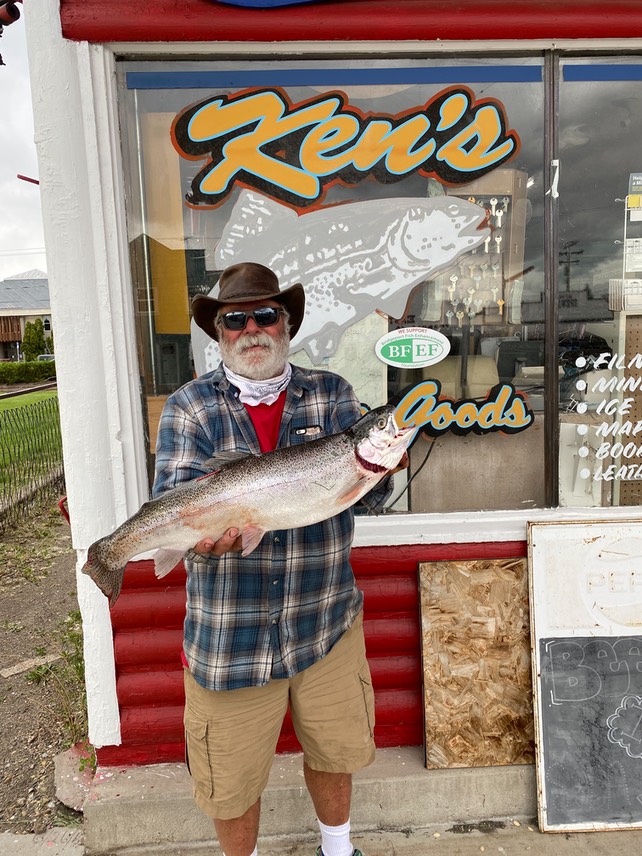
BRIDGEPORT RESERVOIR The reservoir has been holding its own this past week with reports coming in from anglers fishing up in the channels getting into 15 to 25 fish per boat per day. Most of the action is with bait, pinched crawlers, mice tails, devil tails, power bait and night crawlers have all been good ways to go. We haven’t talked to anyone doing any trolling lately and unfortunately we haven’t heard any news of any perch either. There have been a few fish still being caught off of Rainbow Point but the better action still seems to be in the channels. Report courtesy of Kens Sporting Goods
Bullards Bar / Englebright Lakes Go Deep for Late Season Kokanee
DOBBINS – The kokanee salmon season at Bullards Bar Reservoir is at its tail end as the fish move into their fall spawning mode.
“Bullards Bar is slowing down. The fish are going deep and turning gray,” advised Brett Brady of Bare Bones Guide. “This is your last chance of the season if you want to chase them.”
“We got 40 fish on Bullards Bar today, but it got a little rough after 9 a.m. We ended up throwing the kitchen sink at them,” Brady advised after his most recent trip to the reservoir. “It was like they wanted something different all the time. We trolled at 70 to 80 feet deep.”
Anglers interested in catching some kokanee should troll with Tpex lures, spinners and hoochies, tipped with white corn.
Bullards Bar is holding 775,376 acre-feet of water, 80 percent of capacity and 106 percent of average.
Few anglers have been on the water at Englebright Reservoir fishing for trout. However, this is generally a decent time of year to hook rainbows and an occasional brown while trolling with Rapalas, Needlefish, Cripplures and nightcrawlers behind dodgers. Expect to hook holdover rainbows in the 12 to 18 inch range.
Englebright is holding 68,050 acre feet of water, 97 percent of capacity and 103 percent of average.
- Dan Bacher
Camanche / Pardee Lakes 8.9 Lb. Channel Cat Tops Catfish Competition
BURSON – The Lake Camanche Catfish Competition featured 45 entries. Victoria Flemings, who landed an 8.9 lb. channel catfish, won first place in the event. The derby ran from July 19 to 31.
Fishing pressure has been light at both lakes. Trout plants at both reservoirs will resume in the fall after the surface water temperature cools down.
The boat ramps remain closed through the end of 2025 for launching outside watercraft, although shore fishing, mussel-free rental boats, and camping are still available at Pardee and Camanche reservoirs.
Due to the spread of the golden mussel recently discovered in Northern California, the East Bay Municipal Utility District (EBMUD) will keep boat launches closed to private vessels for the 2025 season. This decision eliminates one of the primary ways that mussels spread, helping EBMUD keep its commitment to protect the environment and the public water system on behalf of its 1.4 million customers in the East Bay.
Bass boats, fishing boats, patio boats and party boats are currently available for rental at the marina. Learn more and book: golakecamanche.com/attractions/#boat-rentals
- Dan Bacher
Collins Lake Catfish, Crappie and Trout Lead Late Summer Angling Parade
OREGON HOUSE – Last month was one of the mildest California Julys in recent memory with highs just brushing above the 90s for two or three days mid-month. It’s been a fantastic summer here at Collins Lake.
If you’ve been looking for a time to camp without the crowds, you don’t have to wait till after Labor Day. Reserved weekday occupancy in the third and fourth weeks of August is currently 25% of the same weeks in July. Weekends are still fairly busy but weekdays in August look to be a treat.
The lake is currently about 17′ below spill – normal for this point in the irrigation season. The lake surface temperature is about 79°F.
As we start to see it drop more and more we’re preparing a trout planting schedule – tentatively starting mid-October. In the meantime we’ve seen a few big summer catfish, crappie, redear sunfish and even a limit of trout in July.
Emma, Sara, Toto and Millie took advantage of the beautiful weather and warmer summer water to catch a chunky 10-pound catfish down by the main marina using a worm.
The Usme family caught a pair of catfish with a total weight of 11 pounds around the same place using the same bait… so if you’re looking to catch a catfish, yeah.
Nick, Jason and Rick of Sacramento caught 21 good-sized crappie using a classic crappie bait – minnows! Years ago we used to keep and sell minnows at the Collins Lake store, but now you’ve got to bring your own – apparently it’s well worth the effort!
Amara caught her first fish, a nice redear, on a redworm – great catch, Amara! Declan caught a beautiful lightning trout down below campsite #202.
Finally, Roman and Tim beat the odds, nearly catching a double limit of trout by going a little deeper with PowerBait out in the middle of the lake.
“Trout fishing is still surprisingly good on Collins,” reported Cal Kellogg of fishcalkellogg.com. “On my most recent trip, two guys fishing with me landed 7 trout out of 7 hook-ups. The top two fish were a 3 lb. rainbow and a 3 lb. lightning trout.”
“Even though there is a lot of shad in the lake, the trout are feeding mainly on plankton, so the meat is very red,” Kellogg noted. “The Dipsey Divers are out fishing the downriggers by 3 to 1. The trout hit white Trix Minnows at 40 feet deep.”
- Ed Palma
Davis Lake Catfish and Black Bass Offer Best Late Summer Action
PORTOLA – The rainbow and brown trout fishing has slowed down during the “dog days” of August at Lake Davis, but brown bullhead catfish are hitting and largemouth bass are providing decent action.
“The catfish are hitting both day and night all over the lake,” said Jeanne Graham. “The fish average 1 to 2 pounds each. The top baits are worms and prepared catfish baits.”
Shore anglers and boaters are both catching largemouth bass in the 2 to 3 lb. range. “Most of the fish are hitting plastics south of Eagle Point and north of Lightning Tree,” said Graham.
The trolling bite for trout has slowed down to a crawl. However, she said anglers fishing worms and PowerBait are bagging a few trout in the 17 to 20 inch range at Mallard.
On July 23, the California Department of Fish and Wildlife planted 20,000 subcatchable rainbows in the reservoir.
Davis is holding 71,278 acre feet of water, 86 percent of capacity and 123 percent of average.
- Dan Bacher
Don Pedro Lake Trollers Lay Into King Salmon
LA GRANGE – The king salmon and rainbow trout fishing continues to be very good on Don Pedro Reservoir, though the kokanee fishing has tapered off as it normally does this time of year.
“Yet another great outing at Don Pedro Reservoir today for king salmon and rainbow trout,” reported Monte Smith of Gold Country Sportfishing after his latest fishing adventure. “This grandfather and grandson had a great time. The fish were a little smaller grade of fish, but we had pretty steady action until about 11 o’clock when we were done.”
“The fishing has been really good so if you’re interested in catching some of these acrobatic fish please reach out to me and call or text me at 209-581-4734 for your trip. All necessary gear is supplied on a beautiful comfortable 24-foot Willie boat; you can literally watch on live scope the fish come up to your lure and attack the lure,” he noted.
On his previous trip to the lake, Smith reported, “Another fantastic outing at Don Pedro. The king salmon are on the bite and we have been able to capitalize on it. We ended up with 9 kings, 3 rainbow trout and 3 spotted bass.”
Anglers have been trolling at 60–75 feet deep with pink glow Apex lures.
Don Pedro Lake is holding 1,902,345 acre feet of water, 94 percent of capacity and 114 percent of average. The lake level is 819.64 feet elevation.
- Dan Bacher
Eagle Lake
Slower Fishing in the middle of summer.
According to Tim Noxon of Fish Traveler Guide Service, the fishing at Eagle Lake has slowed down considerably. Tim says he has been trolling trying to find the concentration of trout, and averaging about one trout per hour with 4 rods out. He has been trying multiple methods and lures, including Thomas Bouyants, Dick Nites, motor oil colored 2 inch grubs and even naked crawlers. The lake is in good shape, about a foot higher than last year and launching at the south end is no problem. Some smaller craft are still launching at the Spalding ramp. On a more positive note, Tim said the table is set for the fishing to improve dramatically. Minnows are showing from top to bottom. The schools of feeding trout have not shown up in big numbers to start the feeding frenzy, however. The last 2 years, August and September featured fantastic fishing because large schools of baitfish had formed and the Eagle Lake trout had targeted them voraciously! For current information, you can call Tim at 916-201-4648. He will be glad to talk to you whether or not you book a trip with him.
East Bay Lakes Roundup Del Valle Smallmouth Bass and Catfish Lead East Bay Fishing Scene
ALAMEDA COUNTY – I’ve been out of town for the past couple of weeks and was a bit worried that when I returned, the summer action would have slowed. I wasn’t surprised to see that the cats are out, especially following the recent plants, but I was pleasantly surprised to see that largemouth bass action is still going strong, and the smallmouth bite at Lake Del Valle is starting to get good.
Lake Del Valle – I want to give a special call-out to Paul Clouse and Dr. Al Hurwitz who continue to provide me with near-weekly reports and help keep me tuned to the local action, especially when I can’t get out myself. Dr. Al and Paul are both pretty fishy. The two tend to follow the bite, moving from one species and body of water as the seasons progress, and if they tell me that the bite is good, you can generally count on seeing some similar action.
This past week they caught and released eight smallies. The fish ranged from one to two pounds and were hitting very aggressively and oftentimes going airborne. All fish were caught on their “go-to” trolling lure, the 1/4 oz. Roxstar spinner with silver blade and brown/yellow feathers. The productive areas were the points in Heron Bay, the western shoreline through the Narrows, and Swallow Bay. The fish were down 15 to 18 feet in the 20-to-30-foot column.
The water surface temperature was up from last week, ranging from 74° to 76°. Water clarity was best from Swallow Bay to the dam. In addition to the rapidly improving smallmouth bite, largemouth bass continue to hit spinners, surface baits and plastics, with several fish taken over three pounds and a double-header of two that broke 5 pounds.
Catfish action has been fair and should remain so as summer plants continue. There are currently no water quality alerts or closures.
Contra Loma continues to produce some nice bass and catfish action has been good. The bass remain spread throughout the lake, but some decent start points include the rocks, the docks and Quail Cove. You should expect warm water by mid-day and should focus on areas that are tight against the weeds or out a bit deeper near submerged structure. Plastics, fished with a weedless rig and bottom-bounced with a slow retrieve, should work. Try natural colors, black or dark green. Surface baits are generally the most productive early or late in the day.
There has been a decent crappie bite on worms suspended under a bobber, mini jigs and very small spinners. Catfish can be taken on a mix of baits including chicken livers, cut bait like sardines or anchovies, catfish dough and worms.
There is a caution advisory posted for algae.
Construction Notice – Intermittent Closures. Construction is starting for the Uplands Facilities Improvements Project and North Dock Repair. Impacted areas include: West Shore Picnic Areas, East Shore Parking Area, and intermittent trail closures on the West Shore Trail near Channel Point and the north fishing dock. The swim lagoon remains closed. Some algae reported. There is a caution advisory for algae.
Lake Temescal bass action is slow but there is still the occasional smaller fish taken. There have been some decent bluegill caught and catfish action should be good. The Park District is installing an Oxygen Saturation Technology (OST) system into the lake in spring of 2025. There may be some limited park disruptions, but the addition of the system should be great for the water quality. The swim beach is open, with a caution advisory.
The South Parking Lot of Temescal will be partially closed off starting July 1, 2025, and access will be restricted due to annual weed abatement/park maintenance.
Lake Chabot bass action remains decent with fish to 3.5 pounds. Plastics remain most productive. Catfish action should take off following the most recent plant. Sunfish action is good!
If you’re searching for bass, try throwing plastics and crankbaits along the West Shore Trail, or along the East Shore Trail out to Raccoon Point, Possum Cove or by boat fishing the shallows near the Warm Water Landing. Catfish action should be good for anglers fishing the shoreline across from the marina. There is a danger advisory posted for algae, and algae may be present on much of the shoreline.
Shadow Cliffs bass action has been fair, and this past week, Edwin took a 7.14-pound brute of a largemouth. This is definitely one of the larger bass taken this season, and pre-spawn, the fish would have probably topped 9 pounds!
Catfish action should be good. Try fishing sardine wraps, anchovies and chicken livers with scent applied from the point closest to the boat launch or the dock on the far side of the lake. The early morning and late evening are generally most productive.
Bluegill action has been good, and they are starting to reach some decent size. Try a mix of lures including small spinners, jigs and worms under a bobber. Fishing from the docks is generally most productive. There is a caution advisory posted for algae.
Quarry Lakes Park including Horseshoe Lake, Lago Los Osos, Grau and Shinn Ponds – Horseshoe bass action is probably fair but no catches were posted this week. Catfish action should get good following the most recent plant.
There is a danger advisory due to algae at Niles Swim Beach, and the beach is currently closed to swimming. Bass action at Rainbow, Shinn and Grau has been slow for mostly dinks. Lago Los Osos bass action has been good for fish between 1 and 2.5 pounds.
If you’re interested in helping guide the future of the East Bay Regional Parks, consider submitting your comments on their web page at: DistrictPlan@EBParks.org. The site will be open through 31 July, and your comments are a great way to help guide the future of the parks.
Please Note: There have been some changes to the personal watercraft inspection process so please call ahead if you are planning to launch on any of the EBRPD lakes. It’s better to be prepared than get turned away.
Please send me your pics! Or reach out to me for additional information at email: ctw1930@gmail.com, or by text at 571-481-8040.
- Chuck Wolf, EBRPD Angler’s Edge
EAST WALKER RIVER The flows on the East Walker are at about 134 cfs today. The fishing has gotten a bit tougher up there, mainly due to the heat lately. We’ve had some good reports from anglers fishing early in the morning, from say 7 to 10 or 11 then it just gets too warm and puts too much stress on the fish to be on the water much past that. The night time temperatures have been in the 40’s most nights so that has seemed to help the overall picture quite a bit. When the sun starts to go down in the evening the fish seem to be getting happy again each day and there’s been some decent dry action at that time of the day. In the mornings the streamer action has been good with sculpzilla, dead drift crayfish, ziwi, dali lama, as well as some nymphs like buckskin caddis, z-wing caddis, fox’s poopah, perdigon, zebra midge and copper John. Report courtesy of Kens Sporting Goods.
Folsom Lake Trout Bite Improves, Salmon Bite Challenging
FOLSOM – The rainbow trout bite has been much better at Folsom Lake than the salmon action lately.
“This week has been challenging, but has rewarded patience,” reported Wes Ward of Angling Wes Guide Service. “The salmon have been hard to find, but the trout bite has picked up substantially since early July.”
“The water level is dropping daily and the fish are on the move. I started the week chasing trout between Folsom Point and Mormon Island early and moving out to open water in the afternoons. Hoochies tipped with herring were consistent with an occasional spoon fish in the mix,” Ward stated.
“As the week progressed, the fish scattered to open water. By Wednesday, most of my fish were caught between Beal’s and the dam. Spoons trolled fast, covering water were the most effective.”
“By Friday, I had moved up the North Fork near Anderson Island to find pockets of trout. Slow plastic presentations were the only offering I could get bit on. The bass were way more active than the trout,” Ward noted.
“Saturday morning, the North Fork was totally dead. I had one really solid hit on a spoon that didn’t stick. We moved out to the peninsula and moved into the shallows. My one and only salmon of the week came on a green hoochie in 30 feet of water. Soon after the salmon, we picked up a very nice trout on the same hoochie,” he explained.
“Surface temperatures were 77+ by the end of the week with most of our bites coming between 45–65 feet.”
“I have a few dates available in August if you want to get out on summer Folsom fishing. It’s a great time to get the kids out on some mixed bag fishing. I averaged 5–7 trout per trip with a steady mix of bass on the line,” Ward concluded.
The open launch ramps are Granite Bay, Folsom Point and Brown’s Ravine.
Here are the new boating requirements:
Vessels completing the 30-day quarantine may return to Folsom and Clementine lakes, have the seal removed by authorized staff, and be allowed to launch. Boaters wishing to return to the lakes in the future will have the option to have their boat sealed upon exiting the water and will not be required to quarantine thereafter as long as the seal remains intact.
All trailered vessels are subject to the inspection, quarantine and seal program. Hand-launched, non-motorized watercraft, such as kayaks, canoes, paddleboards, rowing shells, outrigger canoes and rowboats are not subject to the inspection, quarantine and decontamination requirements. Hand-launched watercraft with electric trolling motors, such as fishing kayaks, are also exempt from these requirements.
As part of this new golden mussel prevention program, only hand-launched boats will be permitted on Lake Natoma. Trailered vessels will not be permitted. The existing 5 mph speed limit on Lake Natoma for motorized craft will remain in effect. All boaters, including paddlers and rowers, must arrive with their watercraft clean, drained, and dry.
DBW maintains a list of contacts at: https://dbw.parks.ca.gov/inspections.
Additional information on the golden mussel prevention program, including inspection site locations, frequently asked questions and hours, can be found at www.parks.ca.gov/FolsomLakeGoldenMussels.
Folsom Lake is holding 555,778 acre feet of water, 57 percent of capacity and 90 percent of average. The water level is 43.34 feet in elevation.
- Dan Bacher
French Meadows Reservoir The Trout Bite Is Early and Short
FORESTHILL – If you want to catch rainbow or brown trout, you need to fish early in the morning or late in the evening at French Meadows Reservoir.
“The bite is real early and short,” said Cal Kellogg of fishcalkellogg.com. “I got to the lake to fish from my kayak an hour after sunrise on my latest trip there. I caught four rainbows from 15 to 17 inches in the first hour. I hooked one fish on a Trigger Spoon Jr. deep and the rest on Trout Trix Minnows at 30 feet deep.”
“After that first hour, the bite died. The surface water temperature was 70 degrees. I hooked the fish between the two boat ramps. I saw lots of fish at 50 feet deep on my fish finder,” said Kellogg.
“There were very few fishermen out on the lake,” he added. “I saw one other boat and no bank anglers. The main campground is closed. The lake level is higher than average.”
- Dan Bacher
Lake Almanor
Good Fishing in beautiful conditions on the lake.
Pleasant summertime conditions have made for some great fishing out on Lake Almanor. Below average temps and an occasional thunder shower have been the weather headlines as of late. The water level continues its slow decline currently sitting at 4488.4 A drop of about a foot in the last several weeks. Flows on all the lake’s tributaries are at seasonal norms. Water temperatures are currently running in the low 70’s ticking up into the mid 70’s during the days. Bug hatches continue in many areas of the lake, even a few hearty Hex Flies continue to pop at various locations around the lake, with fish in those areas still keying in on them as evidenced by the stomach contents of several Rainbows. Some fish including trout and Smallies have shifted their attention back to the lake’s pond smelt population. The trout are now widely spread throughout the entire lake. Action for trollers is happening at many locations around the lake, from the dam to Big Springs as well as the area around the mouth of Hamilton Branch. Both sides of the peninsula have also been giving up fish as are the deeper pockets of the west shore like Rocky Point giving anglers plenty of locations to visit. Trout have been caught on a wide variety of offerings recently. Slow trolled worms and plastics along with fast trolled spoons in bright as well as bait fish patterns have both produced fish this week. 35 to 45 feet seems to be holding the bulk of the active fish. The catch continues to be a mix Rainbows and Browns along with a few salmon. Bait fishermen have been netting a few fish at several locations including the dam and east shore. Suspended baits like worms, crickets and meal worms close to the bottom will get the job done. Fly anglers suspending nymphs under indicators are tempting the fish that are keyed in on the aquatic larvae. Bass anglers have been throwing jigs on rocky points and shorelines for smallies keyed in on smelt as their food source. Lots of trout stacked up in Hamilton Branch. Shore anglers are connecting with some, but timing is everything and the bite can be fickle. The weatherman is calling for a bit of a warming trend but nothing drastic and conditions should stay conducive to maintain the classic summertime fishing.
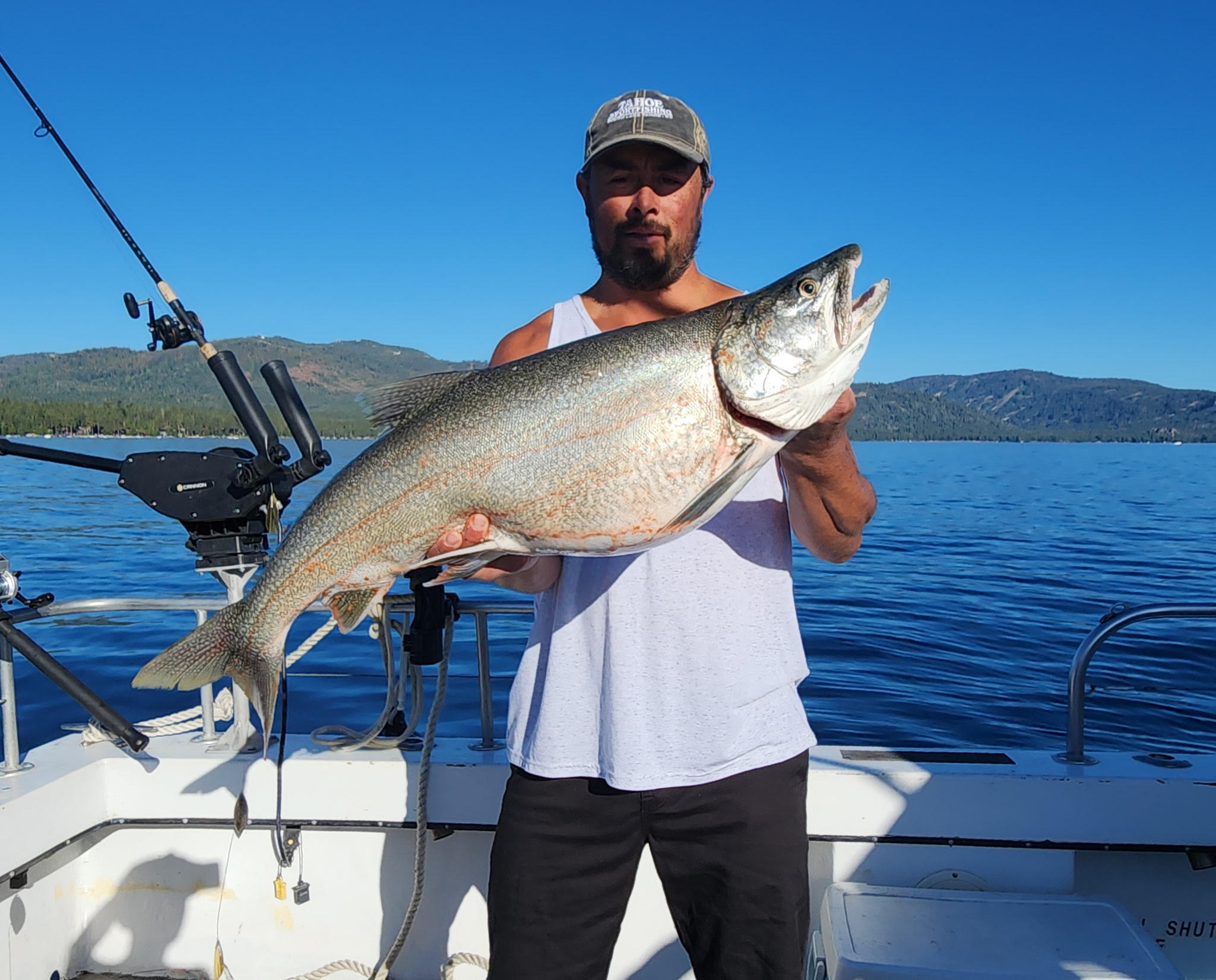
Lake Tahoe Summer Bite is On! Fishing is strong on Lake Tahoe for those targeting deeper water. Surface temps are in the low to mid-60s°F, warming slightly in sheltered areas. Mackinaw are stacked at 400–600 feet and biting for anglers jigging or trolling. Kokanee are showing around 100 feet in South Lake Tahoe, taking bright spoons and hoochies. Rainbows and browns are cruising near creek mouths, with trout fishing best at first light or late evening while trolling 30–40 feet along the west shore. Fly anglers can find action with nymphs early and dries during calm evening hours. The folks at Tahoe Sportfishing reported an outstanding month with 648 Mackinaw and 1187Kokanee caught during July, plus a big fish of 14.51 lb Mackinaw. The mackinaw were caught mootching live bait on the bottom in 100 to 200 feet of water The kokanee were found from 40 to 80 feet down in many parts of the lake. Red wedding ring spinners tipped with white corn was the best offering.
Los Vaqueros Reservoir Catfish Plants Boost Summer Fishing Success
LIVERMORE – There have been five plants of catfish in Los Vaqueros Reservoir so far this summer. The latest plant by Tsai Enterprises was on August 5 when 1,000 pounds of catfish were stocked in the reservoir. They also stocked 1,000 pounds of channel cats on July 15.
For those targeting catfish, chicken liver and anchovies are the best choices of bait. There has been a steady number of catfish being caught around the reservoir. South Cove, Cowboy Cove and Oak Point are some of the popular spots, according to the Los Vaqueros Marina. Expect to catch channel cats averaging 2 to 5 pounds, along with some bigger fish.
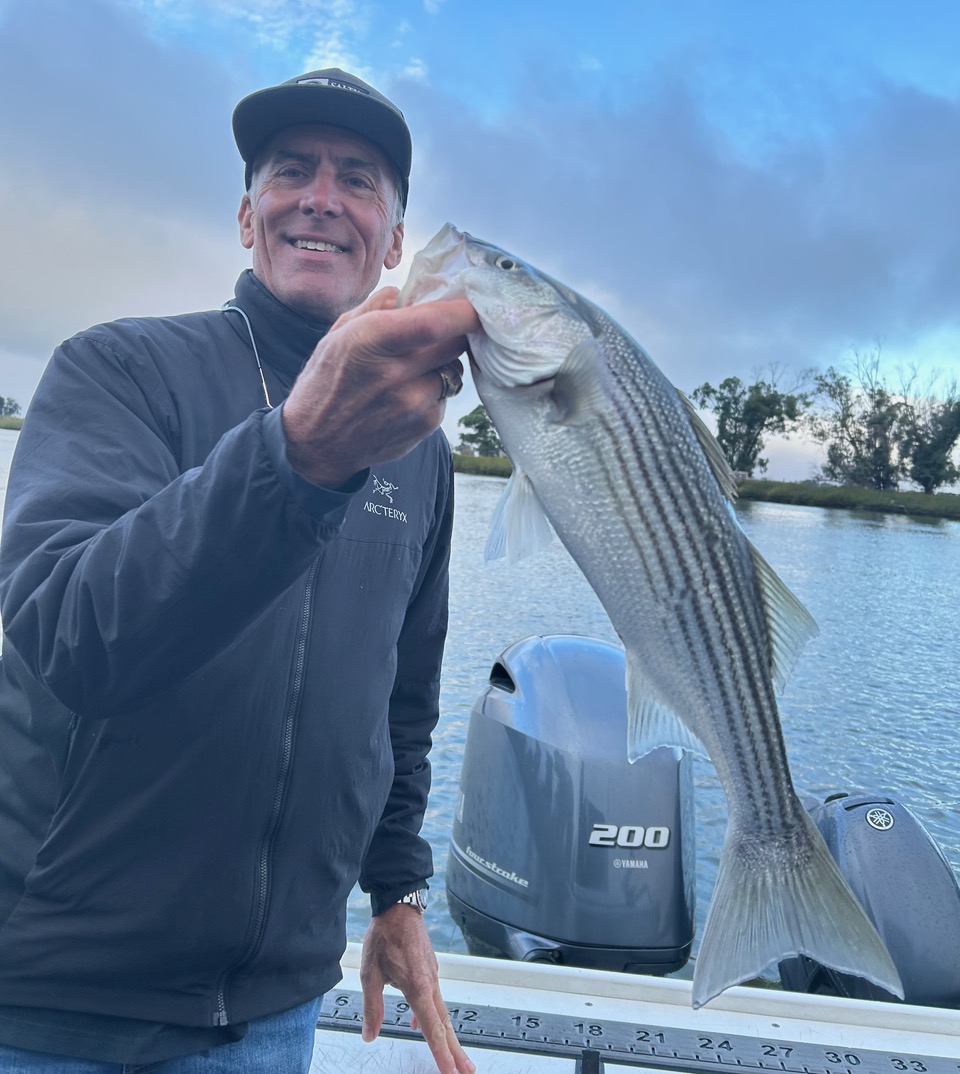
“Striper fishing is mixed with both shakers and legal sized fish being caught from around the reservoir,” the marina reported. “Cut anchovies or shad are the baits of choice, either from shore or a boat. Cowboy Cove and Howden Cove seem to be the hot spots for stripers. Just a reminder: stripers need to be 18 inches or more to be legal. Please release the small fish as quickly and carefully as possible. They are the future of our striped bass fishery.”
Although trout plants are suspended until the fall, there are still plenty of rainbow trout out in the lake for anglers to catch. The last plant of the spring of 2,000 pounds of Mt. Lassen trout went into the lake on May 14.
“Shore anglers have the most success using garlic scented PowerBait followed by night crawlers. Trolling is doing fairly well, especially in the backs of coves. Light tackle is important for catching trout. 4-6-pound test is plenty. Fishing has been good. On days the winds allow boats we have seen a number of limits as well as anglers with just a couple. Remember: Limit is 5 per angler for the day,” the marina stated.
If you are interested in renting a boat, the marina recommends calling ahead to check current wind conditions as they are unpredictable and can impact the ability to safely rent boats to visitors. Wind speeds change suddenly and boat rentals are typically suspended when they exceed 15 MPH and when heavy gusts are forecasted. Remember – rental boats are first come, first served. Weekends and some weekdays sell out quickly.
The reservoir is holding 145,000 acre feet of water. For more information, call (925) 371-2628.
New Melones Lake Big Channel Cats Go On Bite
ANGELS CAMP – While fishing at New Melones Reservoir for late season kokanee salmon remains very good, the catfish have gone on a superb late summer bite at night.
“We changed things up and left the kokanee alone and chased catfish last night,” reported Kyle Wise of Head Hunter Sportfishing. “We fished the shallow flats with cut bait for 22 fish to the boat and 18 retained, while enjoying Lockeford sausage on the BBQ.”
“If you’re looking to escape the heat and enjoy a laid back fishing adventure with nobody on the lake this is for you,” he noted.
On his latest kokanee trip on the reservoir, Wise reported top-notch fishing, “with limits in minutes.”
“I had Mr. Njrich reach out to me to take out the grandkids and learn how to fish for kokanee. We absolutely accomplished both before 8 a.m. with limits and a bonus brown & rainbow trout.
Late season tactics paid off with a few fish being caught up in the water column. “If you’re looking to fill the freezer/smoker or learn a few tricks, we’re going to run a little longer this year,” Wise added.
Boaters interested in participating in the new seal program can obtain a quarantine seal to attach to your boat and trailer at this time. Please visit the Glory Hole boat launch location between 8 a.m. to 4 p.m. to obtain one from a park ranger free of charge, to begin the 30-day quarantine period prior to any future boat launching at New Melones.
For questions about this suspension and the new protocol, contact a New Melones staff member at 209-459-7290 or visit the New Melones website.
New Melones is holding 1,709,940 acre feet of water, 71 percent of capacity and 119 percent of average.
- Dan Bacher
Lake Oroville King Salmon and Rainbow Trout Bite Sizzles!
OROVILLE – Lake Oroville is “on fire” right now for landlocked king salmon and rainbow trout, reported Bret Brady of Bare Bones Guide Service.
“Most bites are happening 55–85 ft deep,” Brady said. “Morning’s the best time, but you can score late morning too.”
Brady has been trolling Uncle Larry’s hoochies in white or green. He recommended adding scent, anchovy, or sardine for extra strike.
“Oroville today produced an insane bite,” Brady reported on a recent trip to the reservoir. “We went 19 fish landed for 24 hook-ups. We pulled a great double hook-up in our first few minutes of fishing this morning and it never stopped.”
“We trolled 45 to 85 feet deep – the bait was everywhere. Our big rainbows went up to 4.5 lbs. We also had a king that went 4.5 pounds. What a morning,” Brady advised.
“Track those bait schools on Oroville—they’re the hot spot,” he added.
Ron Rickman reported top-notch king salmon and rainbow trout action on the Lake Oroville Fishing Reports Facebook Page.
“My Buddy Richard Kowski, Ron, John and I had a great day fishing on the Fish Machine,” said Rickman. “We landed 6 kings and 6 rainbows to 18 inches.”
DWR’s mussel inspection program in Oroville continues to protect State Water Project (SWP) infrastructure, according to the California Department of Water Resources.
Mandatory watercraft inspections are required prior to launching at the Oroville Facilities (Lake Oroville, Thermalito Forebay, Thermalito Afterbay). Watercraft that pass the inspection will receive a seal and can launch during designated ramp hours.
Watercraft Inspection Location/Decontamination Services are only available at the North Thermalito Forebay at Garden Drive and HWY 70 in Oroville. Hours of operation are daily from 8:30 a.m. to 5:30 p.m.
Watercraft inspections and decontamination services at DWR’s Oroville facilities are free. To pass an inspection, watercraft and trailers must not have any attached mussels and be clean and 100 percent dry. Watercraft with ballast bags/tanks, bilge, and motors must have a working battery and be operational to complete required inspections.
Be sure to bring your vessel’s keys!
Sealed Vessel Launching: All trailered and personal watercraft with an intact blue seal will be permitted to launch at the following boat ramp facilities during the hours listed. Boat ramps at the Oroville facilities will no longer be open 24/7. Launching trailered boats or personal watercraft is not allowed at any other location.
The launch ramp hours are daily from 7:30 a.m. to 10 p.m. at the Spillway and Bidwell Canyon ramps.
The Limesaddle and Loafer Creek facilities are open daily from 5 a.m. to 10 p.m.
The Thermalito Afterbay at Monument Hill ramp is open daily from 7:30 a.m. to one hour after sunset.
The Thermalito Forebay at the North Forebay ramp is open daily from 7:30 a.m. to 7:30 p.m.
Lake Oroville is holding 2,645,376 acre feet of water, 77 percent of capacity and 115 percent of average. The lake level is 845.22 feet in elevation.
- Dan Bacher
Rio Vista/Delta Trollers Lay Into San Joaquin River Stripers
RIO VISTA – The striper bite for trollers in the Delta has been excellent, according to avid trolling expert Mark Wilson. Mark tells me that if the wind cooperates, he’s been catching his fish mainly on the San Joaquin River from the Three Mile Slough Bridge east to the Antioch Bridge.
On his last trip, Mark and his friends caught 37 keeper stripers averaging 5 pounds up to 14 pounds, releasing all but their limit. Mark continued to tell me that all the stripers were caught using deep diving Yozuri lures. Mark said that any deep diving Yozuri with green worked the best for him on this particular day.
Mark further said that the Sacramento River was holding fish on the West Bank and off of Decker Island, but that there were more concentrations of stripers on the San Joaquin River, so that is where he’s been fishing. Grass is definitely a problem on both rivers, so he suggests checking your lines often.
There is no sturgeon report this month as sturgeon fishing closed on June 30th from the west side of the Carquinez Bridge east to downstream of the confluence of the Feather River on the Sacramento River and downstream of the I-5 bridge on the San Joaquin River. Sturgeon fishing will resume again on October 1, 2025, so look for a sturgeon report once the fishery opens after October 1st.
If you’d like a change of location, but would still like to target striped bass, then Guide Dennis Grossi of Grossi’s Guide Service is the person to call. Guide Dennis Grossi trolls the Napa River for stripers, departing from Cuttings Wharf on the southwest corner of Napa County in the Carneros region.
Dennis tells me that the stripers are starting to arrive in the river, and on his last trip his clients caught 16 keepers averaging 5 pounds. Dennis told me that he’s been trolling 1 oz. Rat-L-Trap lures, in silver and chartreuse colors, 120 to 150 feet behind the boat, for the best action.
- Ken Baccetti, President of the California Striped Bass Association (CSBA), Isleton-Delta Chapter
Russian River Lower River Yields Quality Largemouths
GUERNEVILLE – While smallmouth bass have drawn many anglers to fish the Russian River during the summer over the years, the lower stretch of river has been producing beautiful, chunky largemouth bass lately. King’s Sport and Tackle reported a memorable day of largemouth fishing during his latest trip:
“I took out a client, Shawn, today. It was a birthday present from his mother-in-law, the owner of the wonderful ‘Inn on the Russian River’ in Monte Rio. And it was very much like fishing with one of my buddies growing up.”
“Shawn grew up in Alaska fishing and lives in Washington. That fishing lineage scares me every single time but I had nothing to worry about. Shawn was totally happy fishing for bass, relaxing on the Russian.
“It started slow with one hookup. The morning fish bite just hasn’t happened often this summer. But in the end he reeled in around eight plus bass and lost two bigger bass, one due to a smart fish and the other due to the guide’s knot tying ability (Palomar knots rarely fail me. I still think it’s the strongest and easiest knot to tie). I was bummed.
“But Shawn’s last fish of the day, just 100 yards from his dock, ended up being 4 lbs 12 ounces, beating the previous largest bass of the season so far by one ounce!
“Good trip. Good company. I could do with a little better morning bite but overall, I call it Russian River successful!”
During a previous trip, King’s Sport and Tackle reported:
“Steve, the current record holder for biggest bass this season from a week ago, asked me to take him and his old fishing buddy Dave out on Tuesday. What a blast those two were, with a game of first fish, last fish, biggest fish, smallest fish, most species! They had me in stitches.
“Our adventure was way down river on a trip I wouldn’t do for a casual fisherman: long day, stretches of no to very little fish, sun blazing and wind which blew us around like kites at times.
“Fishing was okay, a lot of fish were caught where I least expected and some of my go-to spots were empty/nobody home. In the end Steve had 8 bass, and Dave had 6 with some fish missed.
“The biggest was over three pounds and the smallest was sucking on the tail of a D Shad. We spent some time trying for pikeminnows in a school but they wouldn’t hit; sometimes they are the most aggressive fish and sometimes they go basically dormant.”
- Dan Bacher
Shasta Lake
Trout and Kokanee still on the bite.
Shasta Lake water level is sitting at 55’ to the top and water temperature is about 78-79 degrees. The water level report is out and they say it will go down to 80’ to crest by October 1st. The water temperature is a little bit cooler for this time of year, generally it’s been around 81-82 degrees. It’s been kind of an interesting year, Kokanee started off to really well. People were catching them all over the lake. Kokanee fishing is getting a bit tougher now, they’re starting to change color a bit as well as developing the kype nose. The hot spots were by the dam, as well as Gooseneck on the Sacramento arm and McCloud was doing good. We were picking them up in the main body, but this has pretty much stopped. For a while it was getting pretty crowded in some areas. The guys that are still going for them are still using orange and reds as their go to colors, and still doing 1.3-1.8 mph and down 55-60’. The last 4 days I’ve been out I haven’t marked any in the areas that I’ve been. This year the trout bite is behind schedule. This July wasn’t as productive as it usually is, and August usually is off the charts. The fish usually have put on some weight and have fattened up. We have been getting mostly 14”-16” fish. We’re are seeing some good size fish but not as many for this time of year. We had another shad hatch last week and this changed their feeding habits once again. They were primarily feeding on 1” hatchlings so we had to change to a small spoon like a Viper, Dick Nite or Sockeye Slammer. We were running these in a white or silver. I was having great luck with a Popped Eye spoon and I have run these for 5-6 years now. The trick when they’re feeding on small bait is not to put the bend in the spoon this slows down the action. I take them out of the package and remove the red treble and replace it with a Matzuo sickle siwash hook. On the Viper or Dick Nite I use a #6 and Popped Eye a #1. We’ve been fishing in the 55-60’ range and marking lots of bait balls. We still haven’t had great bites that last for hours. It’s been good for 15-20 minutes and slows down and we peck away at them, but the early morning it’s been a bass bite until 7:00 am. Then as the sun rises it slowly becomes more of a rainbow bite. As we come off the full moon and this hot weather returns, many of us are hopeful that the bite winds up and goes full throttle. Report courtesy of Rob Hower, Shasta Lake.
Trinity River Community Unites for River Clean Up As Flows Threatened by Water Plan
GUERNEVILLE – Hoopa Valley — On Saturday, July 26, a Trinity River Clean-Up organized by Save California Salmon and the Hoopa Valley Tribe brought together over 50 community members, Tribal leaders, youth, and environmental advocates.
“The day began at the Hoopa Tribal Office with a morning ground clean-up, followed by a rafting clean-up on the Trinity River and a community lunch,” reported a press statement from Save California Salmon (SCS). “Volunteers removed bags of trash and debris from the riverbanks and waterways, helping restore critical salmon habitat in one of California’s most important and endangered rivers. Organizers said they are finding less trash every year.”
Joe Davis, Hoopa Tribal Chairman, said, “On behalf of the Hoopa Valley Tribe, I would like to thank Save California Salmon and everyone who contributed to this year’s ever-important clean up. Let’s keep the momentum going and continue our strong role as Hupa People to be the stewards of the Trinity River.”
The event centered Indigenous leadership and stewardship, bringing youth and families together to care for the river while educating participants on the deep cultural and ecological significance of the Trinity River, along with current threats to the river’s flows from the Trump administration, according to SCS.
“I’m proud to support the Trinity River Clean-Up,” said Hoopa Valley Tribal council member and local raft guide Joseph Marshall. “It’s important to keep our riverways clean and take pride in our homelands. The youth and community are involved in this cleanup so future generations will learn to keep our valley and river clean. It is our responsibility to take care of our home.”
The organizers said the clean-up was “part of a larger effort to protect salmon populations and honor Tribal stewardship in the face of pollution, drought, and increasing diversion pressures.”
The Trinity River, the largest tributary of the Klamath River, is home to endangered coho salmon, as well as fall and spring-run Chinook salmon and steelhead. It is considered a vital part of the Hoopa Valley Tribe’s culture and subsistence.
“A new diversion plan/endangered species plan, called a Biological Opinion, for the Trinity River is expected to come out for public comment this fall,” said Regina Chichizola, Save California’s Executive Director. “It will be very important for the public to get involved in this comment period as it will be the first one to be subject to the Trump administration’s new Executive Orders about maximizing water diversions to Central Valley farmers. Currently the Yurok and Hoopa Valley Tribes are co-leads in the process.”
“We’re thankful to everyone who showed up. The annual clean up is an opportunity to connect with, learn about, and help the Klamath River’s largest tributary,” added Chichizola. “Restoring the Trinity River is one of the most important things we can do for the Klamath salmon now that the dams are down, but unfortunately over half of the Trinity’s water is still diverted to the Central Valley, and the flows that remain in the river are now threatened by the Trump administration.”
She said engaging in the upcoming public comment periods on Trinity River flows is the best way the public can help the river. “We hope the community will be inspired by the clean up and testify for flows for fish on the Trinity when the new flows plan is released,” Chichizola concluded.
- Dan Bacher
Truckee Area Lakes Donner and Stampede Kokanee Fishing Tapers Off
TRUCKEE -
Donner Lake: Fishing at Donner Lake has been fair, with the best action coming early in the morning. Surface temps are sitting in the mid-60s°F, and while the Kokanee bite has slowed, a few pods are still hanging at 40–50 feet—pink or chartreuse hoochies behind a dodger are your best bet. Mackinaw are deeper at 120–130 feet and responding to white tube jigs and silver spoons. Shore anglers have had luck at the west-end ramps and China Cove with worms and PowerBait. As the sun climbs, boat traffic and warming water tend to quiet the bite down.
Boca Reservoir: Boca continues to produce for both boat and shore anglers, though summer heat has tapered off the Kokanee bite. Trout fishing is still solid, especially near the dam, with worms, salmon eggs, PowerBait, and small spoons getting the job done. Surface temps in the low 60s°F are pushing fish deeper as the day warms. The lake remains full, providing plenty of access and good fishing opportunities all around.
Stampede Reservoir: Stampede is full and cool, holding surface temps in the lower 60s°F. Kokanee action has slowed, but trout are still feeding near coves and rocky points in the early hours. Bass are steady at 20–25 feet and hitting finesse presentations. By mid-morning, most fish slide into deeper water, so focusing on structure and shade lines during first light will give you the best shot.
Prosser Creek Reservoir: Prosser has been producing consistent catches for both trout and bass anglers. The reservoir is around 95% full, with surface temps in the low to mid-60s°F. Shore fishing near the dam at sunrise and sunset with worms, salmon eggs, or PowerBait has been productive, while trollers are finding suspended trout around 50 feet. As with most area lakes, the morning hours are the most reliable.
Jackson Meadows: Jackson Meadows remains a good option for shore anglers despite limited access. The lake is full, with water temps in the mid-60s°F. The dam area continues to be the hotspot, with nightcrawlers and PowerBait catching most of the fish. While boating restrictions remain in place for invasive species prevention, bank anglers are finding success early and late in the day.
Report courtesy of Mountain Hardware and Sports
Truckee/Little Truckee Rivers Hit The Canyon for Best Trout Action
TRUCKEE -
The flows on the Truckee River have dropped around 100 CFS at the Farad gauge. As of today, this section of river is sitting at 550 CFS, which is just a bit above average for this time of year. The cooler than normal days have also kept the water temps peaking at 66°F around 5:00pm along this same section of river, which will often be the coolest on the entire river because of the tailwater releases out of Boca.
Remember, trout are a coldwater fish and prefer cooler temperatures. Because of this we are highly recommending to fish down in the canyon right now. If fishing upstream of the Boca confluence, continue to carry a thermometer with you and call it when temps exceed 66°F to give the fish a break when the water gets warm. This will also be the same for those fishing West Reno and down as water temps will warm back up once you hit Verdi.
At this point in the year, it’s safe to say that the best fishing is early in the morning anyways, so get on the water early and off by mid-day. The flies dejour are a mix of crawdads, large stonefly patterns imitating the nocturnal stone (size 4-6), and small flies such as PMDs, BWOs, midges, and caddis pupa.
We have also noticed an uptick in the fish’s willingness to take a streamer this week, and using most methods of presenting have been working. Stripping, swinging, and dead drifting sculpin, whitefish, baby trout, or crawdad patterns have been putting fish in the net. Just be sure to use heavy flies, a sink tip line, or even just a bunch of split shot to present your flies on or near the bottom.
The dropping of flows on the Little Truckee has begun this week. As of today, we are seeing it sit around 80 CFS, but the odds are this will continue to drop. If planning to fish out here, we advise you to take a look at the flows out of the dam before heading out. You can find them easily here on our website. When they do drop the flows down to the forecasted 45 CFS we will be recommending to fish elsewhere and give these fish a break.
As they step down flows, this will slow the fishing down a bit because the fish will need to move around and adjust to their new surroundings.
For those looking to dry fly fish, you can expect the best hatches to be at the uppermost stretch of river, with PMDs coming off daily. As the season progresses, we have been downsizing our imitations of this mayfly to more of a size 18. This is due to both the pressure the fish have seen recently and because the naturals are getting smaller as well. BWOs, midges, and worms are continuing to fish well for those going subsurface.
The LT is a tailwater, the fishing will be good all day, and we recommend getting out during those odd hours to avoid the crowds.
- Miles Zimmerman, Trout Creek Outfitters