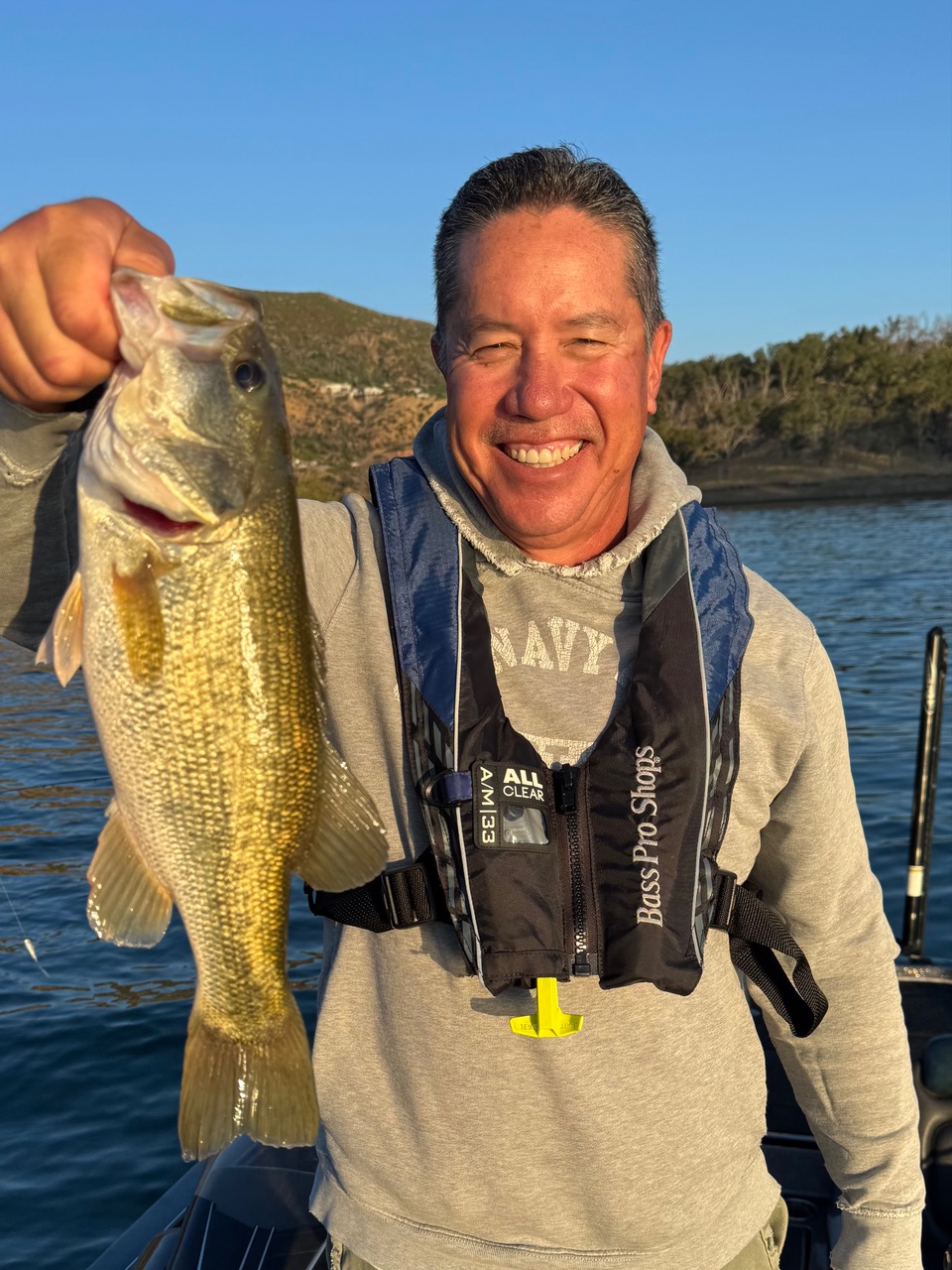
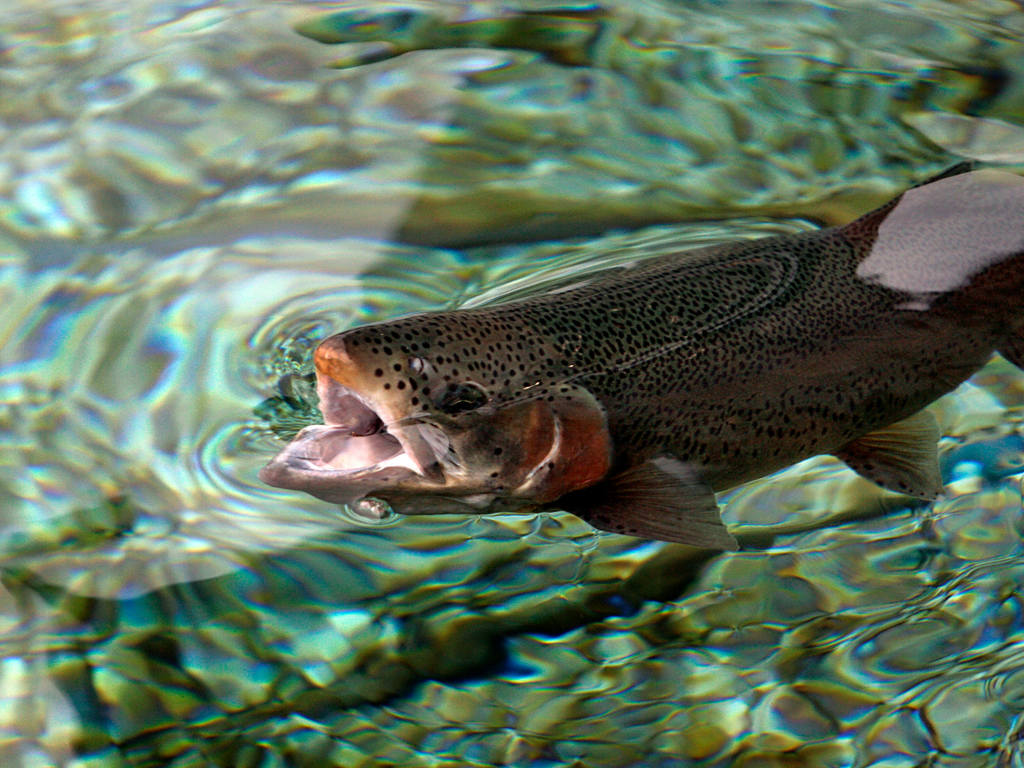
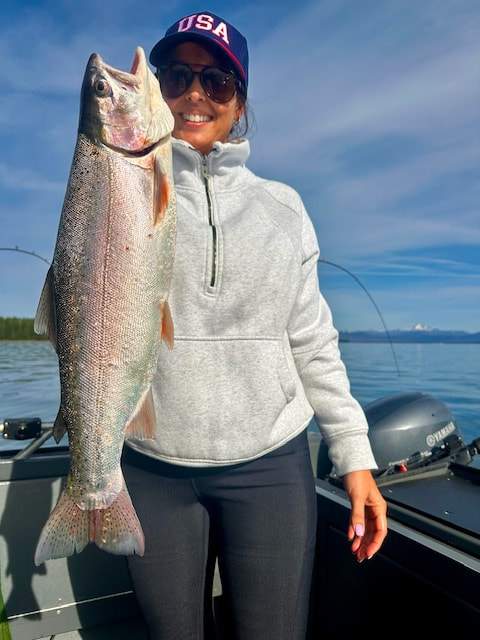
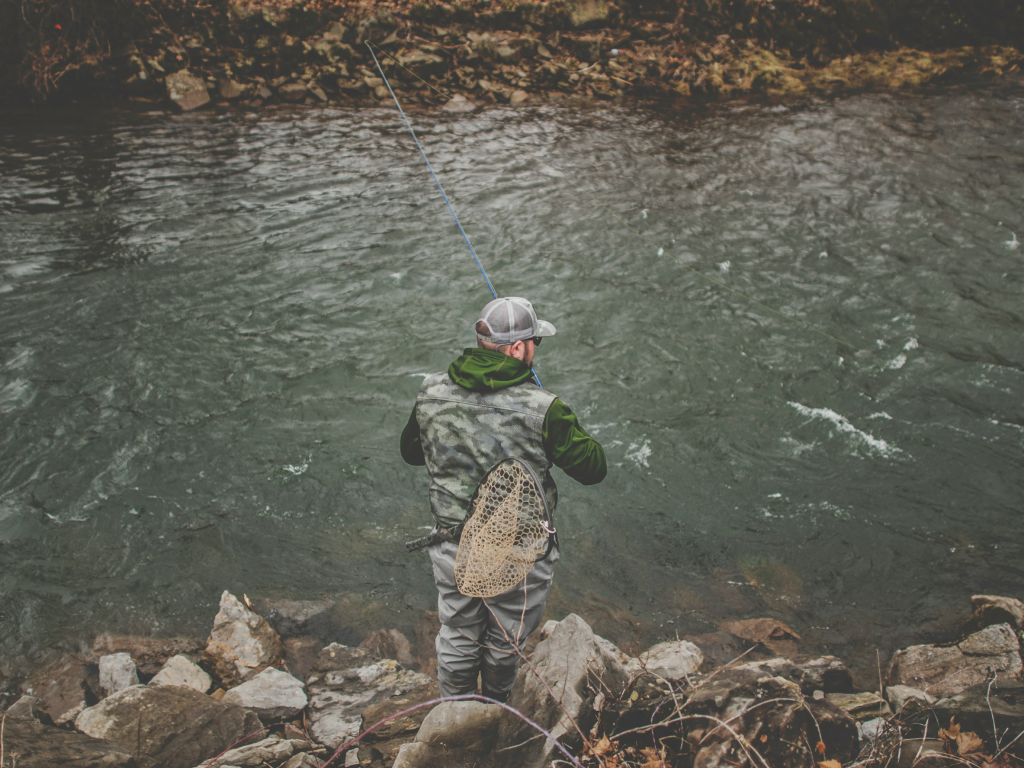
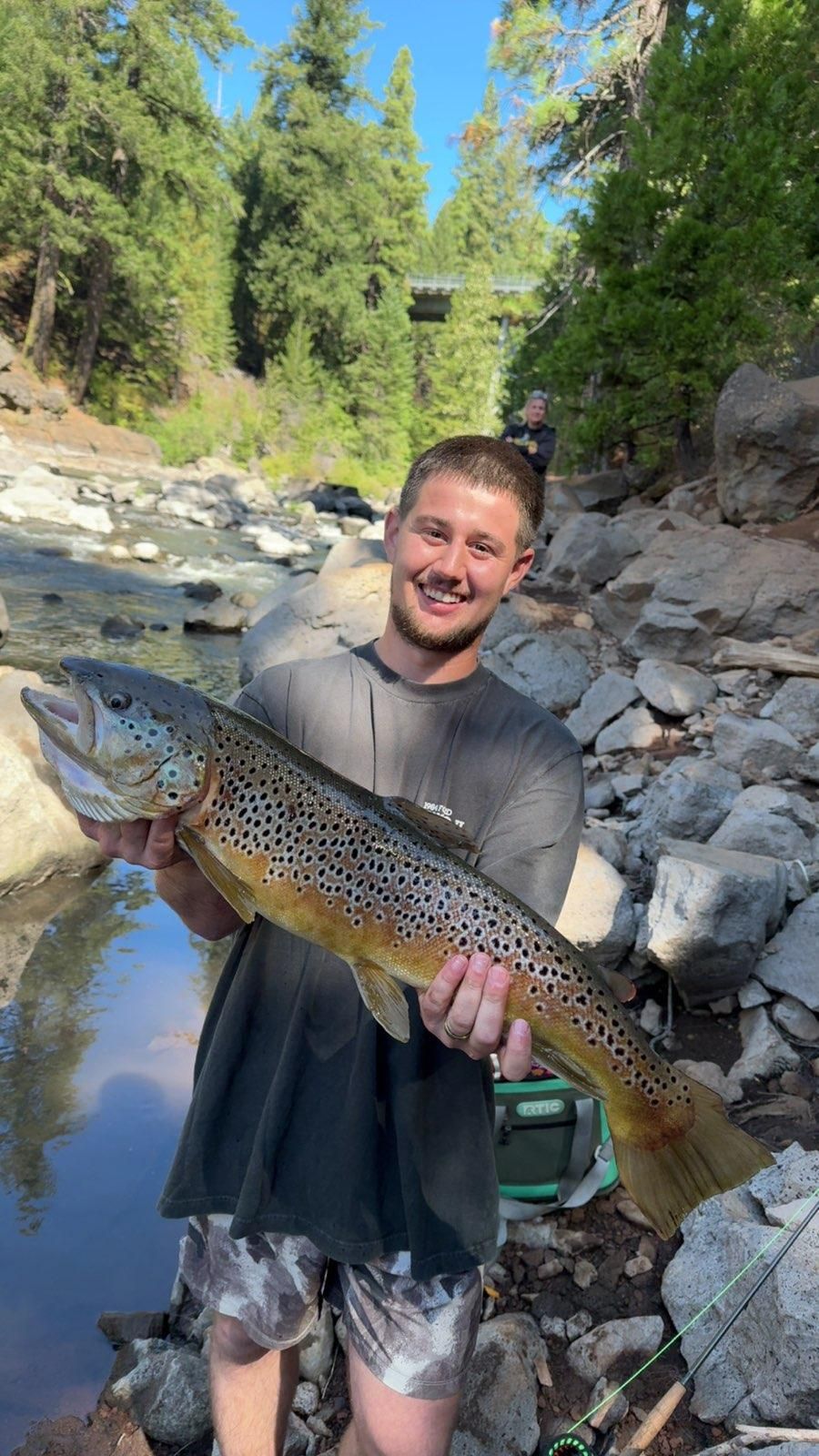
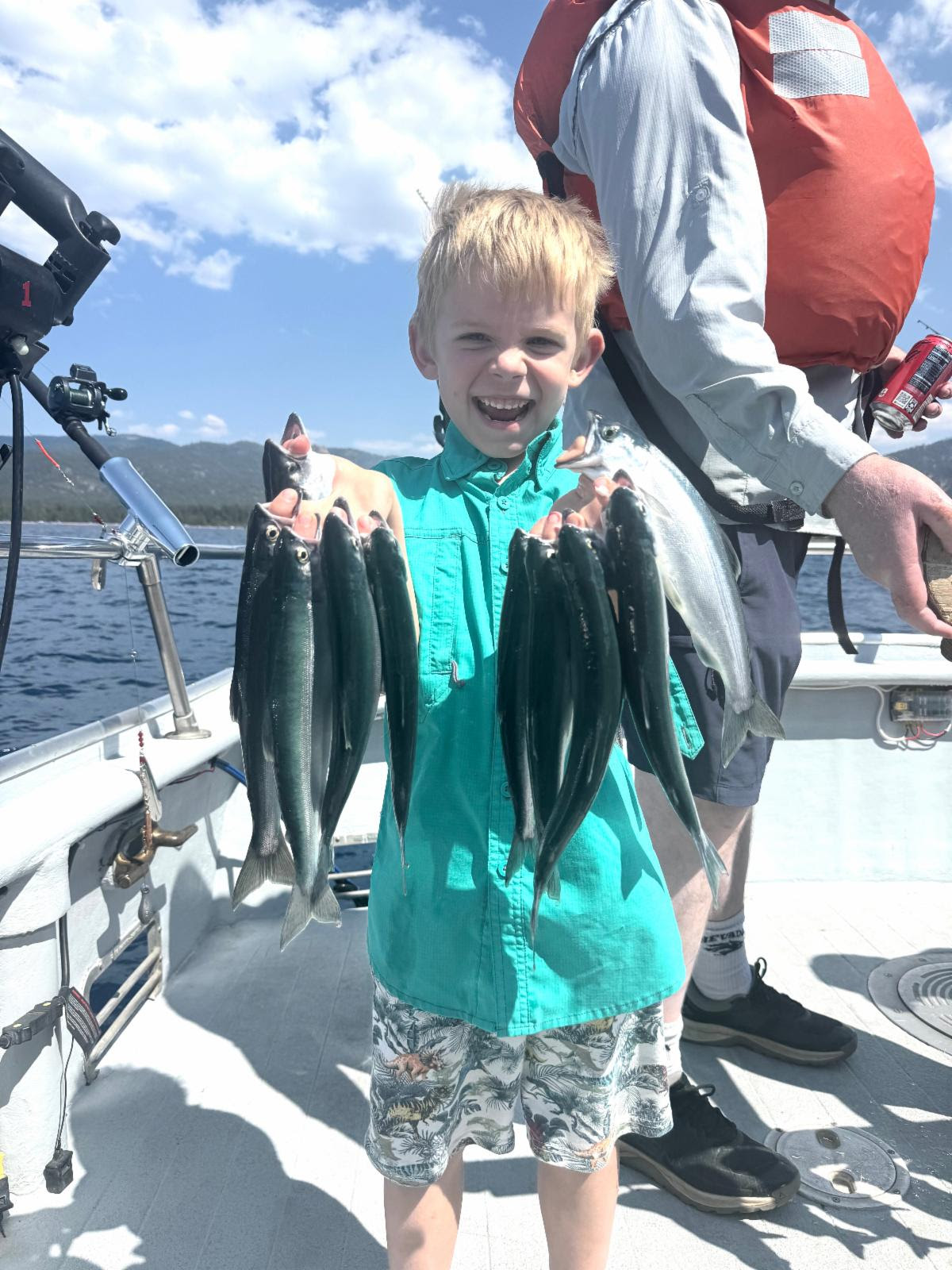
WEST WALKER RIVER We’ve still been getting quite a few good reports from the West this past week with anglers reporting the best action in the Canyon along Hwy 395 up closer to the town of Walker and some decent action in the Pickle Meadows area off of Hwy 108. Bait anglers are using eggs, mini crawlers and power eggs, lure anglers are doing the best early and late in the day with Panther Martins and Roostertails. Fly anglers can fish throughout the day with hopper dropper rigs and have good action as long as they’re sneaky enough. Report courtesy of Kens Sporting Goods
Fish Reports
What's biting across California, newest first.
Bodega Bay/Tomales Bay Rockfish and Lingcod Action Sizzles, White Seabass and Stripers Boated in Bay
BODEGA BAY – The New Sea Angler continues to find topnotch shallow water rockfish and lingcod fishing off the Sonoma County Coast, while anglers are catching a mixture of halibut, striped bass, and white seabass in Tomales Bay.
On his most recent trip, the 16 anglers aboard the New Sea Angler bagged 160 rockfish and 15 lingcod up to 16 pounds.
“After running research trips the last three days, we went back out again today,” Powers reported. “The 16 anglers caught full limits of great quality rockfish, all bottom grabbers with no school fish. They also boated 15 lingcod to 16 pounds. Conditions were good, with no wind and light seas conditions.”
On his previous trip, the 18 anglers aboard the New Angler bagged 180 rockfish and 36 lingcod up to 18 pounds.
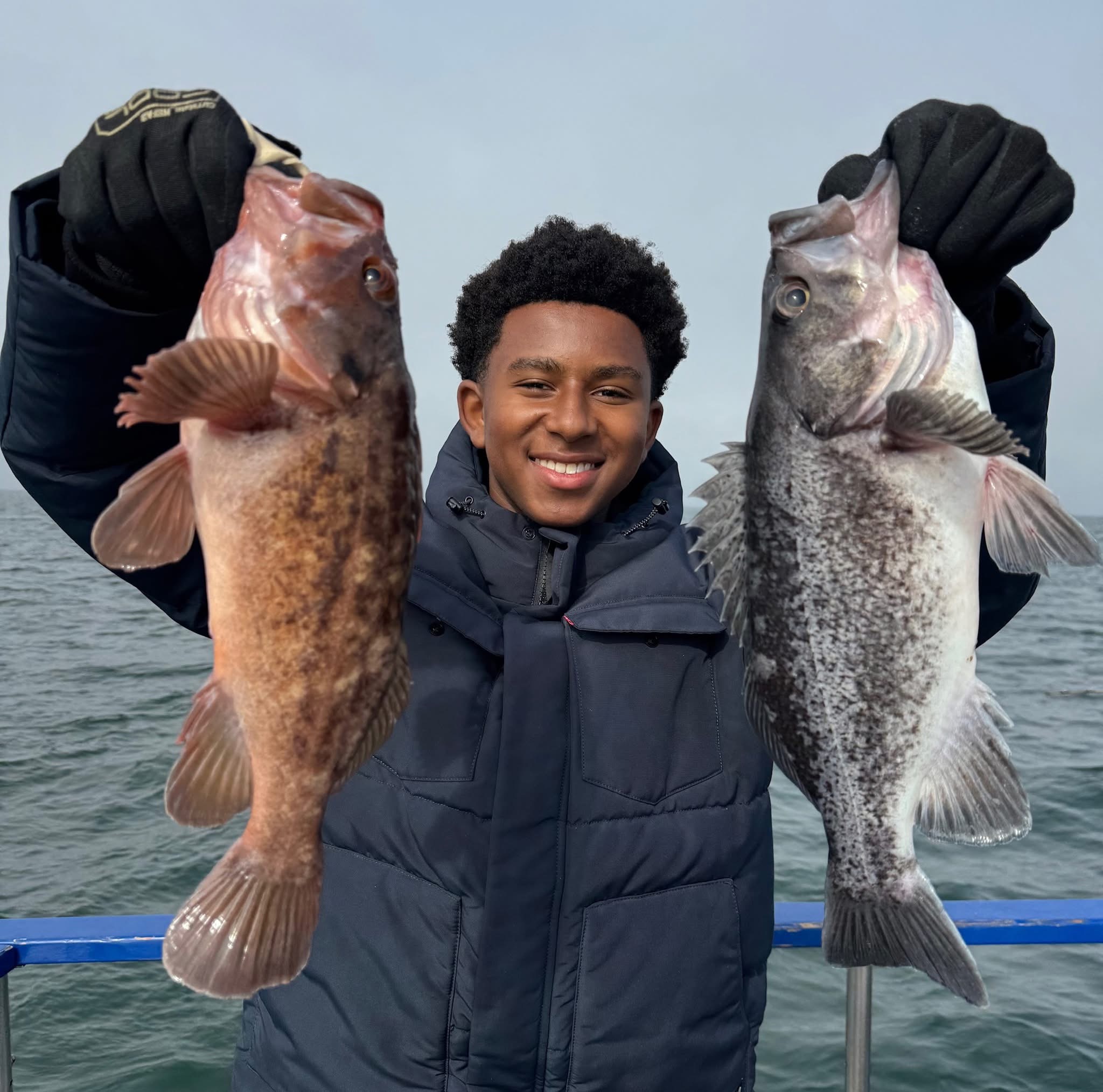
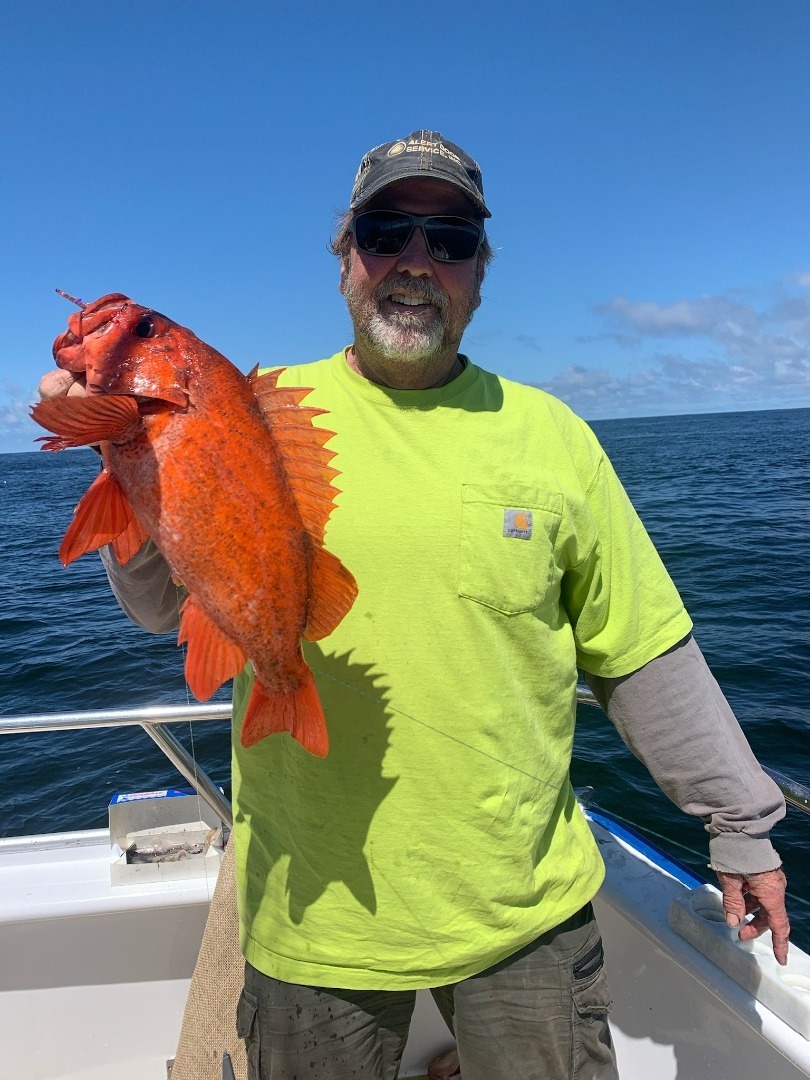
The anglers have been catching quality canary, brown, copper, and vermilion rockfish. Anglers are hooking the fish while using shrimp flies baited with squid strips, bars, jigs, swimbaits, and other offerings.
Meanwhile, anglers fishing inside Tomales Bay have been catching a mixture of halibut, white seabass, and stripers, although the fishing has been challenging at times.
“So what do you do when you’re on vacation but the weather turns to gale force winds? I guess you troll the back by Marshall for bass,” Willy Vogler of Lawson’s Landing reported. “I guess that because the only boat we launched today did that and caught bass – white seabass and striped bass. Flatfish are hard this year, and likely will continue to be hard for a few years if the past salmon closure is any kind of indicator.”
“Gage and I were looking at the halibut results, year over year, from Sportfishingreport.com, and they showed a drop of 50% or better in the catch per fisherman since 2023. Go catch what’s biting, is the result of that, and the twins show it. Two stripers near Pelican and two white seabass near Marshall were the catches of the day. You go, Alexanders, Johnny Sandbar (a Gerard Fitzgerald nickname if there ever was one) and Martha. The catching may suck, but certain people figure out how to catch nonetheless. Nice. Fricking. Fish,” he quipped.
On another day, Vogler reported, “Gage took his girlfriend, Amanda, out fishing this evening. Gage caught, well, nothing. But he gaffed a nice halibut on Amanda’s line. This fish was caught on a jig on the bar after 7:00 PM. Not an early bite but a good fish.”
On another day, Swampy sent over this report: “Evening Willy. Spent the day on the bay with good results. Easy anchovy bait near the yellow marker. 6 halibut to 12 pounds for three anglers north of Hog with the tide change being key. Glad to get some meat this trip. See you next time.”
Vogler’s response? “The halibut fishing may be down, but not out. There were several other halibut caught today with ‘north of Hog’ also being in common. Also, most of the fish were caught in the afternoon. My guess is that some fish came in. Hopefully there’s more following them. Nice work on the fish, Swampy and crew,” wrote Vogler.
The recreational groundfish regulations in the San Francisco Management Area (from Point Arena to Pigeon Point) are available here: https://nrm.dfg.ca.gov/FileHandler.ashx?DocumentID=185056&inline
- Dan Bacher
Fisherman’s Wharf/Berkeley Take Your Pick of Stripers, Halibut or Rockfish
SAN FRANCISCO – Captain Craig Hansen of Argo Sportfishing reports navigating from his berth at Fisherman’s Wharf and drifting live bait with customers at various bay and ocean locations depending on tides and weather. Capt. Craig has been finding stripers at Racoon Strait, and boating halibut at F-Buoy on the Berkeley Flats and on the North or South Bars outside the Golden Gate.
Meanwhile, Captain Ron Koyasako of Nautilus Excursions has been putting customers on striped bass at Angel Island and Red Rock in the bay while drifting live bait. He has also been heading outside the Gate to drift live bait at Seal Rock near the Cliff House and the North and South Bars for halibut. Weather and tides dictate his fishing spots.
This author also spent two special days on the water recently thanks to the Roger Thomas Grant. Roger Thomas, former owner and captain of the fishing vessel Salty Lady out of Sausalito, left a trust that funds trips to take children fishing. The Golden State Salmon Association (GSSA) manages these funds, which are available to children’s organizations to take youngsters—many for the first time—out on the water. As a board member of the Salesian Boys’ and Girls’ Club (SBGC) in San Francisco’s North Beach for more than 22 years, I’ve been arranging trips for the SBGC for the past five years.
This month I assisted Captain Don Franklin of SoleMan Sportfishing on two trips. We fished live bait—another first for the children—in San Francisco Bay for halibut, striped bass, and rockfish. The excitement on the children’s faces as they reeled in fish and saw them netted aboard was priceless. These outings were truly special thanks to the late Captain Roger Thomas.
Meanwhile, rockfish and lingcod action off the Marin County Coast has been excellent.
“We experienced an absolutely phenomenal day up the Marin Coast,” reported Aaron Anfinson, Captain of the Bass Tub. “Underground Construction had amazing lingcod fishing as well as rockfish, scoring limits of both for 12 anglers plus some for the crew! These things were HUNGRY.”
“We had two trips out today,” reported James Smith, Captain of the California Dawn. “Both boats got onto some quality reds and lingcod while fishing in southern waters. They also landed jumbo blues and black rockfish.”
The California Dawn 2 checked in with 19 limits of lingcod (38) to 15 pounds, 19 limits of rockfish (188), and 2 cabezon. The California Dawn 1 had 21 limits of rockfish (210), 8 lingcod, and 1 halibut.
For contact information for these captains or guides, search online.
For more information about the California Striped Bass Association (CSBA), visit www.striper-csba.org to access information about the four CSBA chapters. New members pay $25, which includes a one-time $5 initiation fee. Annual dues are $20 thereafter. Membership helps strengthen our mission to protect striped bass and our fisheries. Some chapters offer a free gift for joining. The Isleton-Delta Chapter provides two free decals and a chapter hat to new members. Membership forms are available on the website—select your chapter, go to the membership page, complete the application, and send payment to the listed address. The Isleton Chapter also accepts credit cards online for memberships, renewals, and events. The website features newsletters, photos, articles, and useful links to help plan fishing trips.
- Ken Baccetti, President of the California Striped Bass Association (CSBA), Isleton-Delta Chapter.
Half Moon Bay Shallow Water Rockfish Limits Are The Rule
EL GRANADA – Rockfishing adventures are producing limits of colorful shallow water rockfish, along with some lingcod and an occasional halibut.
The Queen of Hearts reported 160 rockfish, 4 lingcod, and 1 halibut for 16 anglers on their latest trip out of the harbor. The boat returned the previous day with 250 rockfish, 1 lingcod, and 1 halibut.
Rockfishing trips on Wednesdays are departing at 10 a.m. and returning by 3 p.m. through the end of August.
The rockfish season is the same as last year:
- May through September and November is coastal rockfishing from shore to no deeper than 120 feet.
- April, October, and December are deep-sea rockfishing, fishing depths outside 300 feet.
The only regulation change from last year is that there is no minimum size limit on cabezon or seatrout (kelp greenling).
Recreational salmon season will, barring any unforeseen changes, DEFINITELY REOPEN FOR THE “FALL SEASON” on September 4, 5, 6, and 7. The separate “fall fishery” off the Bay Area coastline is scheduled for Sept. 4–7, 29–30, October 1–5, and 27–31, or until no more than 7,500 salmon are landed during that period. Limit is 2 salmon per person with a 20-inch minimum size. These dates are available on the online booking system—reserve spots as soon as possible as they go quickly.
Perch are showing along the coastline, and squid and anchovies are appearing outside the harbor. Anglers continue to catch rock crab off the fishing pier inside the harbor and on the jetty.
Recreational Dungeness crab season is closed until the first Saturday in November, but rock crab season is open all year using hoop nets or snares.
For those interested in monkeyface eel, there are plenty hidden in the jetty rocks for poke-pole anglers. Striper fishing along the beaches has slowed, but a few are still being landed. Halibut have moved in, with some good-sized fish in the mix.
- Half Moon Bay Sportfishing Center
Monterey Bay Halibut, Rockfish and Lingcod Hit the Decks
SANTA CRUZ – There are halibut limits being reported in the Monterey Bay Area. The halibut were caught up the coast near 4 Mile and down the coast near Moss Landing, reported Todd Fraser of Bayside Marine on August 9. The halibut are hitting drifted live bait and trolled baits and lures.
The Capitola area is producing some nice halibut and a few seabass, he noted.
“The rock fishing was great up the coast near Davenport. The swell was smaller and the winds were calm all morning,” said Fraser.
“There are people talking about looking for tuna Sunday and Monday. There is a boat from Half Moon Bay who has one albacore about 60 miles out,” Fraser said.
Boats out of Chris’ Fishing Trips in Monterey continue to focus on rockfish and lingcod in shallow water. The boats are returning with daily limits of rockfish, along with a few lingcod. Anglers are using shrimp flies baited with squid strips, jigs, bars, swimbaits, and other offerings to nail the bottomfish.
On August 9, the Checkmate checked in with limits of rockfish (200) and 12 lingcod for 20 anglers, while the Caroline came back with limits of rockfish (170) for 17 anglers. On the previous day, the Checkmate tied up at the dock with limits of rockfish (90) and 6 lingcod for 9 anglers.
The rockfish season will continue to run through Dec. 30, 2025. Here are the depth restrictions now in place:
-
May 1 – Sept. 30: 20 fathoms inshore fishery
-
Oct. 1 – Oct. 31: 50 fathoms offshore only fishery
-
Nov. 1 – Nov. 30: 20 fathoms inshore only fishery
-
Dec. 1 – Dec. 31: 50 fathoms offshore only fishery
-
Dan Bacher
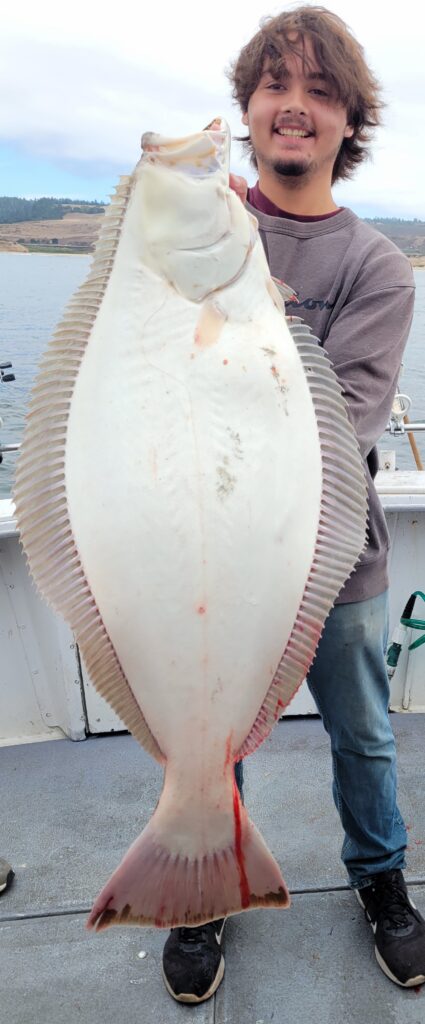
The water is warming and the fishing is heating up along the coastline! Bluefin tuna are being caught by those willing to put in the time and find warm water. Fish have been caught anywhere from Monterey to The Farallones. On the inshore waters, halibut, lingcod, and rockfish are in peak season. I recently took my kayak out in Santa Cruz County and had some good action on halibut in 40-60 feet of water. I was trolling a bounce ball setup in fairly clear water and the big fish of the day was this fat 40” halibut (pictured). Video from the day is live on Youtube!
SANTA ANA RIVER LAKES: Clear Evening Gives Up Single Channel Cat
4mph breezes and clear water greeted our fishing group on July 1, 2025. Fishing pressure stays modest on weeknights, and the fence line near the El Pollo Loco sign offers easy casting room starting around 5 p.m.
Cisco soaked a Carolina rig which included a 1oz egg sinker, one-foot mono leader, and 2/0 circle hook, baited with fresh cut mackerel. He lobbed the setup fifteen to twenty feet off the bank. At 8 p.m. the rod loaded up, and a two-pound channel cat came ashore after a short burst toward deeper water. No additional bites followed before lines-out at 11 p.m.
Expect the bite to rise as July heat pushes water temps higher. Bring plenty of mackerel or shrimp, refresh baits every twenty minutes, and keep casts short to shoreline cover once the sun drops.
HESPERIA LAKE – Shrimp & Mackerel Score Easy Cat Limits
Stained water on July 11 kept visibility low, putting the bite on scent-soaked baits. Anglers fishing shrimp, mackerel, or nightcrawlers enhanced with a dash of “Homeless Stench” attractant from the store filled five-fish cat limits from first light through late afternoon.
Most anglers caught catfish in the 6–8 lbs range, and the day’s top stringer weighed 132 lbs. Hesperia Lake staff noted recent sightings of 15–19 lb fish prowling the deeper channels.
Productive water starts at the aerator line and stretches along the north-shore picnic tables. Cast a ½-oz Carolina rig into 8–12 ft or drop a two-hook high-low straight off the main dock when algae mats drift in. Refresh scent every 20 minutes since shrimp scent fades fast in warm water.
Night sessions run Friday and Saturday; pack a lantern, heavy net, and extra ice. The five-fish limit remains in effect, and the bite should hold as long as water temps stay in the mid-70s and the turbidity persists.
SAN FRANCISCO BAY – Hot Rockfish and Lingcod; Halibut Inconsistent; Stripers Wide Open
Report from July 25 to August 4, with trips starting at 5:30 a.m. and fishing until limits or 2:30 p.m.
I have been fishing in San Francisco Bay between the San Rafael-Richmond Bridge and Bay Bridge for stripers and halibut. For halibut, we’ve also been targeting the north and south bars outside the Golden Gate Bridge. Rockfish and lingcod trips have been focused around Pacifica, Half Moon Bay, and Duxbury Reef.
Rockfish and lingcod fishing has been hot, with limits on both species achieved on most trips. Rockfish have ranged in various sizes and species. Lingcod have been particularly active, with days when we’ve limited out on lingcod even before reaching our rockfish limits. Lingcod have consistently been nice in size.
Halibut fishing has become more inconsistent recently. It’s best to target smaller tides. Most keeper-size halibut seem to be in the ocean or near the Golden Gate Bridge. In the bay and ocean, we are catching many small halibut, ranging from 6 to 15 inches, indicating a positive outlook for future years. Most trips end with slightly more than one halibut per angler, with several nice fish measuring between 30 and 35 inches.
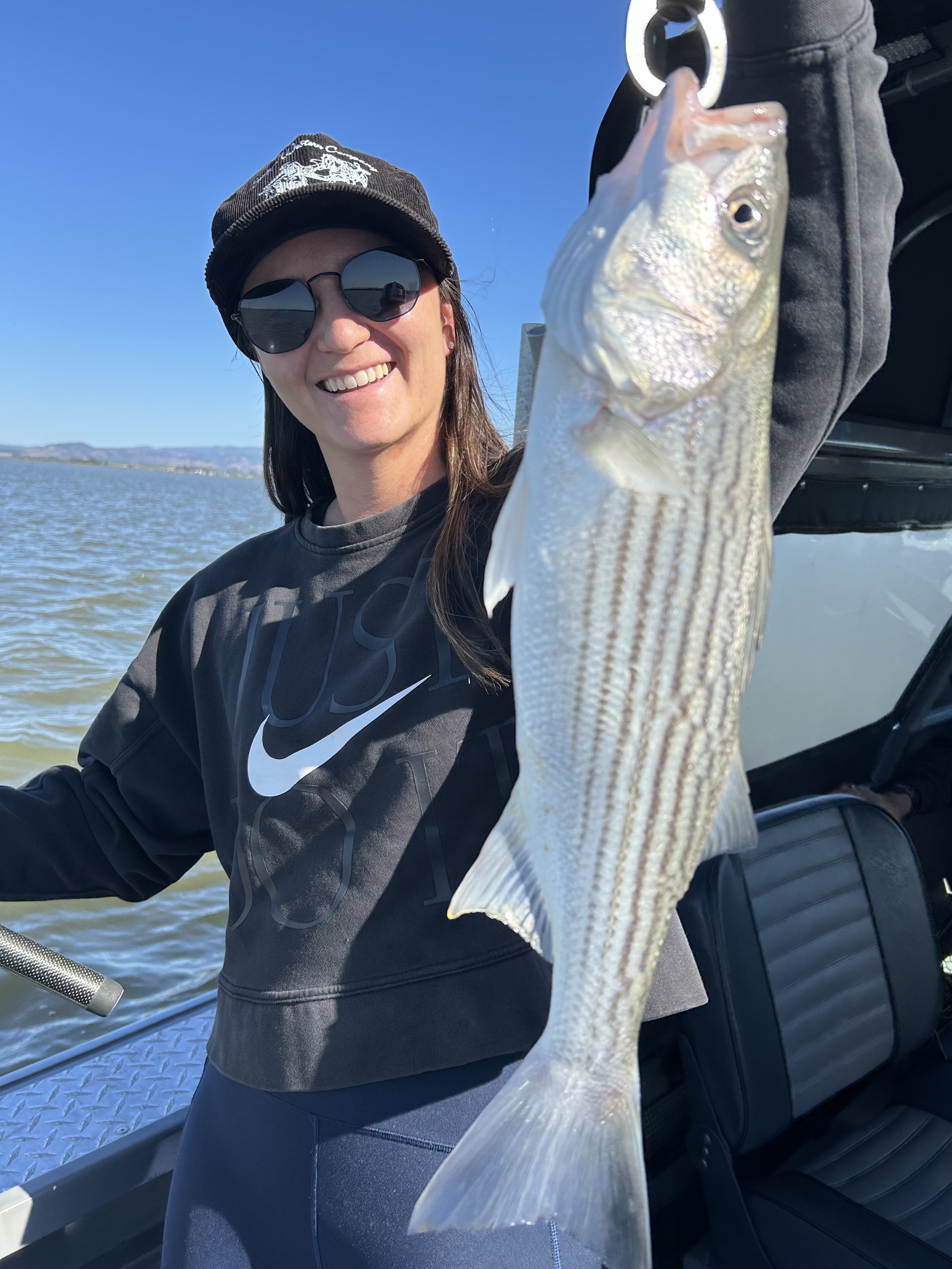
Striper fishing on most days has been wide open in certain spots. Most stripers caught are between 20 and 22 inches, with a few larger fish mixed in. Limits can be achieved quickly if you’re in the right area. Slowly cruising around the islands and using sonar to locate schools has proven effective. When the fish are stacked up, they will bite just about anything presented.
June spoiled us with an incredible halibut bite, but by July the changing water temperature had other plans. The bite slowed dramatically, and while halibut are still around, most are on the smaller side. The spotlight this month belongs to spotfin croaker, and they’ve been delivering some of the most exciting surf action all summer.
In Seal Beach, California, Big Fish Bait and Tackle hosted July’s “Best of 2 Spotfin Croakers” derby. During the incoming slack tide, I landed a 22.25-inch and a 23.25-inch croaker, giving me a combined total length of 45.5 inches—enough to hold the lead until the very end of the month. The fights were unforgettable. Both croakers battled like stingrays, charging off with heavy runs and delivering stubborn headshakes all the way to the net. Mussels and ghost shrimp on 15-pound test were the winning baits. My video content on them can be found on my Instagram @VividSnares.
But here’s the twist—my fishing buddy Chris Garcia also landed the exact same total length! He was part of the derby too, so we tied. Since I caught and turned in my submission video first, according to Big Fish Bait & Tackle, I officially took 1st place and Chris took 2nd. He then tried fishing every day to land a bigger fish than mine. Now that’s the kind of camaraderie and competition we love—it’s what keeps us fishing! In my book though, we’re both first-place finishers. Congratulations, Chris!
Local OG surfcasters tipped us off that it’s spawning season, and by late July, spotfins had spread both north and south as sand crab beds lit up the shoreline. It’s been a season to remember, and the bite shows no signs of slowing.
Barred surfperch were everywhere as well, with some reaching 6 to 12 inches. Croaker and corbina stayed active on bloodworms, ghost shrimp, and soft-shell sand crabs. Clean water and the incoming tide after an early morning minus low were key—especially for corbina in the 15- to 20-inch range.
My two spotfins secured first place and a custom surf rod and gear from Flashbites, along with sputnik weights from American Sea Fishing. Now, August’s derby target is halibut. Good luck everyone, be safe, and tight lines!
For video content, follow us on Instagram @VividSnares.
—Joel Dacoron, Founder of Vivid Snares & Fishing LLC
Some months the fish make you fight for every bite, and July 2025 has been one of those grind-it-out months for NorCal striped bass. I’ve been fishing my whole life thanks to my dad, Manuel, who put me on my first striped bass from the surf in Pacifica, CA. My name’s Joel, founder of Vivid Snares & Fishing LLC, born and raised in the SF Bay Area, and I’ve been fishing these waters for two decades.
This summer, the bite’s been slow, but trust me—they’re still out there if you know where and when to look.
During June’s More Than Fishing Striped Bass Surf Fishing Tournament, even the OG surfcasters from Montauk back to San Mateo and up through San Francisco coastlines had a hard time matching last year’s numbers. But one angler, P-nut Khammao, showed everyone that persistence pays off. His trick? He chased diving birds on his e-bike, cast wherever the action popped, and when the birds stopped diving, he went to different beaches and stacked more than a handful of stripers while most stayed put and went home empty-handed.
The fish of the month for July? Jorge Barrera’s monster 37-inch striper, landed on a simple pink metal trout lure during low to incoming tide—proof that even in slow months, the big ones still chew. Sure, there are bigger numbers outside of NorCal, but here, they’re big.
While my dad and I skunked in the tourney, we’ve been hammering giant red rock crabs with my original lead-free Vivid Snares (vividsnares.com). From SF’s Crissy Field to Torpedo Wharf, the rock crab bite is straight fire since Dungeness crab season closed. Just bait up the crab snare with raw chicken, fish, or squid, cast with your fishing rod, and let it soak for 5 to 10 minutes. Then set hard—if it feels heavy, it’s a crab—and reel in smooth. Want a guaranteed good time crab snaring? Book a trip with the professional crab-snaring guides at The Art of Crabbing (theartofcrabbing.com)—they’ll put you right on the crabs. Oh, and be sure to tell them Joel from Vivid Snares & Fishing sent you.
Kittle’s Outdoor Sports in Colusa hosts the 2025 California Duck Calling Championship and Outdoor Expo!
The California State Duck Calling Championship comes to Colusa on August 23 and 24, 2025. This event will include the California State Championship and the Butte Sink Regional Calling Competitions that are both World Championship qualifiers. It will be held at the Veterans Memorial Park in Colusa. The events start Saturday at 9 am, with registration beginning at 8 am. The festival also includes seminars, sportsman’s vendors with outdoor gear, artwork and more! Plus, a Calling Championship for juniors at no charge. Attendance is FREE for everyone! If you wish to compete in the Calling Contest, download the registration form at www.kittlesoutdoor.com
Kittle’s Outdoor Sports in Colusa is also having a special early season Waterfowl Sale in conjunction with the Calling Contest. They are offering a multitude of Specials in their store which include many discounts of famous name brand gear. Beretta Firearms is offer special Rebates up to $350 on select Beretta shotguns, rifles and handguns. And Kittle’s will be offering Specials on All Ammo throughout the store, including they will pay the Calirornia 11% Tax for you through December 2025
FREE STREET DANCE - LIVE MUSIC Kick up your heels in Historic Colusa to the sounds of the Jeff Crossman band and Tyler Applegarth!
- Street Dance August 23rs
- Main Street Colusa, CA
- After the first day of the State Duck Calling Contest - 7pm till 10pm The City of Colusa will Close down part of Main Street - behind Rocco’s, the Sportsman’s Club (Jamison’s) and the Tap Room for a Street Dance August 23rd. This Live Entertainment is sponsored by the City of Colusa and Kittle’s Outdoor. All on a Saturday Night after the first day of the California State Duck Calling Contest.
The 2025 Duck Calling Championship and Waterfowl sale is sponsored by Kittle’s Outdoor Sports, and many more sponsors including Sitka Gear, Fish Dog Outdoors, Kent Cartridge, JJ Lares, Higdon Outdoors, Colusa Casino, Beretta, Keller & Keller Farming, Rig Em Right, White Brothers Farming and more.
Salmon groups, Tribes respond to State Water Board updates to Bay-Delta Plan with deep alarm
SACRAMENTO — The State Water Resources Control Board has just released its controversial proposed updates to the Sacramento Delta portions of the Bay-Delta Plan.
The proposal includes both the Big Ag-backed voluntary agreements on water, strongly opposed by Tribes, environmental groups, fishing organizations and environmental justice organizations, and a “regulatory pathway.”
Governor Gavin Newsom gushed about the release of the update proposal — and, as usual, announced proposed legislation gutting the California Environmental Quality Act (CEQA) to fast-track the implementation of the process.
“I am proud to see the healthy rivers and landscapes program represented in this plan update — it’s a testament to California’s commitment of a collaborative, science-driven approach to managing our water for the benefit of our communities, economy and fish and wildlife,” claimed Newsom in a statement. “However, our work is not yet done — I have proposed legislation to create a CEQA exemption for all water quality control plans that would accelerate the time it takes to get these critical plans done by removing unnecessary and redundant process requirements.”
“We’re done with barriers and obstacles to our state’s success. We must work together to protect our natural resources for the benefits of the habitats and people of our state,” Newsom gushed.
Two salmon groups, Save California Salmon and the Golden State Salmon Association, blasted the inclusion of the voluntary agreements in the update.
“The Bay-Delta Water Quality Control Plan (Bay-Delta Plan) update is necessary to protect the water quality in the Bay-Delta and Sacramento River watershed,” said Regina Chichizola, Executive Director of Save California Salmon. “This watershed is critically important to salmon, Tribes, and the tens of millions of Californians that get their drinking water from, or live in, the Delta.
“Water is our most precious resource and it is extremely overallocated due to agricultural diversions. This plan should be guided by science, not politics or profit, to ensure enough water is left in the system for ecosystems, fish, and clean drinking water. We are very disappointed to see the board pushing voluntary actions by large-scale agricultural interests after decades of inaction and failed voluntary solutions.”
Scott Artis, Executive Director of the Golden State Salmon Association, also responded to a briefing by the Water Board on the Bay-Delta with profound alarm.
“Today’s NGO briefing by the State Water Resources Control Board on the Bay-Delta Plan process left conservationists, fishermen, and Tribal and environmental justice advocates deeply alarmed,” said Artis. “The Board appears to be laying the groundwork to approve the Voluntary Agreements (VAs)—a controversial, deeply flawed proposal designed behind closed doors by the very water users who would benefit most from it.”
“This is a sad day for the State Water Board and one more on a long list of bad days for salmon. The Board seems to be collapsing under pressure from the Governor to approve the fatally flawed voluntary agreements. The VAs are a scam that could cost taxpayers billions, enrich water agencies and make the rivers even sicker. The VAs set the stage for even more damaging diversions by the massive Delta tunnel. Commercial fishing in California has been closed for 3 years because of unsustainable water diversions. This looks like a plan to kill California’s most important wild salmon runs and fishing jobs.”
“At the heart of the VAs is a deceptive premise: they offer modest ‘environmental water’ while setting the stage for massive new diversions from projects like Sites Reservoir and the proposed Delta tunnel. These diversions would come from the same existing flows that form the baseline for the new water, meaning overall conditions in the Bay-Delta could become even worse than they are today.”
“Taxpayers are being asked to foot the bill—over $2 billion—most of which would go directly to the water agencies that helped write the VAs. Meanwhile, in critical dry years when ecosystems are most vulnerable, the VAs offer little to no new water: zero on the Yuba, Feather, and Mokelumne rivers, and a meager 2,000 acre-feet on the Sacramento River, the state’s largest.”
He said the VAs also mirror the failed CALFED Environmental Water Account, which allowed state water projects to worsen environmental conditions while financially benefiting water users.
“Equally troubling is the exclusion of key voices. Tribal leaders, fishing communities, environmental justice advocates, and conservation groups were shut out of the process. The Governor’s office has refused to meet with opponents, despite repeated requests and the dire implications of the plan.”
“Despite claims of new environmental benefits, the water proposed in the VAs has been shrinking for years, and there’s no contingency if the anticipated $900 million in federal funds fails to materialize—which appears likely.”
“If the VAs falter, it could take years before the State Water Board reevaluates the situation, leaving already declining salmon and imperiled rivers in an even more precarious position.”
“One thing is clear. The Voluntary Agreements aren’t a solution—they’re a water diversion tactic dressed up as progress, with consequences California’s natural heritage, people and communities can’t afford.”
The release of the plan updates comes despite an ongoing Title VI Civil Rights Act complaint filed by the Delta Tribal Environmental Coalition (DTEC), comprised of the Shingle Springs Band of Miwok Indians, the Winnemem Wintu Tribe, Little Manila Rising, Restore the Delta, and Save California Salmon. The complaint is driven by the State Water Board’s failure to uphold basic environmental protections in the Bay-Delta, disproportionately harming Tribes and other communities of color.
“We’re encouraged to see Tribal Beneficial Use designations of the Bay Delta Watershed still included in the Plan. We would have liked to see both the Tribal Cultural and Tribal Subsistence uses designated but still see the Tribal Cultural use designation as a win for tribes and an important step forward to tribal uses of water being protected should it remain in the final plan,” said Vice Chair Malissa Tayaba with the Shingle Springs Band of Miwok Indians.
“We’re disappointed to see the Voluntary Agreements still moving forward. We stand strong in our belief that the proposal is scientifically inadequate. Eight years of an experimental ‘voluntary’ taking and giving of instream flow with questionable oversight is eight years too long that could mean complete devastation for our salmon relatives. Tribal voices and indigenous knowledge was completely and intentionally excluded from VA negotiations from the beginning and now that the Water Board has made it a viable proposal, language has been included to create optics of tribal inclusion with no real mandates for the actual incorporation of Tribal input, Tribal decision-making or Tribal co-governance.”
“It is clear that the State Water Board is continuing its inclusion of the Voluntary Agreements proposals despite the fact that there is a Title VI Civil Rights complaint filed against them, in part, for doing just that,” said Gary Mulcahy, Government Liaison with the Winnemem Wintu Tribe. “The VAs have been in process now for over 9 years, and have failed to include environmental justice communities, Disadvantaged Communities, and California Tribes in their planning and implementation processes. A clear violation of the civil rights of those groups who will be significantly affected by their actions.”
The negotiations leading to today’s Bay-Delta plan draft update have been criticized for being conducted in secret and excluding Tribal and frontline communities.
“The Water Board is now saying you need to talk to the Tribes, but that is the old term of a day late and a dollar short – 10 years after the VAs began planning,” said Mulcahy.
The proposed updates also raise fundamental concerns about equity, transparency, and science-based water governance.
“The State Water Board is betting on the livelihood of Delta communities and future generations that will be left to live with the consequences of poor policy making,” said Cintia Cortez, Policy Program Manager at Restore the Delta. “The Board’s failure to address these issues is evident by their failure to resolve DTEC’s Title VI Complaint. Instead, the Board is aligning itself with a Governor that continues to push an agenda for his personal gain and does not benefit Californians.”
The current Bay-Delta Plan has not been substantially updated since 1995, despite repeated admissions from government fish and wildlife agencies that existing flow standards are insufficient to support native fish species, including Chinook Salmon, Longfin Smelt, and White Sturgeon. Salmon fisheries have remained closed for three consecutive years due to catastrophic declines in their breeding grounds, according to the groups.
The Water Board will receive comments on the revised draft in writing by September 10, 2025, and at a public hearing on September 8 and 9, 2025.
The proposal was released as Governor Gavin Newsom is fast-tracking the Delta Tunnel, Sites Reservoir and the voluntary agreements in order to export more Delta water to his Big Ag donors and Southern California water agencies.
The two projects, in tandem with the voluntary agreements, will seal the doom of imperiled Sacramento River winter, spring and fall-run Chinook salmon, Delta smelt, longfin smelt, green sturgeon, white sturgeon, Central Valley steelhead and other fish species, already in unprecedented crisis due to the already massive water exports to corporate agribusiness and Southern California water brokers, along with other factors.
High School Buddies Celebrate at Eagle Lake
By Paul J. Kneeland
I have been blessed to have a few very good friends from high school days that I get to see every year, in spite of the fact that high school was over 50 years ago! We have been getting together for a “Reunion trip” every year lately. It used to be every 5 years, but when one of us passed away as we got older, we decided to do it annually. This year we decided to go to Eagle Lake and stay at my small cabin at Spalding. We went up on a Tuesday afternoon, with me towing the Fish Sniffer. Rogue Jet Coastal 21 to be our fishing platform. Brian Lockshaw of Rogue River, Oregon met Steve Pestoni of Weaverville and Dave Barsi of Oak Run, and they all rode in Steve’s truck and arrived about 5 pm. We had a great dinner of barbequed steaks, baked potatoes and salad as we shared many memories and tall tales on the back deck. Wednesday morning, we were up at 4:15 and at the launch ramp at the south shore by 5:45. We backed out of the launch ramp and immediately starting fishing, heading to the east side off of Eagles Nest . It was a little smoky from the fires burning near Lake Shasta and southern Oregon. The. air temperature as a balmy 54 degrees, with the water temperature showing 71 degrees on the Lowrance fish finder. The weather stayed nice all day with a little trolling breeze that came up and kept us cool. It warmed up in the afternoon, about 86 degrees at the cabin. We started trolling east and landed 3 fat fish in the first 20 minutes – unfortunately, all Tui Chubs!! We were marking lots of fish suspended at 20 to 25 feet deep in 40 feet of water, and determined that the majority of them were chubs. We continued through Eagles nest and back toward the ramp with no luck.. We didn’t see many marks and also no bait balls. Then we headed over to Wildcat Point on the west side and started trolling north in 30 to 40 feet of water. Saw a few marks, but didn’t know if they were chubs or trout. Finally got 2 trout south of Shrimp island – I got one that was a fat 22 incher at 3.75 pounds that hit a pink/blue Vance’s Sockeye Slammer at 28 feet deep. Brian got the only other trout of the day on a black/white/red stripe Excel Spoon that was about 15 inches long. Our good friend Paul Saviez of Idaho drove in about 3 pm., and we spent the next few hours telling the old stories and enjoying each other’s company. Thursday morning, we were able to get out a little earlier and launched about 5:30. Tim Noxon of Fish Traveler Guide Service was already out and had 2 nice trout in the box when we launched. Tim was fishing just off Pikes Point to the west of the boat ramp. I talked to him on the phone and he said he was trolling naked crawlers right on the bottom in about 25 of water. Tim and his one client were done by 8 am, with a fantastic limit of Eagle Lake trout of 3.2, 4.4, 4/8 and 5.1 pounds!! After Tim went in, we stayed in that area all morning, trolling on the bottom in 20 to 30 feet of water. We could see marks on the graph, but again they were not hitting very well. We tried our favorite spoons in the 2 and 2 ½ inch size but never got a hit.. So, we changed up a little, and started trolling naked crawlers and small spoons off the downriggers, near the bottom, per Tim’s instructions. We landed 7 nice trout and one Tui chub. Several of the trout were last year’s plants of about 14 to 16 inches, and they were extremely health and feisty! Dave Barsi caught the biggest trout that was 24 inches but only 3.75 pounds. It also had a strange looking bent back? And the fish was also was tagged. It had a huge head, and if had been fat and healthy would have weighed 5 or 6 pounds easily. Brian and Steve each got a beautiful, fat 20 incher we all determined were the prettiest fish of the trip. All of our 7 came on naked crawlers and pink/blue Sockeye slammers. When I cleaned the trout, one of them coughed up a bunch of tiny minnows, about ½ to ¾ inch long! Mid July at Eagle Lake is not the best time of the year to fish, but that was the week we could all get together. As my Dad always said, “the best time to go fishing is when you can!” We did catch several nice trout, and enjoyed the shared history of the past 50 years with great friends! For more information on fishing Eagle Lake, contact Tim Noxon of Fish Traveler Guide Service at 916-201-4648 or www.fishtravlerguideserviceeaglelake.com. The Eagle Lake RV Park and Store offers cabin rental, full service store and fuel, located on the Strand in Spalding. Contact them at 530-825-3133 or www.eaglelakervpark.com
Summer All-Nighters: A Fishing Rite of Passage by Jack Naves Some memories never fade. A cool breeze. Waves lapping against the side of the boat. That river smell. The sound of the clicker going off. I’ll never forget spending nights on the Sacramento River near Clarksburg with my dad back in the eighties. In search of striped bass, we’d anchor out on the flats and spend the night enjoying great food, watching wildlife, and waiting for that lunker to come along. Those memories never fade; they are recalled anytime I am lucky enough to spend a night on the boat. Those opportunities are rare these days, but when they do happen, it takes me back to those nights on the river. I recently had the chance to introduce a couple of kids to all-night fishing at New Melones Lake in Angel’s Camp. On back-to-back weekends, I hauled the boat up the hill packed with sleeping bags, lanterns, and enough propane to grill up some delectable delights. The first outing was on Friday, July 25, with my son Adam. After launching the boat in the late afternoon sun, Adam and I trolled east in search of kokanee salmon. It started off slowly, but once we found the fish at 80-90 feet down, it was wide open. We limited out quickly on 15 to 17-inch footballs, incredible quality indeed! Next up, we ran to a cove on the west side of the lake and set up for all-night catfishing. We enjoyed grilled hot dogs and chips while soaking chicken livers for catfish. As the sun disappeared over the hills, a noisy flock on Canada Geese swam by. I think they were trying to let us know that we were not at the catfish hotspot. Before it was totally dark, I ran east to a cove near the Glory Hole Marina and set anchor for the night. I anchored in ten feet of water, hoping the wind would keep us straight. I forgot to bring my rear anchor, so the boat swayed in the northwest breeze throughout the evening. Adam had never caught a catfish, so he kept asking if we were really going to catch one. I assured him it was just a matter of time, but by 10:30 pm, we both had our bed rolls out and were getting sleepy. There were a lot of false alarms, as the swaying boat was dragging our baits along the bottom, making Adam think we kept getting bites. Suddenly he motioned, “Is that a fish?” I glanced up at his portside rod, figuring it was another false alarm. Under the dim glow of our lamps, I saw the rod tip stabbing towards the rear of the boat. “Yeah, grab it!” I uttered, and Adam sprang into action. ZZZZ – the fish was ripping line, and I coached him not to reel against the drag on the spinning reel to avoid line twist. Adam was too excited to listen and instead cranked on the big handle as the fish darted deeper and the reel sang out in protest. I coached him to pump up and reel down, and eventually saw a golden flash in the water illuminated by my headlamp. The fish made several additional runs into the darkness until I was finally able to net it. “It’s at least ten pounds” I remarked, while removing the 6/0 circle hook from the corner of its mouth. We took some quick photos and got a weight of just over thirteen pounds on the digital scale. “We’re gong to let the big ones go” I relayed to Adam, and quickly revived and released the big channel cat. It disappeared into the darkness from which it came. We caught a total of five channel catfish and one white catfish. I kept a twenty-incher for the fryer and released the rest. Three of the fish were over ten pounds. It was a solid night’s work, and a great introduction to night fishing for Adam. We reeled in the lines and got a few hours of sleep before dawn. First thing the next morning, we headed back to the kokanee grounds, rounding out limits in no time at all. Next, Adam wanted to fish for bass, so I ran above the bridge and started the next phase of our trip. The bass were not into our topwater offerings, but I was picking them off with a jig. Adam got into the action with a drop shot setup, landing both largemouth and spotted bass. We hit the road around 10:00 am with a fantastic trip under our belts. The very next weekend, I had the opportunity to repeat the same script, this time with Rj Sanchez and his son Gino. Like Adam, Gino kept asking if we were really going to catch a catfish, and this time it was close to midnight when Gino’s rod finally went off. He landed a beautiful eight-pound channel cat and then followed suit with another good-sized whisker fish not long after. It must have been close to three in the morning when Rj got in on the action, catching and releasing a chunky eleven-pound channel cat before finally getting some shuteye. My alarm was set for 5:00 am, and it came suddenly. The next morning, we grinded on the kokanee grounds for our three limits by 10:00 am. It was a tough bite, but we found fish in open water between 55 and 65 feet deep that were more willing to bite than the bottom dwellers. It capped on another amazing adventure on the water. Be it from the decks of a boat, or from the banks of the Mokelumne River, I’ve been lucky to have experienced some great overnight fishing trips. There is a calming vibe that takes over when the sun goes down on the water. Soaking in evenings with lines out is something I’ll never take for granted. Get out this summer if you have the chance. You won’t regret it.
American River Steelhead and Stripers Are Hitting Lures
RANCHO CORDOVA – Summer steelhead fishing has been going strong on the lower American River, while schoolie striped bass are also on the bite.
“We’ve been catching and releasing lots of summer steelhead in the 2 to 8 lb. range,” said Kailyr Perry of Kailyr’s Guide Service. “We’ve been using both plugs and different types of bobber baits, including nightcrawlers and crawdads.”
“On my latest trip on the lower American, my clients caught and released 10 steelhead. Most were in the 2 to 3 lb. range, with the largest going 8 lbs.,” he noted. “We also hooked and released six stripers to 22 inches while using paddletails, glidebaits and jerkbaits.”
Water releases from Nimbus Dam into the American River were 3,981 cfs at press time.
- Dan Bacher
Lake Berryessa Trollers Catch Kokanee Limits, Bass Respond to Top Water Baits
SACRAMENTO – Kokanee salmon fishing and black bass action are both sizzling on Lake Berryessa.
“I had a father/son duo of Leroy and Don out on Berryessa and they absolutely crushed ‘em,” said Nate Kelsch of Big Nate’s Guide Service after a recent trip. “They landed limits of big, beautiful Kokanee, with a couple of donkeys in the mix, and 2 beautiful rainbow trout by 9 a.m.”
“We used 4 different color Tpex lures behind 6 in. Catch America Offset Dodgers, tipped with Chrome Killer Corn,” Kelsch observed. “The fish still cannot resist it! If you are not using these setups or the corn, you are truly missing out.”
“We caught fish from 50 to 90 ft, but 75 to 90 ft was best. If you’re interested in booking a trip, please don’t hesitate to call, as we have now opened up the books for October as well. Berryessa is fishing as good as I’ve ever seen it, for all species, and shows no sign of slowing down. We haven’t even started our king salmon trips yet.”
On his next trip, Kelsch reported similar fishing success. “This morning I had Miguel, Christine, and Rio out on Berryessa and they scored 3 limits by 10 a.m. of some big Kokanee and a bonus trout! We were cracking jokes the entire time, and had non-stop action,” said Kelsch.
“We dropped a handful of fish, which extended our morning, and then they invited me to join them at Turtle Rock for some great egg roll,” Kelsch noted.
“We trolled with the same Catch America 6 in. Offset Dodgers and Tpexs as the past few months, with Chrome Killer Corn. The only thing that is changing is the depths. These kokanee are going from 45 ft down to 95 ft then back up to 45 ft again. Pay attention to your electronics and chase the marks! We’ve been knocking out limits every day and the fish are getting bigger and bigger.”
Don Paganelli of Paganelli’s Bass Fishing Experience reported a continuing great top water bite for largemouth, spotted and smallmouth bass on Berryessa.
“My clients rocked it today on Berryessa with topwater baits,” said Paganelli after his latest trip to the lake. “There were lots of blowups with some nice ones landed up to 6 1/2 pounds and big ones lost, but that’s fishing. We got off the water by 1:30 p.m. with the heat climbing.”
The surface water temperature was 81 degrees. “The dropshot bite was fair,” added Paganelli.
Reclamation now requires all boats launching at Lake Berryessa to participate in a seal program to prevent the spread of invasive golden mussels. All vessels wishing to launch at Lake Berryessa will be inspected, according to the Bureau of Reclamation:
A red quarantine seal will be applied for 30 days during which the vessel will not be permitted to launch. Vessels that have finished the 30-day quarantine may return to the lake and have the seal removed by authorized staff and will be allowed to launch.
For questions about this new protocol and vessel decontamination, contact BOR-Berryessa@usbr.gov.
Lake Berryessa is holding 1,425,726 acre feet of water, 89 percent of capacity and 116 percent of average.
- Dan Bacher
BRIDGEPORT RESERVOIR The reservoir has been holding its own this past week with reports coming in from anglers fishing up in the channels getting into 15 to 25 fish per boat per day. Most of the action is with bait, pinched crawlers, mice tails, devil tails, power bait and night crawlers have all been good ways to go. We haven’t talked to anyone doing any trolling lately and unfortunately we haven’t heard any news of any perch either. There have been a few fish still being caught off of Rainbow Point but the better action still seems to be in the channels. Report courtesy of Kens Sporting Goods
Bullards Bar / Englebright Lakes Go Deep for Late Season Kokanee
DOBBINS – The kokanee salmon season at Bullards Bar Reservoir is at its tail end as the fish move into their fall spawning mode.
“Bullards Bar is slowing down. The fish are going deep and turning gray,” advised Brett Brady of Bare Bones Guide. “This is your last chance of the season if you want to chase them.”
“We got 40 fish on Bullards Bar today, but it got a little rough after 9 a.m. We ended up throwing the kitchen sink at them,” Brady advised after his most recent trip to the reservoir. “It was like they wanted something different all the time. We trolled at 70 to 80 feet deep.”
Anglers interested in catching some kokanee should troll with Tpex lures, spinners and hoochies, tipped with white corn.
Bullards Bar is holding 775,376 acre-feet of water, 80 percent of capacity and 106 percent of average.
Few anglers have been on the water at Englebright Reservoir fishing for trout. However, this is generally a decent time of year to hook rainbows and an occasional brown while trolling with Rapalas, Needlefish, Cripplures and nightcrawlers behind dodgers. Expect to hook holdover rainbows in the 12 to 18 inch range.
Englebright is holding 68,050 acre feet of water, 97 percent of capacity and 103 percent of average.
- Dan Bacher
Camanche / Pardee Lakes 8.9 Lb. Channel Cat Tops Catfish Competition
BURSON – The Lake Camanche Catfish Competition featured 45 entries. Victoria Flemings, who landed an 8.9 lb. channel catfish, won first place in the event. The derby ran from July 19 to 31.
Fishing pressure has been light at both lakes. Trout plants at both reservoirs will resume in the fall after the surface water temperature cools down.
The boat ramps remain closed through the end of 2025 for launching outside watercraft, although shore fishing, mussel-free rental boats, and camping are still available at Pardee and Camanche reservoirs.
Due to the spread of the golden mussel recently discovered in Northern California, the East Bay Municipal Utility District (EBMUD) will keep boat launches closed to private vessels for the 2025 season. This decision eliminates one of the primary ways that mussels spread, helping EBMUD keep its commitment to protect the environment and the public water system on behalf of its 1.4 million customers in the East Bay.
Bass boats, fishing boats, patio boats and party boats are currently available for rental at the marina. Learn more and book: golakecamanche.com/attractions/#boat-rentals
- Dan Bacher
Collins Lake Catfish, Crappie and Trout Lead Late Summer Angling Parade
OREGON HOUSE – Last month was one of the mildest California Julys in recent memory with highs just brushing above the 90s for two or three days mid-month. It’s been a fantastic summer here at Collins Lake.
If you’ve been looking for a time to camp without the crowds, you don’t have to wait till after Labor Day. Reserved weekday occupancy in the third and fourth weeks of August is currently 25% of the same weeks in July. Weekends are still fairly busy but weekdays in August look to be a treat.
The lake is currently about 17′ below spill – normal for this point in the irrigation season. The lake surface temperature is about 79°F.
As we start to see it drop more and more we’re preparing a trout planting schedule – tentatively starting mid-October. In the meantime we’ve seen a few big summer catfish, crappie, redear sunfish and even a limit of trout in July.
Emma, Sara, Toto and Millie took advantage of the beautiful weather and warmer summer water to catch a chunky 10-pound catfish down by the main marina using a worm.
The Usme family caught a pair of catfish with a total weight of 11 pounds around the same place using the same bait… so if you’re looking to catch a catfish, yeah.
Nick, Jason and Rick of Sacramento caught 21 good-sized crappie using a classic crappie bait – minnows! Years ago we used to keep and sell minnows at the Collins Lake store, but now you’ve got to bring your own – apparently it’s well worth the effort!
Amara caught her first fish, a nice redear, on a redworm – great catch, Amara! Declan caught a beautiful lightning trout down below campsite #202.
Finally, Roman and Tim beat the odds, nearly catching a double limit of trout by going a little deeper with PowerBait out in the middle of the lake.
“Trout fishing is still surprisingly good on Collins,” reported Cal Kellogg of fishcalkellogg.com. “On my most recent trip, two guys fishing with me landed 7 trout out of 7 hook-ups. The top two fish were a 3 lb. rainbow and a 3 lb. lightning trout.”
“Even though there is a lot of shad in the lake, the trout are feeding mainly on plankton, so the meat is very red,” Kellogg noted. “The Dipsey Divers are out fishing the downriggers by 3 to 1. The trout hit white Trix Minnows at 40 feet deep.”
- Ed Palma
Davis Lake Catfish and Black Bass Offer Best Late Summer Action
PORTOLA – The rainbow and brown trout fishing has slowed down during the “dog days” of August at Lake Davis, but brown bullhead catfish are hitting and largemouth bass are providing decent action.
“The catfish are hitting both day and night all over the lake,” said Jeanne Graham. “The fish average 1 to 2 pounds each. The top baits are worms and prepared catfish baits.”
Shore anglers and boaters are both catching largemouth bass in the 2 to 3 lb. range. “Most of the fish are hitting plastics south of Eagle Point and north of Lightning Tree,” said Graham.
The trolling bite for trout has slowed down to a crawl. However, she said anglers fishing worms and PowerBait are bagging a few trout in the 17 to 20 inch range at Mallard.
On July 23, the California Department of Fish and Wildlife planted 20,000 subcatchable rainbows in the reservoir.
Davis is holding 71,278 acre feet of water, 86 percent of capacity and 123 percent of average.
- Dan Bacher
Don Pedro Lake Trollers Lay Into King Salmon
LA GRANGE – The king salmon and rainbow trout fishing continues to be very good on Don Pedro Reservoir, though the kokanee fishing has tapered off as it normally does this time of year.
“Yet another great outing at Don Pedro Reservoir today for king salmon and rainbow trout,” reported Monte Smith of Gold Country Sportfishing after his latest fishing adventure. “This grandfather and grandson had a great time. The fish were a little smaller grade of fish, but we had pretty steady action until about 11 o’clock when we were done.”
“The fishing has been really good so if you’re interested in catching some of these acrobatic fish please reach out to me and call or text me at 209-581-4734 for your trip. All necessary gear is supplied on a beautiful comfortable 24-foot Willie boat; you can literally watch on live scope the fish come up to your lure and attack the lure,” he noted.
On his previous trip to the lake, Smith reported, “Another fantastic outing at Don Pedro. The king salmon are on the bite and we have been able to capitalize on it. We ended up with 9 kings, 3 rainbow trout and 3 spotted bass.”
Anglers have been trolling at 60–75 feet deep with pink glow Apex lures.
Don Pedro Lake is holding 1,902,345 acre feet of water, 94 percent of capacity and 114 percent of average. The lake level is 819.64 feet elevation.
- Dan Bacher
Eagle Lake
Slower Fishing in the middle of summer.
According to Tim Noxon of Fish Traveler Guide Service, the fishing at Eagle Lake has slowed down considerably. Tim says he has been trolling trying to find the concentration of trout, and averaging about one trout per hour with 4 rods out. He has been trying multiple methods and lures, including Thomas Bouyants, Dick Nites, motor oil colored 2 inch grubs and even naked crawlers. The lake is in good shape, about a foot higher than last year and launching at the south end is no problem. Some smaller craft are still launching at the Spalding ramp. On a more positive note, Tim said the table is set for the fishing to improve dramatically. Minnows are showing from top to bottom. The schools of feeding trout have not shown up in big numbers to start the feeding frenzy, however. The last 2 years, August and September featured fantastic fishing because large schools of baitfish had formed and the Eagle Lake trout had targeted them voraciously! For current information, you can call Tim at 916-201-4648. He will be glad to talk to you whether or not you book a trip with him.
East Bay Lakes Roundup Del Valle Smallmouth Bass and Catfish Lead East Bay Fishing Scene
ALAMEDA COUNTY – I’ve been out of town for the past couple of weeks and was a bit worried that when I returned, the summer action would have slowed. I wasn’t surprised to see that the cats are out, especially following the recent plants, but I was pleasantly surprised to see that largemouth bass action is still going strong, and the smallmouth bite at Lake Del Valle is starting to get good.
Lake Del Valle – I want to give a special call-out to Paul Clouse and Dr. Al Hurwitz who continue to provide me with near-weekly reports and help keep me tuned to the local action, especially when I can’t get out myself. Dr. Al and Paul are both pretty fishy. The two tend to follow the bite, moving from one species and body of water as the seasons progress, and if they tell me that the bite is good, you can generally count on seeing some similar action.
This past week they caught and released eight smallies. The fish ranged from one to two pounds and were hitting very aggressively and oftentimes going airborne. All fish were caught on their “go-to” trolling lure, the 1/4 oz. Roxstar spinner with silver blade and brown/yellow feathers. The productive areas were the points in Heron Bay, the western shoreline through the Narrows, and Swallow Bay. The fish were down 15 to 18 feet in the 20-to-30-foot column.
The water surface temperature was up from last week, ranging from 74° to 76°. Water clarity was best from Swallow Bay to the dam. In addition to the rapidly improving smallmouth bite, largemouth bass continue to hit spinners, surface baits and plastics, with several fish taken over three pounds and a double-header of two that broke 5 pounds.
Catfish action has been fair and should remain so as summer plants continue. There are currently no water quality alerts or closures.
Contra Loma continues to produce some nice bass and catfish action has been good. The bass remain spread throughout the lake, but some decent start points include the rocks, the docks and Quail Cove. You should expect warm water by mid-day and should focus on areas that are tight against the weeds or out a bit deeper near submerged structure. Plastics, fished with a weedless rig and bottom-bounced with a slow retrieve, should work. Try natural colors, black or dark green. Surface baits are generally the most productive early or late in the day.
There has been a decent crappie bite on worms suspended under a bobber, mini jigs and very small spinners. Catfish can be taken on a mix of baits including chicken livers, cut bait like sardines or anchovies, catfish dough and worms.
There is a caution advisory posted for algae.
Construction Notice – Intermittent Closures. Construction is starting for the Uplands Facilities Improvements Project and North Dock Repair. Impacted areas include: West Shore Picnic Areas, East Shore Parking Area, and intermittent trail closures on the West Shore Trail near Channel Point and the north fishing dock. The swim lagoon remains closed. Some algae reported. There is a caution advisory for algae.
Lake Temescal bass action is slow but there is still the occasional smaller fish taken. There have been some decent bluegill caught and catfish action should be good. The Park District is installing an Oxygen Saturation Technology (OST) system into the lake in spring of 2025. There may be some limited park disruptions, but the addition of the system should be great for the water quality. The swim beach is open, with a caution advisory.
The South Parking Lot of Temescal will be partially closed off starting July 1, 2025, and access will be restricted due to annual weed abatement/park maintenance.
Lake Chabot bass action remains decent with fish to 3.5 pounds. Plastics remain most productive. Catfish action should take off following the most recent plant. Sunfish action is good!
If you’re searching for bass, try throwing plastics and crankbaits along the West Shore Trail, or along the East Shore Trail out to Raccoon Point, Possum Cove or by boat fishing the shallows near the Warm Water Landing. Catfish action should be good for anglers fishing the shoreline across from the marina. There is a danger advisory posted for algae, and algae may be present on much of the shoreline.
Shadow Cliffs bass action has been fair, and this past week, Edwin took a 7.14-pound brute of a largemouth. This is definitely one of the larger bass taken this season, and pre-spawn, the fish would have probably topped 9 pounds!
Catfish action should be good. Try fishing sardine wraps, anchovies and chicken livers with scent applied from the point closest to the boat launch or the dock on the far side of the lake. The early morning and late evening are generally most productive.
Bluegill action has been good, and they are starting to reach some decent size. Try a mix of lures including small spinners, jigs and worms under a bobber. Fishing from the docks is generally most productive. There is a caution advisory posted for algae.
Quarry Lakes Park including Horseshoe Lake, Lago Los Osos, Grau and Shinn Ponds – Horseshoe bass action is probably fair but no catches were posted this week. Catfish action should get good following the most recent plant.
There is a danger advisory due to algae at Niles Swim Beach, and the beach is currently closed to swimming. Bass action at Rainbow, Shinn and Grau has been slow for mostly dinks. Lago Los Osos bass action has been good for fish between 1 and 2.5 pounds.
If you’re interested in helping guide the future of the East Bay Regional Parks, consider submitting your comments on their web page at: DistrictPlan@EBParks.org. The site will be open through 31 July, and your comments are a great way to help guide the future of the parks.
Please Note: There have been some changes to the personal watercraft inspection process so please call ahead if you are planning to launch on any of the EBRPD lakes. It’s better to be prepared than get turned away.
Please send me your pics! Or reach out to me for additional information at email: ctw1930@gmail.com, or by text at 571-481-8040.
- Chuck Wolf, EBRPD Angler’s Edge