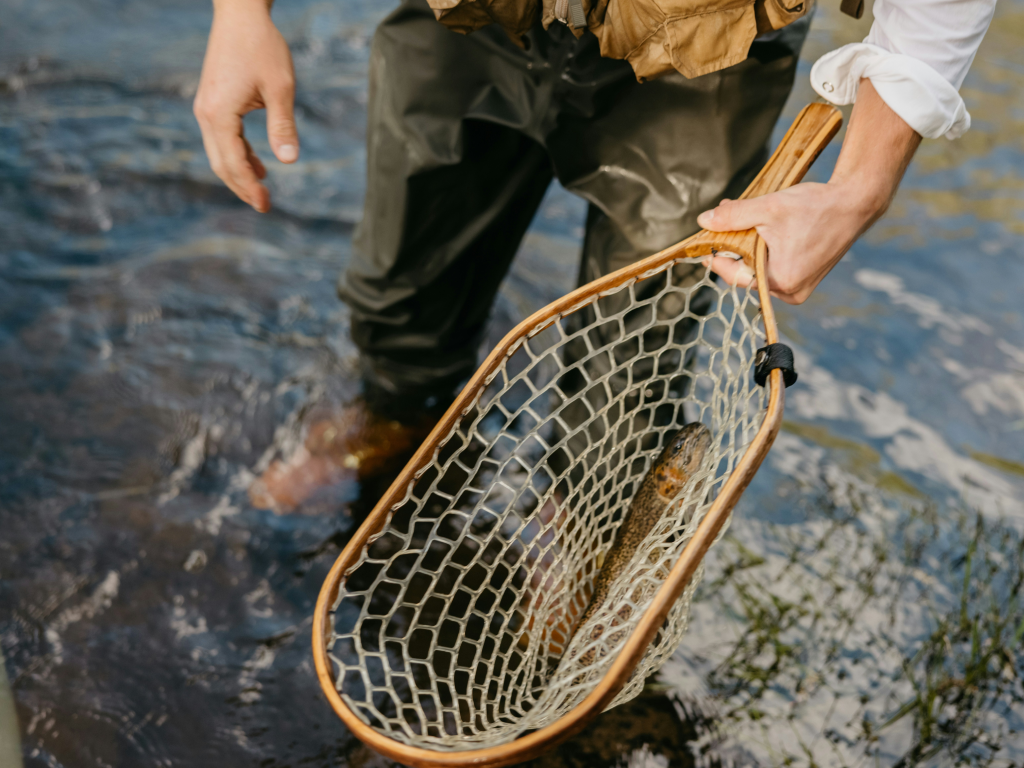
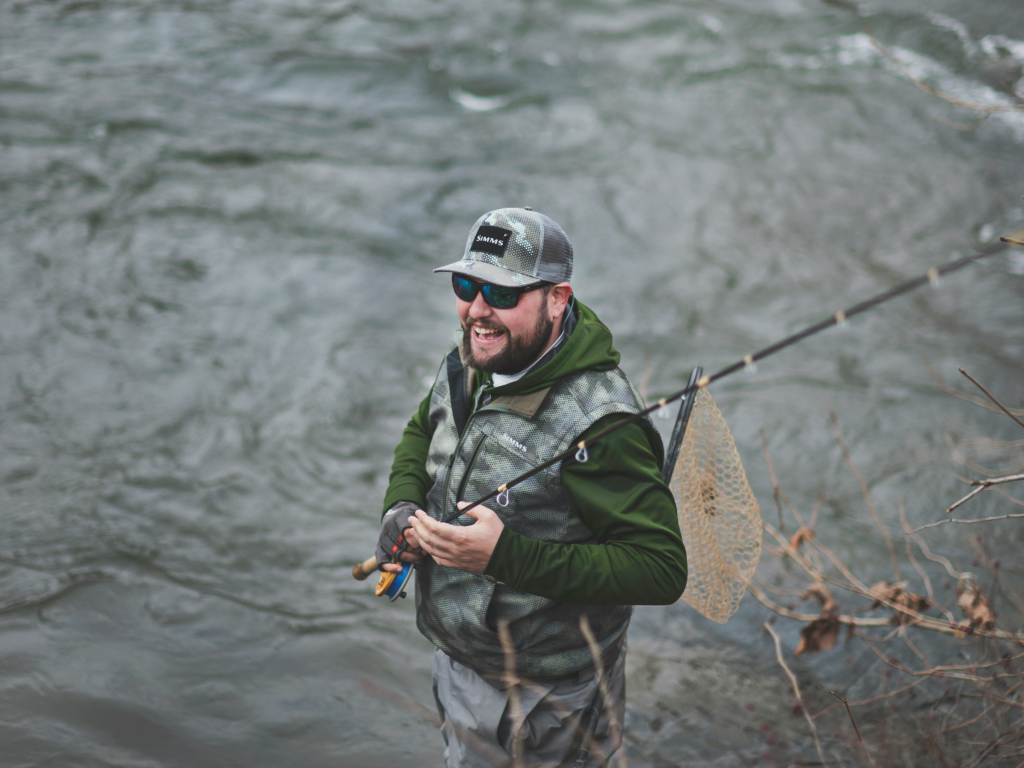
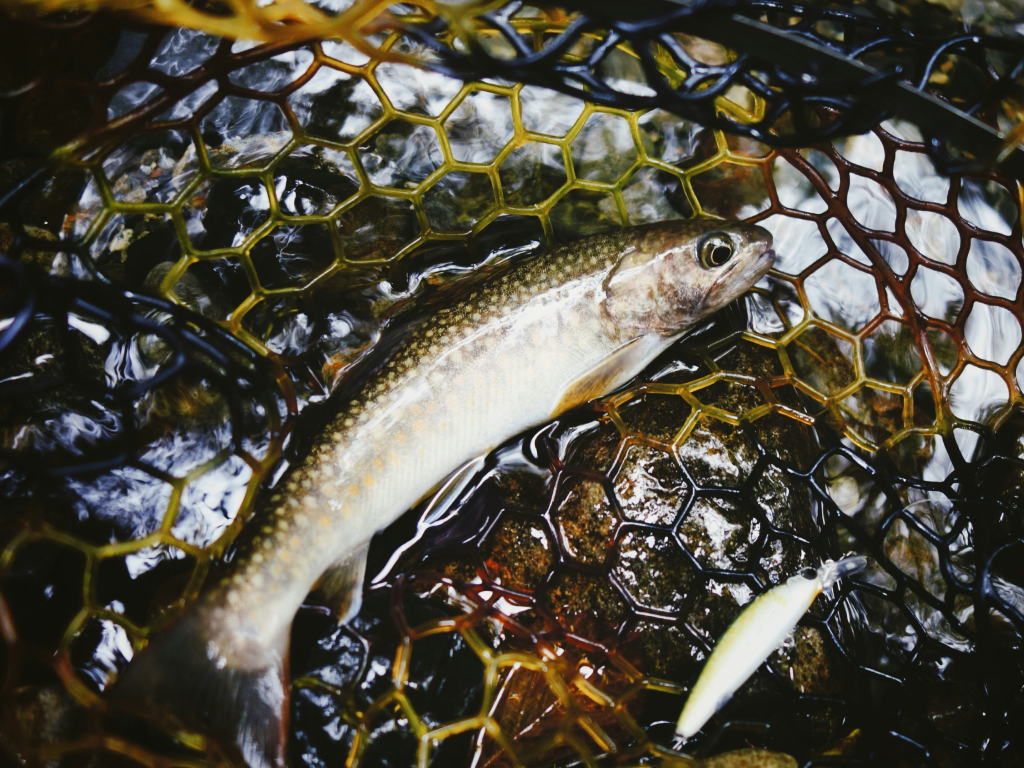
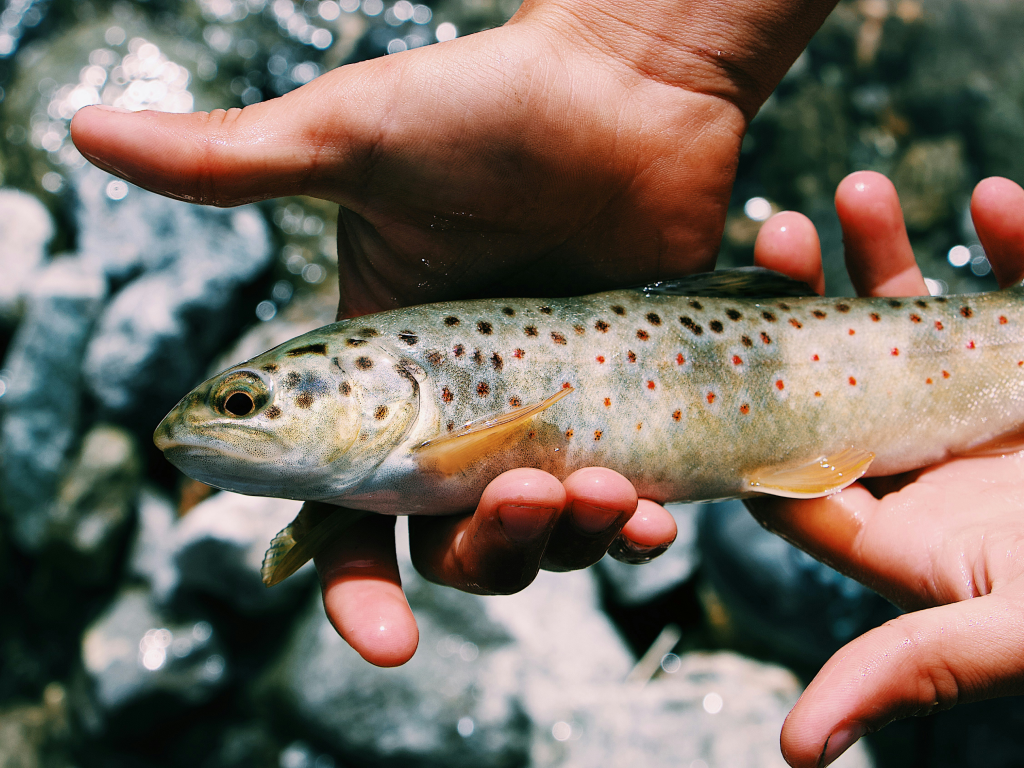
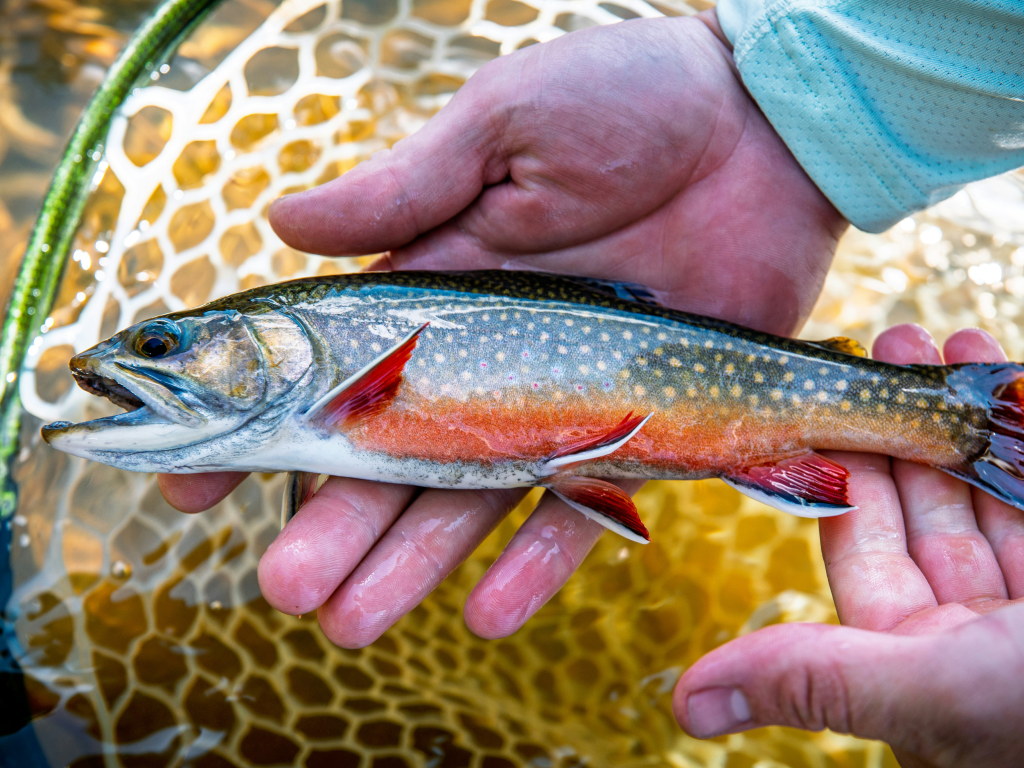
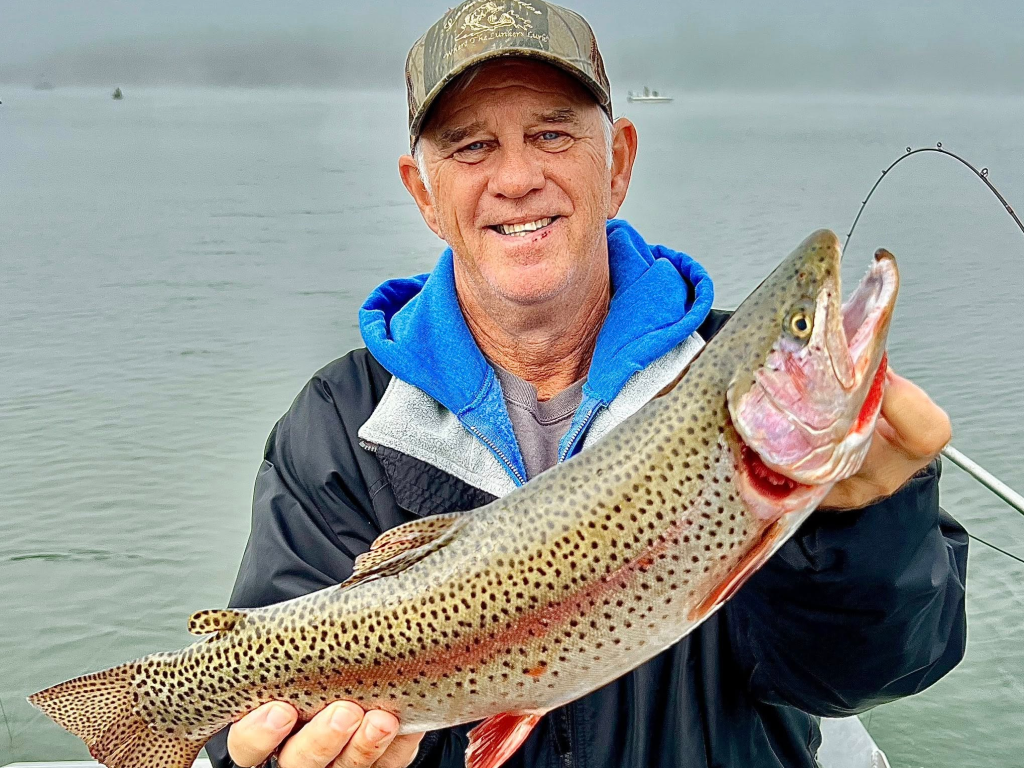
ANGELS CAMP - Fishing for rainbow trout remains great on New Melones Reservoir, according to Kyle Wise at Headhunter SportFishing. “We had another fun day on the lake with Ed and his father from Oregon,” said Wise after a recent trip. “it took a little bit to find fish, but when we did, the bite was on. It was no uncommon to be fighting doubles all afternoon. We use stick baits down to 55’ while trolling at 2.5 mph.” One another fishing adventure, Wise asked, “What do you do on Veterans Day? You take a vet fishing and let him catch monster trout. Ed did that and we had lots of other action, catching limits of bass to fulfill his day.” Now that the lake waters have turned over, the trout fishing along the shoreline in Glory Hole and other areas on the lake should improve. Anglers should toss out PowerBait, nightcrawlers, Kastmasters, spinners and other offerings for the rainbows. The Bureau of Reclamation requires that all boats launching at New Melones Lake participate in a seal program to prevent the spread of the new invasive mussel species, the Golden Mussel, that was found in the Sacramento-San Joaquin Delta. Any boats wishing to launch at New Melones must be left out of the water for 30 days with a documented wire and Red seal attached through the bow eye of their boat and wrapped around their trailer, effectively tying the two together. After 30 days, the boater can return, have their wire/seal cut, and launch. Upon exiting the water, the boat and trailer will once again be banded together, but with a Green seal and wire. This marks the end of their 30-days, and that they can return any day during the hours listed. The seal/wire must remain intact to launch (a New Melones staff member must cut the seal/wire allowing the boater to launch), and any boats found with tampered seals must restart their 30-days. Boaters can stay overnight, but must be off the water by the given time frame to be resealed. Valid seals are applied by staff at open boat launches during the hours of operation. This seal program only works for New Melones Lake. New Melones Lake is not accepting other seals or sealing for other lakes currently. New Melones Lake Marina is decontaminating boats for same day access at a fee. Find more information and make an appointment on their decontamination website, or call (209) 785-3300. Hand-launch vessels such as kayaks, paddleboards, canoes, etc. do not need to participate in the banding process if they are hand operated or use an electric trolling motor. No gas-powered motors allowed. For hand-launch vessels with trailers, the trailer cannot touch the water. Current launch hours are 8 a.m. to 4 p.m. at Glory Hole Point. The Tuttletown ramp is now closed. New Melones is holding 1,632,799 -acre feet of water, 68 percent of capacity and 126 percent of average.
Fish Reports
What's biting across California, newest first.
OROVILLE – Fishing for rainbow trout and king salmon has been tough lately, but the bass are definitely on the bite at Lake Oroville “The jig fishing is definitely off the hook,” reported Tony Mello at Johnson’s Bait and Tackle. “We caught and released quality one spotted bass after another from 8:30 am to 1:30 pm on my most recent trip to Oroville. The fish were all in the 1-1/2 to 3 lb. range. The fish hit best on Keitech jig heads with dark green pumpkin Yamamoto double tail grubs. The A-Rig bite should start soon with the water temperature dropping to 60 degrees.” “On my last trip to Oroville, we ended up with one king, no trout and 8 bass while trolling,” said Rob Reimers of Rustic Rob’s Guide Service. “Most of the spotted bass were fish in the 14 to 16-inch range. We hooked all of the fish while trolling with Brad’s Cut Plugs at 35 to 55 feet deep.” “The rainbow and king fishing should improve once the lake water turns over,” he stated. “The surface water temperature was still in the sixties on the day we went out.” DWR is reminding the public that boat ramps at Lake Oroville are no longer open 24/7. Watercraft must be out of the water by ramp closing time or they will be locked into the facility overnight. Please plan ahead. More details about DWR’s mussel inspection program are available at water.ca.gov/mussels. Watercraft Inspection Location/Decontamination Services, North Thermalito Forebay at Garden Drive and HWY 70 in Oroville. Hours of operation: Daily from 8:30 a.m. to 4:30 p.m. Sealed Vessel Launching at Lake Oroville is available at the Spillway, Bidwell Canyon, Lime Saddle and Loafer Creek/Loafer Point. Lake Oroville is holding 1,776,850-acre feet of water, 52 percent of capacity and 100 percent of average. The lake level is 768.87 feet in elevation.
Pyramid lake has turned over and the surface temperature has dropped almost 10 degrees in a matter of a couple weeks. The lake is still stabilizing and fish are scattered from the surface to the bottom of the lake. The bite has been slowly but surely picking up. Landing 20-40 fish while trolling has been the standard. Shore fishing has also dramatically improved. Shore fishermen have been throwing Sierra Spoons and little Cleo’s as well as large spinners such as Blue Foxes, Mepps , and Panther Martins. Fly fisherman are getting on a good indicator bite using bead head nymphs and balanced leaches as well as stripping streamers and Popcorn Beatles through bait balls. Trolling seems to be the best method right now allowing boaters to cover a lot of water picking away at the Lahontan Cutthroats. Fish are stacking up on structure so working the rocky points is key. Depths vary and we’ve picked up fish long lining on the surface and down to 80’ with downriggers with the most consistent bite at 40’-60’ for fish on the chew. Everyday seems to be different on the lures and colors that are working best. We’ve found Apexes, Sierra Spoons, Lyman’s, Mag Lips , Flatfish, Doctor Spoons and Papa G spoons are all catching fish. Watermelon patterns have been the most consistent as well as tui chub, red dot frog, rainbow trout, gold, and when targeting the deeper fish purples have dominated. Speed has varied as well. Apexes, spoons, Lyman’s, and Mag Lips have been best from 2.6-3.2 mph. Flatfish, Sierra Spoons , and Papa G spoons have done better at 2.0-2.2 mph. The best concentration of fish have been found at Pelican, Spider, and Warrior points on the west side of the lake. Artillery, Anderson bay, and Red bay have been tops on the east side. We have had a lot of bites that take the lure out of the downrigger clip and then nothing is there. What has really improved our hook up rate is when the fish pulls the lure out of the down-rigger clip, Instead of setting the hook, drop the rod tip to the water even let out about 10’ of line and reengage the reel. Over half our fish are getting hooked after the fish has pulled the lure from the clip and keeping the lure in the strike zone as long as you can Report Courtesy of Cory Kellar. Black Beard Worm Company
RIO VISTA – The striper bite for trollers in the Delta has been very slow lately, according to legendary trolling expert Mark Wilson. Mark said he and his friends have been navigating all over the Delta trying to locate the now elusive stripers. Mark said he finally located a few in Montezuma Slough trolling from the “Glass House” to the “Birds Landing” areas, but he and his friends have only been able to get 3 to 6 keepers a trip trolling both deep diving and shallow running P-Line and Yozuri lures. He has heard that those casting swim baits have been doing somewhat better. The areas producing for those casting are Sherman Island and in Broad Slough. Mark believes that it’s just a matter of time before the stripers arrive back in the Delta from San Francisco and San Pablo Bays. The sturgeon catch and release fishery opened again on October 1, 2025. “My cousin Tom and I caught limits of stripers to 7 pounds two days in a row on my last two trips on the Delta,” said Cal Kellogg of fishcalkellogg.com. “We hooked the fish while vertical jigging with P-Line Laser Minnows in chartreuse and silver. We landed our fish at Light 46 on the San Joaquin. The key is to cruise around the fish marks while going up current until you locate biting fish. The fish size is variable; one fish will 14 inches and the next one will be 25 inches.” “The fish are just moving into the system – they have beautiful blue backs. If want to plug, work tule breaks with 4-inch Fish Traps on 3/8-ounce jig heads. You got to be patient. Throw at riprap most on riprap outside of the tules on the San Joaquin,” advised Kellogg. Meanwhile, Captain Mike Funtanilla of Bend Ur Rod Sportfishing said he has been putting his clients on multiple hookups on each trip. Capt. Mike went on to say that he’s been doing well from Pittsburg and the Middle Grounds in 25 feet of water, as well as in 55 to 75 feet of water in the deep-water channel (see the attached photos). Roe continues to be the bait of choice. Capt. Mike has also been soaking grass shrimp on these same trips for stripers, so his customers can enjoy catching a striper as well. If you would like more information about the California Striped Bass Association (CSBA), go to our website (www.striper-csba.org). You will be able to access all the information related to the 4 CSBA Chapters. New members only pay $25, that includes a one-time $5 initiation fee. After the first year of membership the annual dues are only $20. Your membership helps to strengthen our mission to protect striped bass and our fisheries. Some Chapters will give you a free gift just for joining. he Isleton-Delta Chapter gives all new members two free Isleton Chapter decals and a Chapter hat as a thank you for joining our Chapter. Membership forms are available for each Chapter on the website. Just click on your Chapter of choice and go to the membership page, fill out the application, print it and send your application and payment to the address listed on the application. The Isleton Chapter accepts credit cards online on the website for new memberships, membership renewals as well as our chapter’s events. The website also has Chapters’ newsletters, photos, interesting articles, and useful links that will help you plan your next fishing trip.
Lake Tahoe: Most ramps are closed for the winter except Sand Harbor, Pine Forest, and Cave Rock. Mackinaw are holding 50–150 feet deep off the west shore, Cal Neva Hole, and South Lake. Trollers are picking up trout around 100 feet down along shoreline drop-offs. Shore anglers are finding a few fish in the mornings 20–30 feet from shore. Afternoon fishing has been great as the days get shorter. Live bait has been the best for the mackinaw and fish are also found on the west shore near Camp Richardson, trolling and jigging down to 200 feet deep. Report courtesy of Mountain Hardware and Sports, and Tahoe Sportfishing.
TRUCKEE - Donner Lake: Fishing remains solid. Mackinaw are hanging deeper—50 to 150 feet—and responding well to larger plugs and slow-trolled spoons. Shore anglers are connecting with rainbows near China Cove and the west-end ramps using worms, PowerBait, and spinners. Early and late in the day remain best before boat traffic picks up. Boca Reservoir: Fishing remains good, though the boat ramp is now closed. Surface temps are in the 50s, and trout are active near the dam and west-end creek. Kokanee have fully colored and are no longer biting. The reservoir is sitting at roughly 60% capacity. Stampede Reservoir: Trout fishing has been steady. Rainbows and browns are being caught along the north shore during early and late hours with worms, lures, and PowerBait. Trollers are finding suspended fish 40–60 feet down on spoons or Rapalas. Cooler mornings are bringing trout shallower, making early hours most productive. Prosser Creek Reservoir: The reservoir is providing a fun mix of bass and trout. With the boat ramp closed, shore anglers are seeing the best action. The lake is around 60% full with surface temps in the 50s. Bass are holding in coves at about 10 feet, taking plastics, jigs, and crankbaits. Trout anglers near the dam are getting bites with worms, eggs, and PowerBait. While not known for big fish, Prosser continues to offer steady action. Jackson Meadows: The pass creek gate and boat ramp are now closed, limiting access to those willing to make the trek in. Trout anglers fishing near the dam are still finding success with worms, PowerBait, and small spoons.
TRUCKEE - With the rain/snow mix over the last week we did see the river come up and get a bit off color for a short while. As of today, the water has cleared back up and the flows have stabilized. Overall, for this time of year, the flows are incredibly good along the entire system. Just under 300 CFS in Glenshire, around 450 below Boca, 450 in West Reno, and just under 500 at Sparks. It’s very rare to see such consistency along the entire 100+ miles of this river. The colder days have caused temperatures to plummet, making it a little harder to get the fish to move on your fly. This is the time of year where the later starts will be advantageous as things warm up later in the day. This is also the time of year where your fly selection should consist of a few key bugs that remain active during the winter. Stoneflies, worms and eggs are all great attractor nymphs right now, and pairing these larger flies with the small bugs of winter, I.E. baetis and midges, is really all you need to focus on at this time. With the surge of rainwater pushed through the system this week, worms should be top of that list. At these continued low flows, we are strongly encouraging anglers to avoid fishing the Little Truckee River until we see water levels come back up. These over-pressured fish could really use a break from seeing people, especially as the browns attempt to spawn at 48 CFS. With so many other excellent options for fishing right now, we feel strongly that anglers should look elsewhere for the time being.
Check out the new Issue of The Fish Sniffer magazine for November 29, 2025 In this issue of The Fish Sniffer, we are moving from Fall into Winter. Much cooler temperatures, rain and some snow has come to Northern Californial. Trout, salmon, bass, panfish, stripers, catfish and all other species will go on the bite to fatten up for the lean winter ahead. Check out the articles in this issue of The Fish Sniffer, including information on catching 3 different varieties of trout at Lake Amador, the beginning of the great fall season at Eagle Lake and much more. Check out Dan Bachers conservation features with some very good news about the future of salmon fishing in Northern California. Read how to catch more fish and enjoy the wonderful outdoors in Northern California for the season. The golden mussel problem is still impacting boaters all over the state and has caused major boat launch closures and strict new inspection and quarantine rules several lakes in our area. These rules are starting to change, with Lake Pardee and Lake Comanche announcing they will allow outside boats on their waters next year, with banding and inspections in place. Be sure to check out the regulations at any lake you want to fish before you go. All you need to know about fresh and saltwater fishing in Northern California is now available in the new issue of The Fish Sniffer Magazine!
SACRAMENTO — Opponents of the Delta Tunnel project last month celebrated their successful campaign against Newsom’s trailer bill to fast-track the Delta Conveyance Project through the State Legislature, but the zombie project continues to slowly move through other government processes.
Newsom on October 23 announced what he described as “two recent key victories” in his unrelenting political campaign to advance the 43-mile long Delta Tunnel. He cited a court decision reversing a preliminary injunction that was previously blocking pre-construction geotechnical work, along with a California Department of Water Resources (DWR) submission to the Delta Stewardship Council for a “certification of consistency” for the broader project.
He claims the project is a critical infrastructure project to “safeguard California’s water supplies amid a hotter, drier future,” while Tribes, fishing groups, environmental justice organizations, family farmers and elected officials say underground tunnel would devastate imperiled salmon and other fish populations and wreak havoc in communities throughout the Bay-Delta region.
Newsom claimed that these “victories help the Delta Conveyance Project move forward in compliance with the Delta Reform Act” — the state law that creates a regulatory framework to protect both the Sacramento-San Joaquin River Delta ecosystem and a reliable statewide water supply.
“California must quickly complete the Delta Conveyance Project to protect our state’s water supplies,” Newsom gushed. “No piece of infrastructure is more fundamental to our water supply and economic success. This is the most effective strategy to ensure that the state can continue to deliver water for Californians in future hotter, drier, and more extreme conditions. Enough delays, we must quickly move forward to protect Californians’ water supplies, and we look forward to completing this project sooner rather than later.”
However, opponents of the project said the tunnel would do anything but protect the Delta ecosystem and the state’s water supply.
“The Governor’s statement ignores more practical ways to secure California’s water supplies without sacrificing the Delta, namely continuing to maintain our existing levee system,” said Osha Meserve, Counsel for numerous Delta interests in administrative and judicial proceedings.
“The reference to a hotter drier future is particularly ironic, since the Delta Tunnel proposal actually would fail to perform as promised in that climate scenario. With complex challenges like reduced snowpack and a sinking aqueduct, simplistic yet extremely costly big pipe solutions like the Delta Tunnel are not going to cut it.”
In response to Newsom’s boasting about “two key victories,” Roger Mammon, President of California Striped Bass Association, West Delta Chapter, pointed out, “The Governor can tout about overcoming two hurdles for the DCP, but it still remains the most environmentally destructive project ever imposed on our Delta and will have negative affects on all Californians.”
Carolee Krieger, Executive Director of the California Water Impact Network (C-WIN), said the Governor’s claim of “two key victories” for the Delta Tunnel is just “more of the Governor’s smoke and mirrors to cover up the facts.” She noted that the Delta Tunnel has to still go through many steps before it could be ever approved.
Krieger said the proposed “$100 Billion boondoggle tunnel” still has no approved water rights, no authority to issue bonds, and no permit from the State Water Resources Control Board.
“With no water, no money to build and no permit, it sounds like it isn’t even close,” Krieger stated. “This will harm the ratepayers, the area of origin water rights farmers in the Delta and the fish. It’s time to pull the plug on this money sucking waste!”
Frank Egger, President of the North Coast Rivers Alliance, said the claim that the Delta Tunnel will protect Californians’ water is “totally false.”
“The tunnel creates no new water. It further diverts our Northern California rivers south, first to irrigate Westlands Water Districts high plain desert to grow products to export, not feed America, then to drive new development in the Southland. There are real alternatives to meet So Cal’s water needs,” he revealed.
He also noted this the 3rd year of closure for California’s commercial salmon season, due to the collapse of Sacramento and Klamath River fall-run Chinook salmon populations.
“Califonia’s Chinook Salmon are teetering on extinction and commercial fishers are facing bankruptcies. We ran a Statewide Referendum to stop the Peripheral Canal and we can run a Referendum to stop this proposed $20 billion dollar boondoggle,” he concluded.
Gary Bobker, Program Director of Friends of the River, summed up the essential dilemma posed by the project.
“A project that takes more water from the Delta inherently cannot protect the Delta. This project wastes a million taxpayer dollars each day. The Governor needs to move on,” he concluded.
California Chamber files ballot initiative request eviscerating CEQA
In another development regarding the Delta Tunnel, the California Chamber of Commerce on October 21 filed a request for a ballot initiative titled the “Building an Affordable California” initiative, according to the Chamber’s website.
“The Building an Affordable California initiative would streamline the review of essential projects under the California Environmental Quality Act (CEQA). Rather than provide piecemeal exemptions, it would establish reasonable timelines for local and state agencies to review plans and solicit public comment. Timelines would also be established for any necessary judicial review,” the Chamber wrote.
“The initiative would ensure timely decisions are made on proposed essential projects such as housing, improvements to water supply, transportation, energy, and facilities for health and public safety,” the Chamber stated.
In a press release responding to the Chamber’s announcement, Restore the Delta noted that “essential projects’”are defined so broadly that virtually any public, private, or utility infrastructure project could qualify—paving the way for large-scale construction without the environmental review and community protections CEQA provides.
“This is a direct attack on environmental justice communities, Tribal sovereignty, and the ecosystems that sustain our state,” said Morgen Snyder, Director of Policy and Programs at Restore the Delta. “At a time when California residents are on the verge of losing their SNAP benefits and healthcare, framing this initiative as ‘affordable’ is frankly disrespectful. While housing affordability is a real crisis, removing community voices and environmental safeguards for the sake of industry profits is a massive step in the wrong direction.”
Snyder said the proposal follows “a growing wave of legislative efforts to weaken CEQA in the name of speeding up large infrastructure and housing projects—despite the fact that many of these recent streamlining measures have not yet been implemented or evaluated.” If passed, the new initiative would:
• “Eliminate key community and environmental protections, including shortening the timeframe for public comment, which places an undue burden on impacted communities — often with fewer resources — effectively eliminating or severely limiting their ability to provide input and advocate for mitigation of harms.
• “Undermine AB 52 Tribal consultation requirements, replacing them with vague, limited language that weakens tribal sovereignty and confidentiality.
• “Leave mitigation decisions entirely to the lead agency, giving developers and state departments unchecked authority to define their own environmental accountability.”
Notably, the proposed ballot language defines an “essential water project” as one that repairs, replaces, improves, or augments public water systems — or falls under the state’s Water Resilience Portfolio, according to Snyder. Under this definition, the controversial Delta Conveyance Project would almost certainly qualify as an “essential project,” the group said.
That designation would effectively shield the Delta Tunnel from meaningful CEQA review — silencing Delta communities and ignoring the project’s massive environmental and economic consequences. The Delta region supports a $780 million recreation and tourism economy, a $1.5 billion commercial fishing economy, and $5 billion in agricultural production — all of which could be undermined by the project’s disruption of Delta flows and ecosystems,” said Snyder.
The group also took issue with Governor Gavin Newsom’s announcement celebrating new “wins” for the Delta Conveyance Project, including a court decision allowing preliminary geotechnical work to resume and the Department of Water Resources’ submission of a Certification of Consistency with the Delta Plan.
Restore the Delta cautioned that these developments “are not victories for Californians, but rather signals of a deeper pattern of state leadership prioritizing politically connected water agencies over the Delta’s ecological and economic health.”
“The Governor’s framing of the Delta Tunnel as a climate solution is profoundly misleading,” Snyder added. “It will not create new water, it will only reroute it — deepening harm to Delta communities, Tribal resources, and ecosystems that are already at a breaking point. There will be appeals and debate around whether this project is even consistent with the Delta Reform Act’s coequal goals: protecting the Delta and ensuring reliable statewide water supplies.”
Restore the Delta is calling on California’s elected leaders to reject “backroom attempts to gut environmental review and instead focus on truly sustainable, community-driven solutions for water resilience such as investments in regional self-sufficiency, ecosystem restoration, and equitable access to clean water for all Californians.”
I’ll conclude this piece with a question that I’ve posed to state officials at numerous hearings and meetings regarding the Delta: Can you give me one example in U.S. or world history where a project to divert water out of a river or estuary has restored that river or estuary?
Not one Delta Tunnel project proponent has ever been able to answer that question.
Planted at Lakes 4 and 7. Brighter colors doing better, try Fish Thugs in Fire and Ice pattern
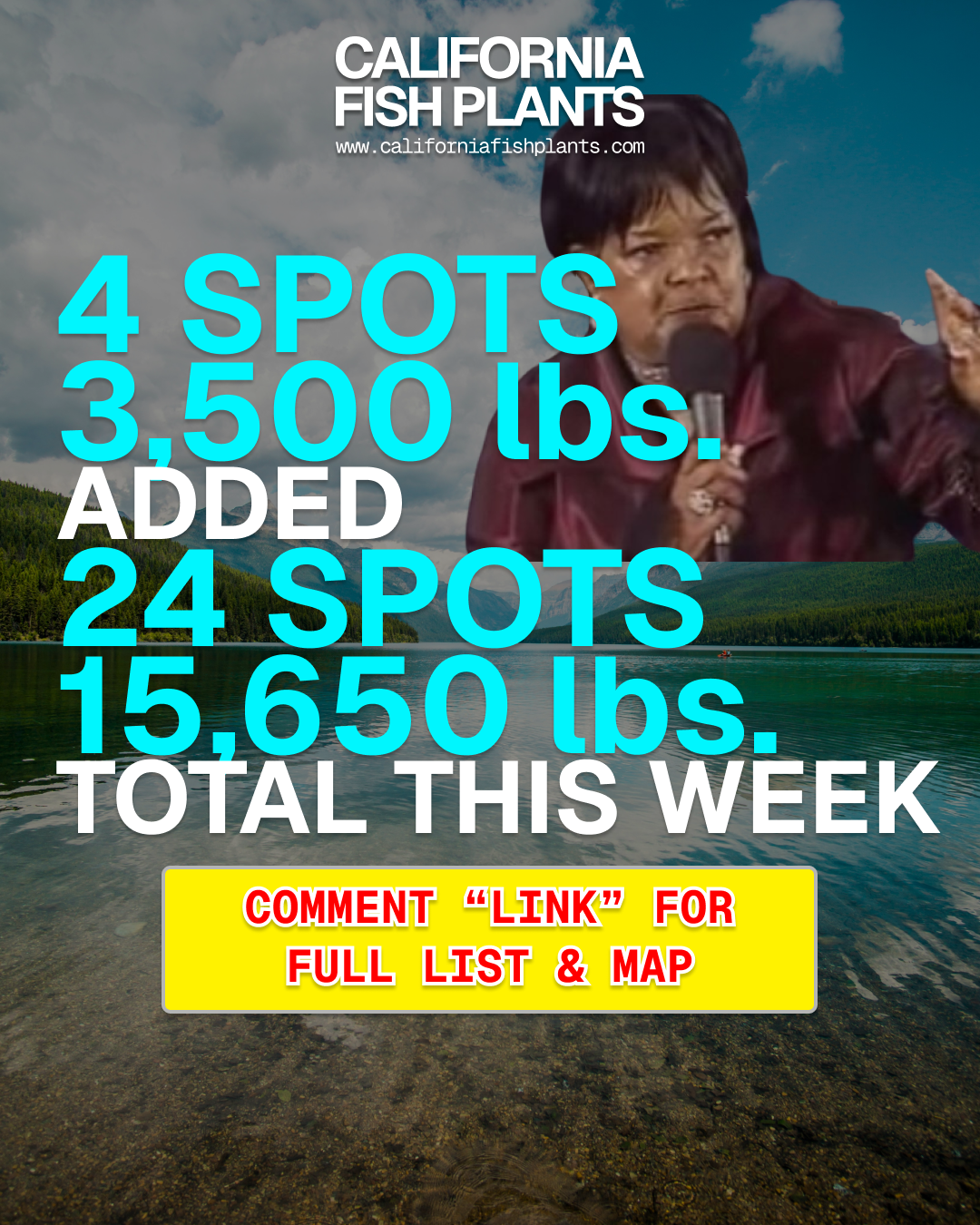
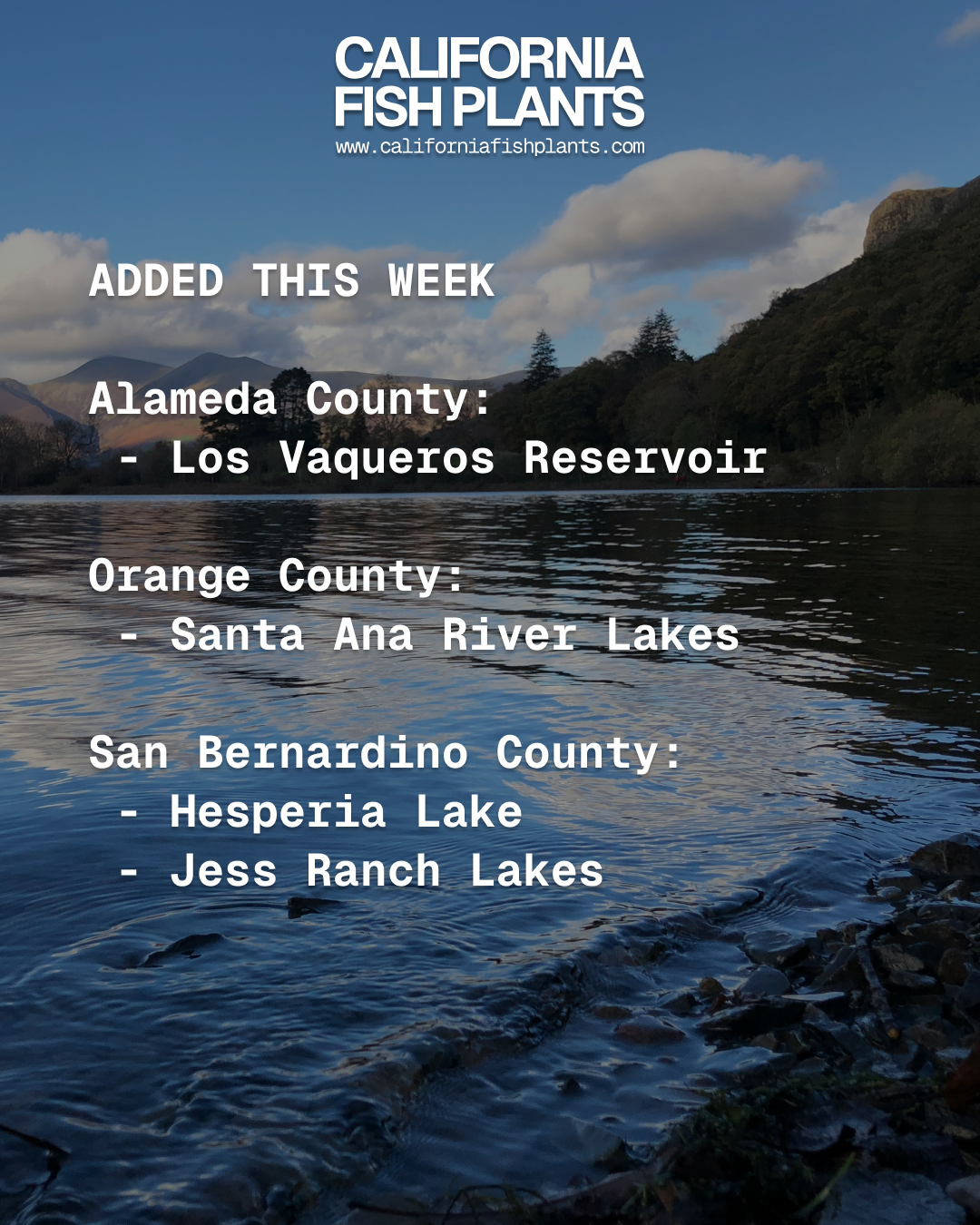
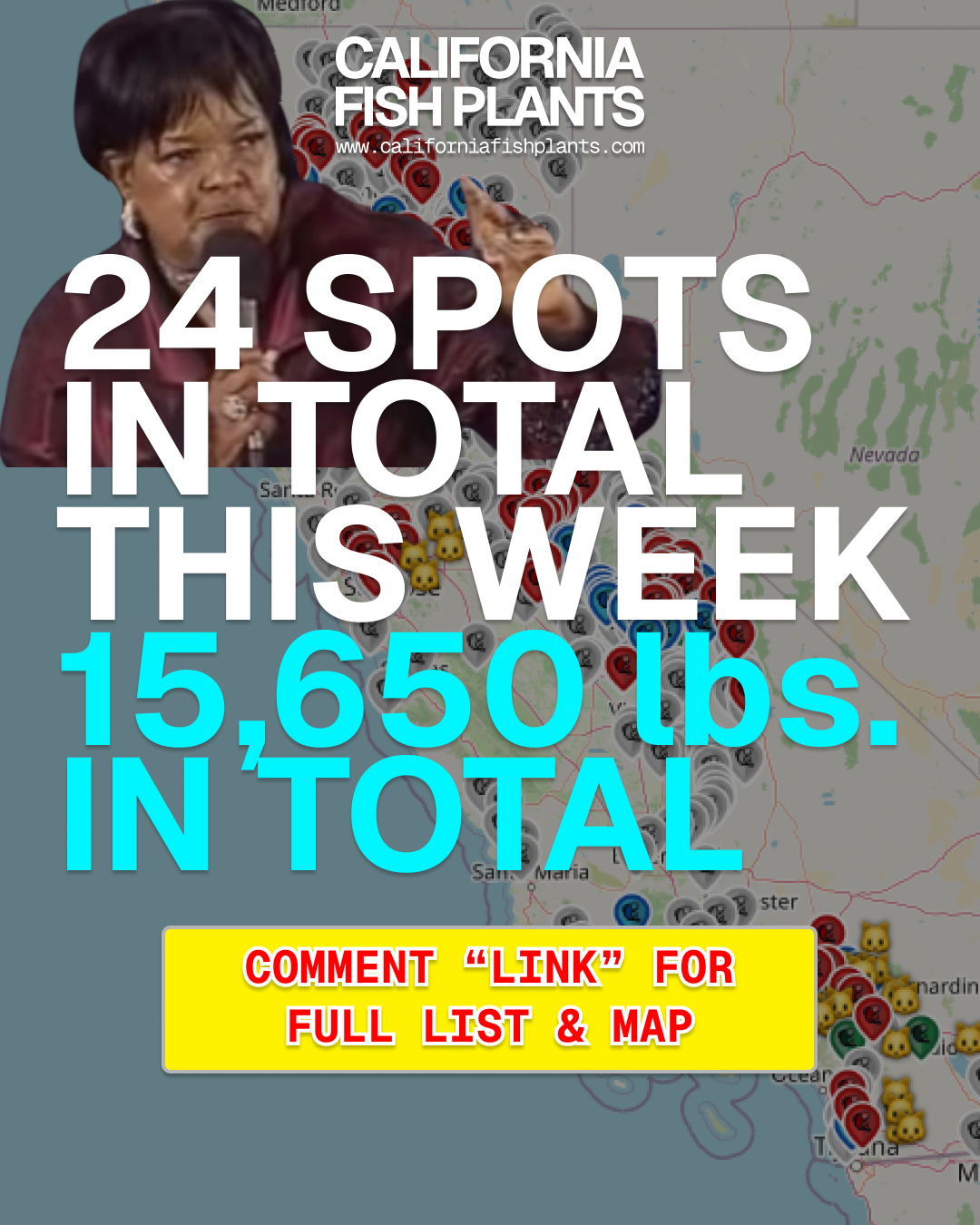
🎣 Mid-week Fish Plants for 11/23/2025 - 11/29/2025 Thanksgiving Fishing, and the trout are biting Hey anglers, here’s your midweek update. 4 additional spots are planting fish, bringing totals to 15,650 lbs. of trout across 24 locations. This week, the early Winter’s chill continues to have trout feeding aggressively across California, and they’re getting closer to the surface. Most spots are open the Friday after Thanksgiving. Check reports and switch colors as water color and sunlight will change freqently this time of year.
Planted at both lakes. Shad patterns workign well, try Fish Thugs in Brown Shad
Planted at both lakes
Pelican Lake
No fishing on plant day
Planted near boat launch. Try fish thugs in yellow along weed lines
Split at both lakes.
Lake closed on Thanksgiving. Minnow and jigs doing best. Try Made Baits beetle color
Los Vaqueros will be open on Thanksgiving. Huge catfish still being caught, try MFW magic patch
Couple of 20 lbers planted. 15 lbers have been caught
🎣 California Fish Plants for 11/23/2025 - 11/29/2025 Trout Are Surfacing Higher Heads up: We are now including extra notes where the fish are biting but don’t have plants this week so you can maximize your trips. Sometimes the best bites are where they just plant. This week, the early Winter’s chill has trout feeding aggressively across California, and they’re getting closer to the surface. This week, the state is planting 12,150 lbs of trout across 20 locations. As always, fresh plants mean hungry fish ready to bite. With unannounced plants included, last week totaled 39,750 lbs of trout across 49 locations. This is THE TIME to get out there.
Bank anglers catching 2-4 lbers on spoons. Trout 10-20’ deep
Action is good along shoreline. Red and black doing best. Try Fish Thugs Smoke Red Flake
Best results from dock or near the ramp.
Trout biting smaller bait fish, try smaller Fish Thugs Fire Ice