DEC 1ST '25 Lake Jennings
Second plant of the season. Lighter patterns along weed lines doing best. Try Fish Thugs in Gravy color


What's biting across California, newest first.
Second plant of the season. Lighter patterns along weed lines doing best. Try Fish Thugs in Gravy color
🎣 California Fish Plants for 11/30/2025 - 12/6/2025 18,650 lbs of Trout, bites are coming in HOT Cool November weather is turning California waters into trout hotspots. This week, California is expected to have 18,650 lbs. of trout planted across 29 locations as we head into December. With unannounced plants, last week saw a revised total of 18,650 lbs. of trout across 25 locations. We’re also restocking on the sold out MADE Baits in a ton of new colors + dropping some new spoons this week. Perfect with a lot of the California waters clearing up. (You want that flicker action with that shine)
Lake will be closed to fishing on Dec 2-4 in prep for derby
Nightcrawlers and Powerbait doing the best
Powerbait dipped in scents doing best. Try soaking in MFW scents before casting. Reset every 15 min.
Trout are biting are smaller brighter minnows. Try Fish Thugs in Dark Melon and Chartreuse
CDFW plant ahead of their private plants
Bite is a bit rough right now
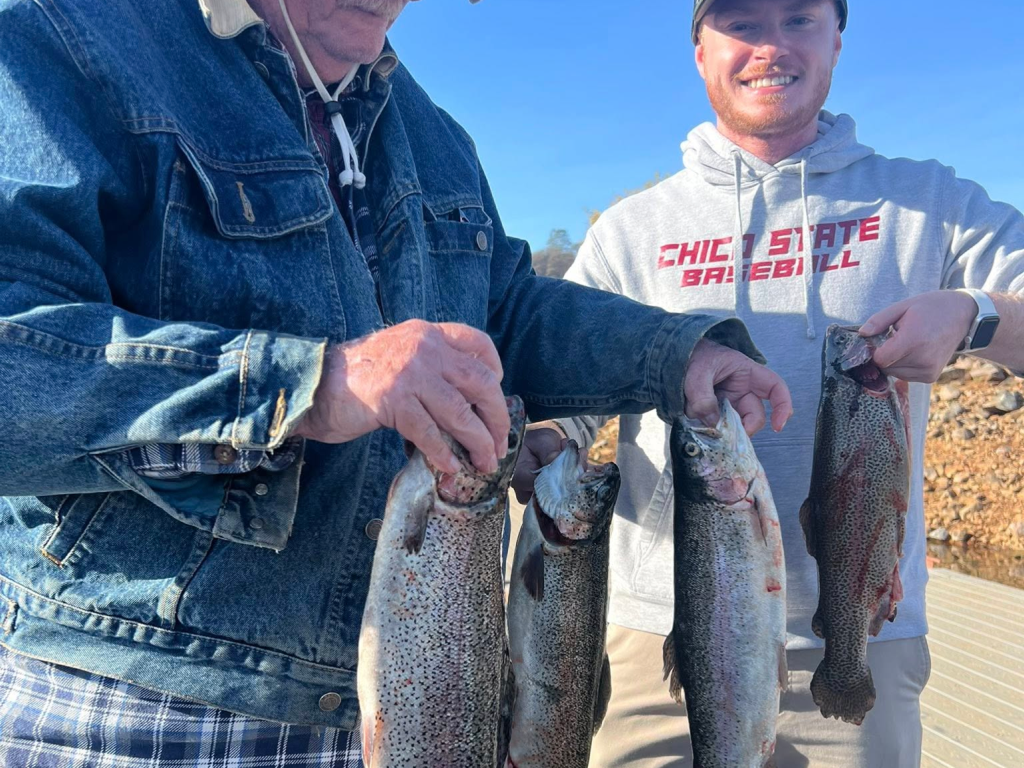
Fishing Collins on 11/25, I was reminded that it ain’t over until it’s over. 2 clients and I spent 6 fruitless hours mostly trolling the lake for exactly nothing. No takedowns, not even a stink eye. We tried spincasting for a bit in along the east shoreline, but that didn’t do any good either. Disappointed and frustrated, we headed back to the launch. But as we were literally tying up to the dock, I noticed one solitary trout, about 3 pounds, cruising near the surface. On a whim, and I almost didn’t do it, I cast a grub I’d been using earlier. And while that particular trout didn’t bite, 5 or 6 others followed my grub back to the dock. And that’s when we all noticed there were even more fish- an entire school of nice, Collins-sized fish. There were even a few lightning trout mixed in. We got the two other spinning rods back out and started tossing. In 20 minutes we had these four rainbow to about 5 lbs, 2 on a copper Mepps spinner and 2 on Power Bait we just tossed in and soaked. The grub got nothing but looks! We would’ve stayed longer and I’m certain we would’ve caught more, but the young guy had borrowed his girlfriend’s car and had to get to work. I have a hunch they’d just done another stocking and maybe these fish hadn’t yet moved away from the dock, but I didn’t see a truck, and nobody was fishing nearby. Craziest end to a morning of fishing I’ve experienced in a while. It was a good lesson to not be afraid to try something completely different, and to never totally give up until the boat’s out of the water and the tie-downs are on!
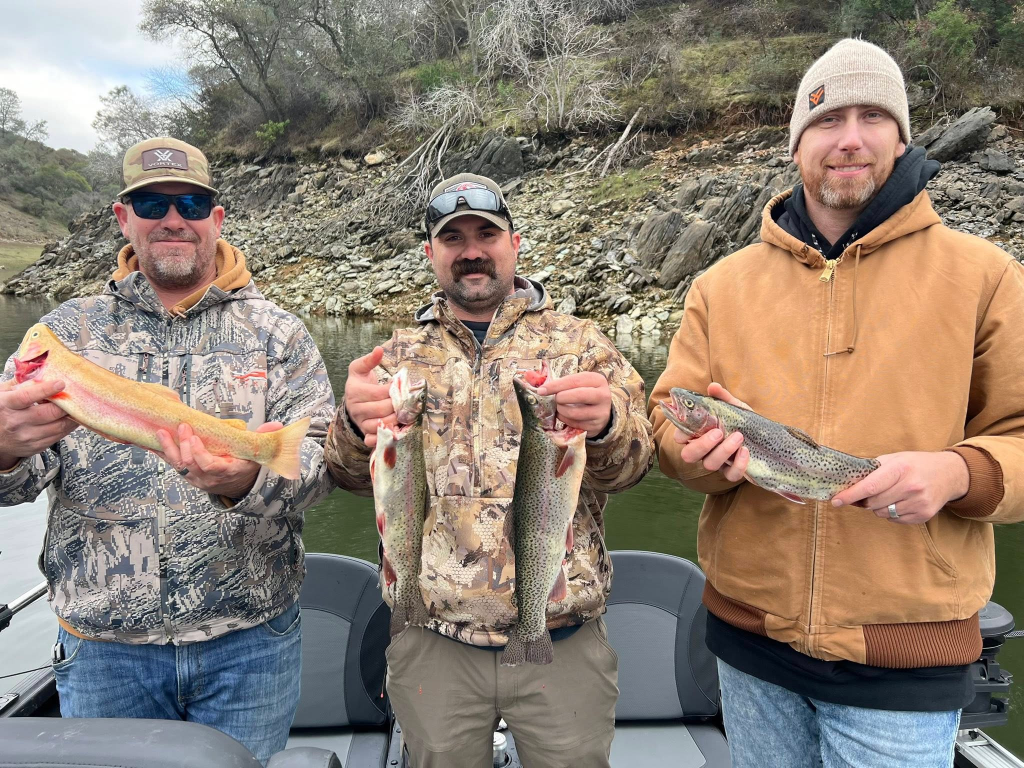
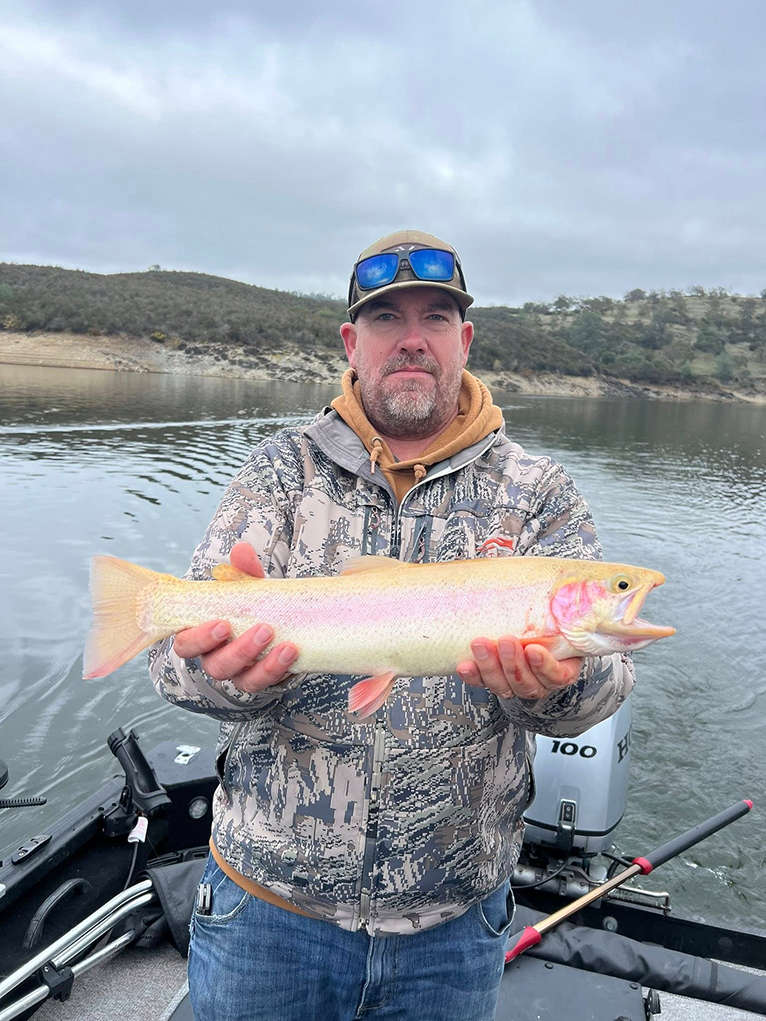
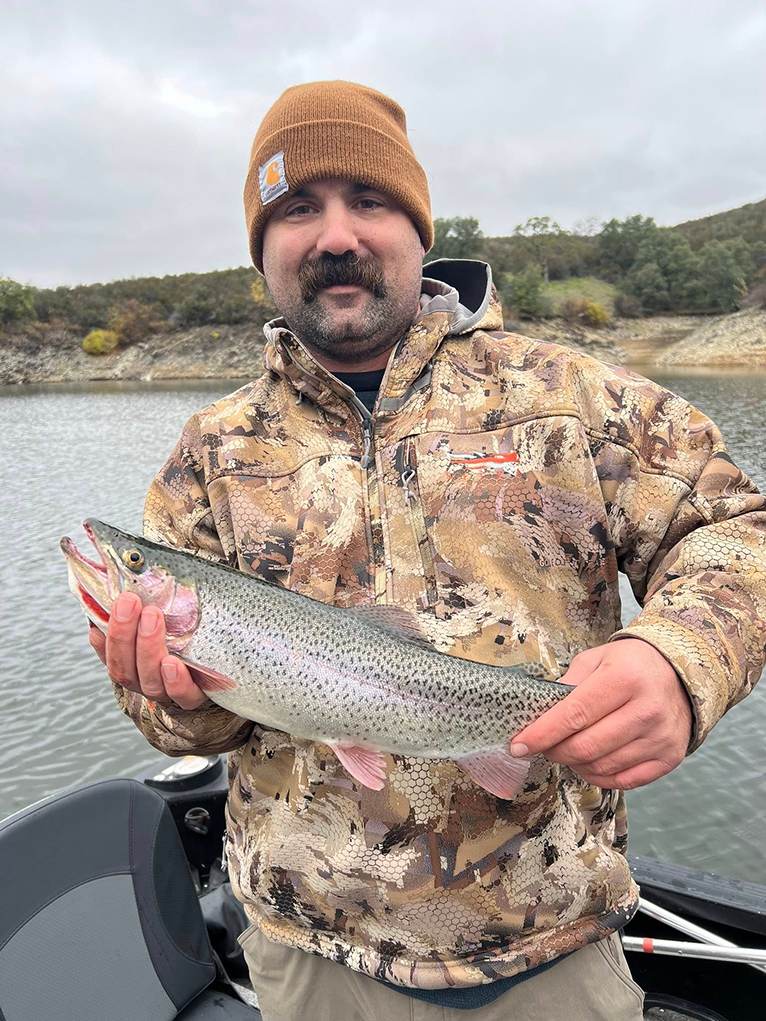
Tom Mailey of Get The Net Fishing Guide Service reported in with solid results from a recent outing on Lake Amador, hooking four out of six trout including a lightning trout and a cutbow hybrid. “4 for 6 at Amador with a lightning trout and a cut bow mixed in. Wasn’t lights out but getting better for sure,” Mailey noted. Anglers trolled at speeds of 2.2 to 2.7 mph, using a mix of lures for top notch results. Two fish hit on a chrome Hot Shot at 15 feet over the side, including a big one lost right at the boat. Two more came on a bright red Speedy Shiner top-lined 175 feet back, while the fourth fell for a frog pattern Speedy at about 15 feet over the side. Three of the four trout struck in front of the Rock Creek arm, with the last coming from the main body. Trout action is clearly on the upswing here. Bundle up and hit the water before the bite heats up even more.
Fishing report by Tom Mailey of Get The Net Fishing Guide Service, in partnership with The Fish Sniffer.
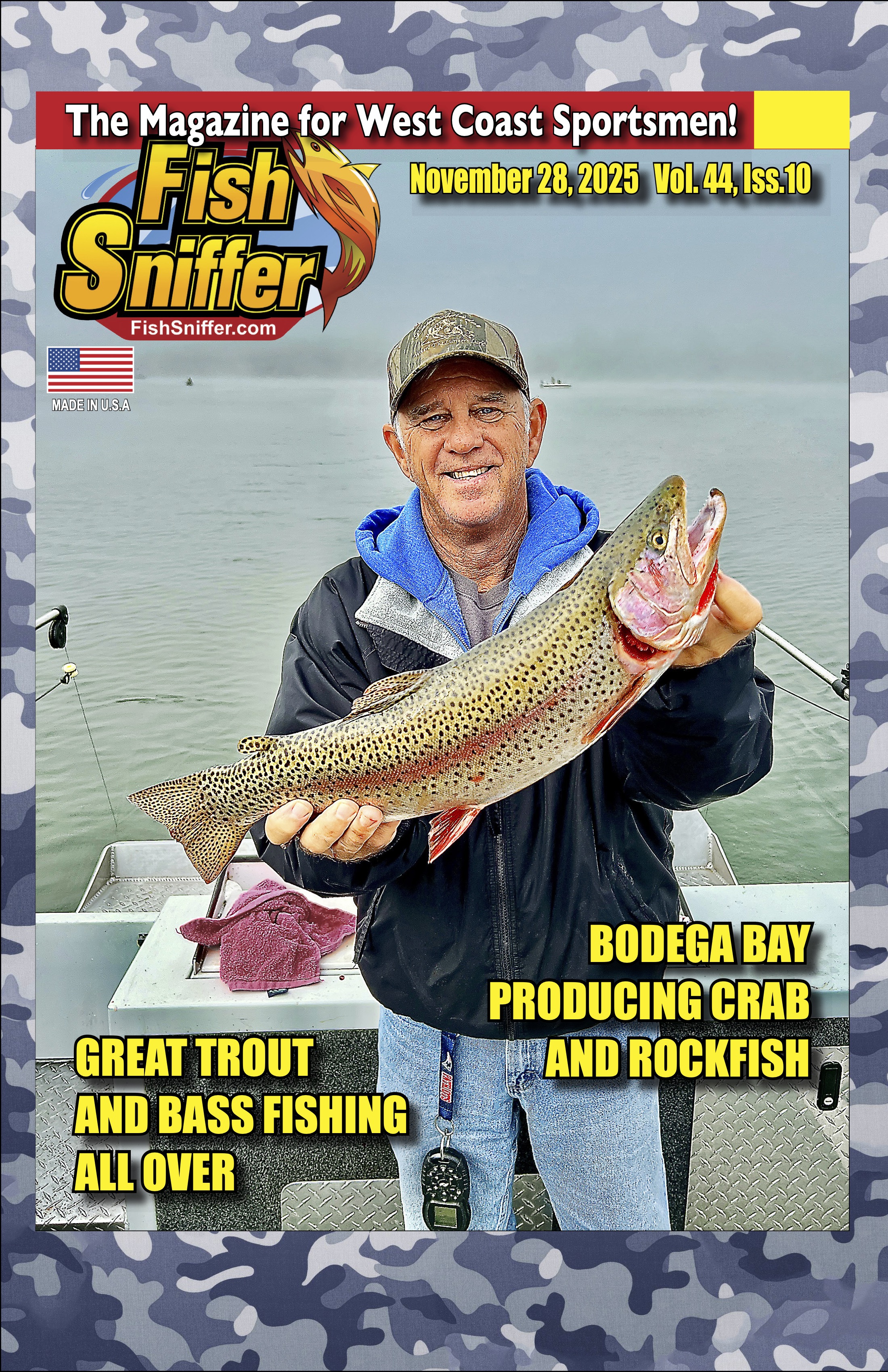
Check out the new Issue of The Fish Sniffer magazine for November 29, 2025 In this issue of The Fish Sniffer, we are moving from Fall into Winter. Much cooler temperatures, rain and some snow has come to Northern Californial. Trout, salmon, bass, panfish, stripers, catfish and all other species will go on the bite to fatten up for the lean winter ahead. Check out the articles in this issue of The Fish Sniffer, including information on catching 3 different varieties of trout at Lake Amador, the beginning of the great fall season at Eagle Lake and much more. Check out Dan Bachers conservation features with some very good news about the future of salmon fishing in Northern California. Read how to catch more fish and enjoy the wonderful outdoors in Northern California for the season. The golden mussel problem is still impacting boaters all over the state and has caused major boat launch closures and strict new inspection and quarantine rules several lakes in our area. These rules are starting to change, with Lake Pardee and Lake Comanche announcing they will allow outside boats on their waters next year, with banding and inspections in place. Be sure to check out the regulations at any lake you want to fish before you go. All you need to know about fresh and saltwater fishing in Northern California is now available in the new issue of The Fish Sniffer Magazine!
BODEGA BAY – The Dungeness crab season is in full swing and anglers have been catching limits of rockfish and limits of crabs on recent crab/rockfish trips aboard the New Sea Angler out of Bodega Bay Sportfishing. On his latest fishing adventure on Nov. 21, Rick Powers reported in with 140 Dungeness crab to 2-1.2 pounds and 140 rockfish for 14 anglers. “The weather conditions were great and we finished with full limits of crabs and rockfish by noon,” Powers noted. The previous trip aboard the New Sea Angler yielded 20 Dungeness crab up to 2.5 pounds. 120 rockfish and 2 lingcod up to 10 pounds. Anglers are using an array of bars, jigs, swimbaits and other lures, tipped with squid strips, to land the lingcod and rockfish. The recreational groundfish regulations in the San Francisco Management Area (from Point Arena to Pigeon Point) are available here: https://nrm.dfg.ca.gov/FileHandler.ashx?DocumentID=185056&inline Willy Vogler at Lawson’s Landing in Dillon Beach shared a report from Kelley Roy about the excellent crab fishing available now in the outer bay. “We dropped nets shallow and deep with both depths getting crab, but the shallow probably did a little better than the deep. There were some nice, very nice jumbos in the mix. We were able to get 3 decent limits - easy day,” Roy stated. The outer bay has been pretty consistent when you can fish it from here. There’s some blank spots and some great spots and a lot of in-between spots. Make sure you put your hoops in a not blank spot before you give them a soak. I have heard that 30 to 50 feet of water has been pretty good,” Roy said.
SAN FRANCISCO – The live bait season is over on San Francisco Bay, so charter boat captains have switched to crab./rockfish combos and crab only trips through the end of the rockfish season on December. “Today we had a crab only charter and it was another fabulous day on the ocean!,” reported Mike Rescino of Lovely Martha Sportfishing on November 21. “We finished up 28 limits of delicious crab.” On a recent crab/rockfish combo, Rescino said, “Today we had lights out fishing catching 27 limits (270) of crab, 27 limits (270) of rockfish and 9 lingcod!.” His previous crab/rockfish combo also yielded top-notch results. “Today we had a private combo trip and finished up with 18 limits (180) of tasty crab and limits (180) of rockfish along with 8 lingcod,” Rescino stated. Captain James Smith of California Dawn Sportfishing also reported stellar crab/rockfish combo action outside of the Golden Gate. “We experienced lights out fishing and crabbing today. Both boats checked in with limits of crab and rockfish,” said Smith on November 21. “The final count aboard the California Dawn 2 was 27 limits of rockfish (270) and 27 limits of crab (270). The final count on the California Dawn 1 was 21 limits of rockfish (210) and 25 limits of Dungeness crab (250).”
MONTEREY - Charter boat trips out of Chris’ Fishing continue to produce full limits of rockfish, along with some hefty lingcod. The Checkmate checked in from a trip on November 21 with limits (110) rockfish and 6 lingcod for 11 passengers. The boat ended up on the previous trip with limits (120) of rockfish and 6 lingcod, reported Chris’ Fishing. A previous fishing adventure aboard the Caroline yielded limits of rockfish (130) and 6 lingcod for 13 fishermen. Anglers are using shrimp flies baited with squid strips, jigs, bars, swimbaits and other offerings to nail the bottomfish. Anglers out of Santa Cruz are concentrating on Dungeness crab and rockfish. “There were some nice crab caught today in 110-130 feet of water,” said Todd Fraser of Bayside Marine on November 21. “The deep water rock fishing was good. The wind was not bad, but the swell is building.” “The wind was not as bad as expected,” he reported on November 20. “There were some calm periods and anglers caught crab and rockfish. The lingcod were on the bite near the inshore rock piles.” Recreational fishing regulations allow take of rockfish, cabezon, greenling and lingcod in all depths for state waters in the Northern, Mendocino, San Francisco, and Central Groundfish Management Areas through December 31, 2025: https://wildlife.ca.gov/Fishing/Ocean/Regulations/Groundfish-Summary
IONE - The Lake Amador management is now releasing loads of trout every week from their on-site hatchery and fishing is perking up. “We released 1000 lbs. yesterday, half at the Dam and half down closer to the spillway,” said Lee Lockhart at the Lake Amador Resort. “The lake came up 4 feet so far and the clarity is amazing! Powerbait seems to be the best choice from shore and trollers are doing well with slower moving lures. Trout should be a bit shallower now after the rain; the top 15’ should be the most productive.” The lake level is now 22’ from full, the surface water temperature is 59 degrees and the water clarity is 10’. “We released 1000 lbs. of Cuts and Golds today, over half right in the middle of the Dam and the rest closer to the spillway,” said Lockhart on his previous report. “Most anglers are saying fish are running all different depths with most in the 10-20’ range for morning and 15-30’ after noon.” Robbie Dunham of Koke Machine Guide Service reported 7 trout up to 4 pounds landed on his most recent trip to Amador. He used Speedy Shiner lures at 10’ to 30’ from the dam to Jackson Creek. Successful anglers include Walter Villalobos, who landed four scrappy trout while fishing from the launch ramp area. Jesus, Rob, Edson, and Angel all put together a nice stringer of five trout using worms, spoons, and jigs from the corner of the Dam. Finally, Isaac, Jesse, Matt, and Jack went out by boat and caught 5 trout in Cat Cove while using pink, white, and copper colored flies.

SACRAMENTO - If you like to catch big, bold rainbow trout or black bass, now’s the time to hit the waters of Lake Berryessa. Just ask Nate Kelxh of Big Nate’s Guide Service. “Today I had returning clients Pastor Sean, Gil, and Parjeet out in Berryessa and they absolutely hammered them,” said Kelsch after a recent trip to the reservoir. “ I spoke with Sean yesterday. as the weather forecast wasn’t looking good, and he opted to go for it ‘No matter what’ so I devised a game plan for the storm and in.” “To no one’s surprise, we were the only boat on the lake as the wind was blowing, the rain was coming down, and there we were right in the middle of it,” he explained. “Time to knuckle down and get on the fish!!! Good thing we went because it was lights out fishing. My crew scored three big limits of beautiful rainbow trout and 1 extra for me) 3 bass, a slab crappie, and a monster Sacramento pike minnow before lunch. We even landed all four fish during quadruple hook-up.” “If you aren’t running the Trigger Spoon, Trigger Spoon Jrs and Optomizer Jrs from my Catch America fall/winter packages, you are definitely missing out on what you should be catching,” he continued. “Today we ran all of them as well as some stick baits smothered in Chrome Killer Scent from 16 ft down to 60 ft and had success at all depths. Speeds were between 2.4 and 3.1mph.” After another trip, Kelsch reported, “This morning I had Bob, Christine and Kevin out on Berryessa for some more red hot huge Eagle Lake trout action and this group absolutely crushed them. They scored limits by 10:30 a.m. It was hard for me to keep all the rods in the water!” “We had fish flying out of the water from 40 ft down to 3 ft in the air, Trigger spoon Jrs, Trigger spoons and stick baits led the charge from 15 ft to 45 ft, again smothered in Chrome Killer Scent on the new Big Nate’s Trolling Rods.,” he concluded. The spoon bite for largemouth, spotted and smallmouth bass is going strong at Lake Berryessa. Don Paganelli of Paganelli’s Bass Fishing reported catching and releasing between 20 and 25 bass while using Blade Runner Spoons at Berryessa on a recent trip. “We even caught some trout while spooning at 40 to 50 feet on the main body of the lake. The fish were2 all nice and fat feeding on shad. We had lots of hits and misses, but that’s spooning. Get out while it lasts,” he urged. On his latest fishing adventure, Paganelli reported, “Lake Berryessa smallmouth bass along with spotted and largemouth bass joined the party for some spooning action. Fish are showing from 40 to 50 feet and are still feeding on shad. We moved around a lot on this day trying to locate better fish.” Reclamation now requires all boats launching at Lake Berryessa to participate in a seal program to prevent the spread of invasive golden mussels. All vessels wishing to launch at Lake Berryessa will be inspected, according to the Bureau of Reclamation: A red quarantine seal will be applied for 30 days during which the vessel will not be permitted to launch. Vessels that have finished the 30-day quarantine may return to the lake and have the seal removed by authorized staff and will be allowed to launch. For questions about this new protocol and vessel decontamination, contact BOR-Berryessa@usbr.gov. Lake Berryessa is holding 1,358,787-acre feet of water, 85 percent of capacity and 118 percent of average.
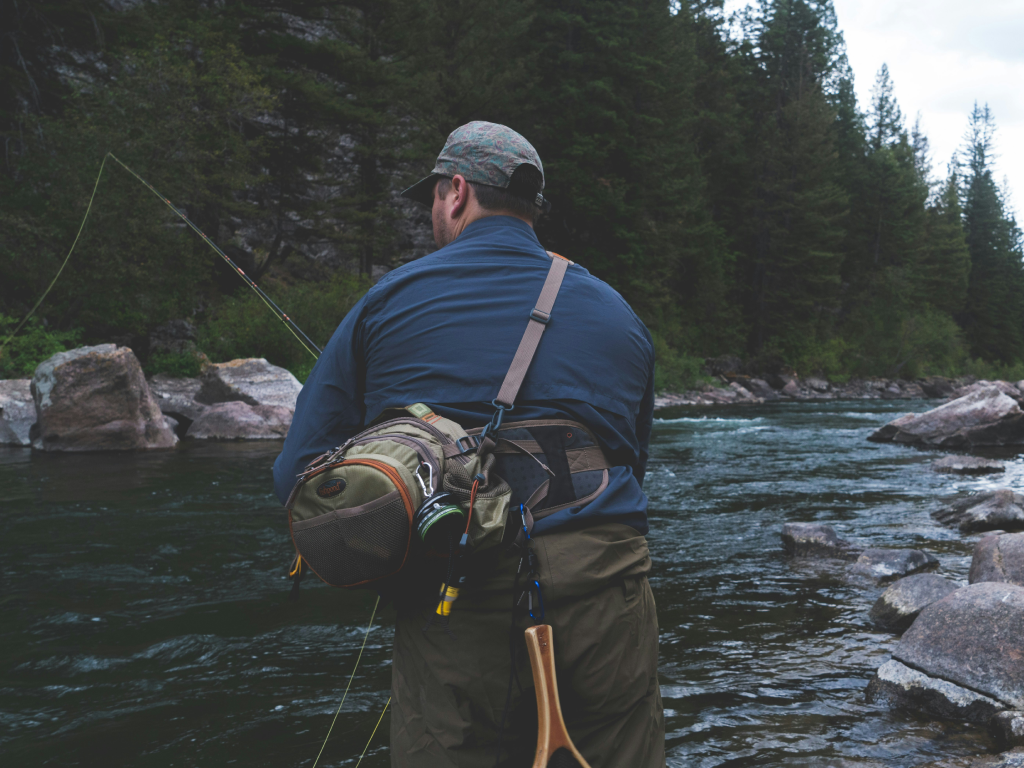
BURSON – Fall fish plants have started at Lake Camanche, resulting in increasing catches in the lake and the South Shore Pond. The boat ramps at Camanche remain closed through the end of 2025 for launching outside water craft, although shore fishing, mussel-free rental boats, and camping are still available. The first plant of 3,000 pounds of rainbow trout took place on Nov. 7. Mt. Lassen stocked 1,000 pounds at the South Shore Pond, 1,000 pounds at the South Shore Ramp and 1,000 pounds at the North Shore Ramp. The next load of 2,000 pounds of rainbows, including 1,000 pounds of rainbows at the South Shore Ramp and 1,000 pounds at the South Shore Pond, went in on November 13. That was followed by another plant on November 20. That load included 1,000 pounds of rainbow trout in the South Shore Pond, 250 pounds of lightning trout in the South Shore Pond, 1,000 pounds of rainbow trout at the South Shore Ramp and 1,000 pounds of rainbow trout at the North Shore Ramp. Lake Camanche is holding 300,810 acre feet of water, 122 percent of average. Due to the spread of the golden mussel recently discovered in Northern California, the East Bay Municipal Utility District (EBMUD) will keep boat launches closed to private vessels for the 2025 season. “This decision eliminates one of the primary ways that mussels spread, helping EBMUD keep its commitment to protect the environment and the public water system on behalf of its 1.4 million customers in the East Bay,” the agency said in a press release.
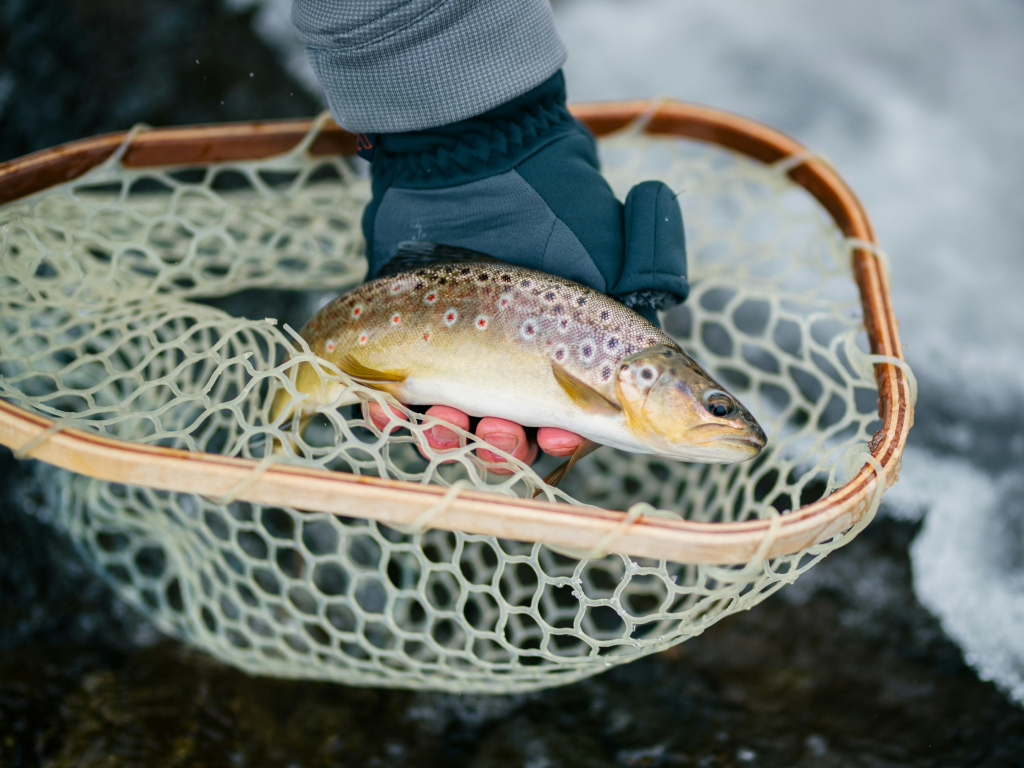
OREGON HOUSE – With 5000 lbs. of trout already planted in October and an additional truck for each week scheduled until May, fall fishing at Collins Lake is really taking off. The lake is 34 ft below spill with a surface temperature of 58 degrees. We’ve had a good mix of cool and warm days punctuated by a few of wind and rain. Most days however have been very pleasant either on shore or in a boat. In Mid-October Jeff Ensley caught a 17-pound monster catfish up along the inlet fishing with Yellow Garlic Marshmallows. He wasn’t the only one with a “late summer.’ Everett Buchter caught a 7.5 lb. catfish up in the channel using frozen shad. Get catches there! Let’s see who will pull up a catfish in November! Trent was pretty excited for the first fall 2025 plants, catching a limit including a big lightning trout. Along with his friends Elijah and Garrett they managed to bring in a triple limit for the day- and all big fish! Trout had been pretty deep but we’ve had more than a few reports of improving shallow and even top water conditions. Jeff and Laurie caught eight trout fishing the topwaters, including a big lightning trout and a trophy rainbow. Local guide “Angling Wes” Wes Ward has had good success, especially using small spoons down about 15′ in otherwise fairly shallow water. Lots of fish have been caught on pink, but as he says “that will change as the weather rolls through.” as the lake has cooled. The trout are definitely migrating further from the lake center and closer to the shore. “The rainy and windy days have been producing the best fishing,” said Kellogg. “My latest trip to Collins produced limits of trout for 3 anglers. The top five fish weighed a total of 17 pounds. There are a lot of 3 to 4 lb. fish, including holdovers from last year, holding at the mouth of the Narrows and in front of the marina on the east side of the lake.” Th best trolling depths are from 1 to 10 feet deep. “We’re doing best using cold steel #5 floating Rapalas, orange Trout Trix Minnows and orange Metalheads at speeds of 1.8 to 2.2 mph. We are also running small sideplaners, trolled at 20 to 30 feet back from the boat,” Kellogg tipped. Fall is a beautiful time of year at Collins and there’s LOTS of mid-week camping availability, including cabins, so if you’re looking for a quieter trip to the California Foothills than you could ever find in summer, or if you want to try your hand fishing a well-stocked Northern California lake head on up our way.
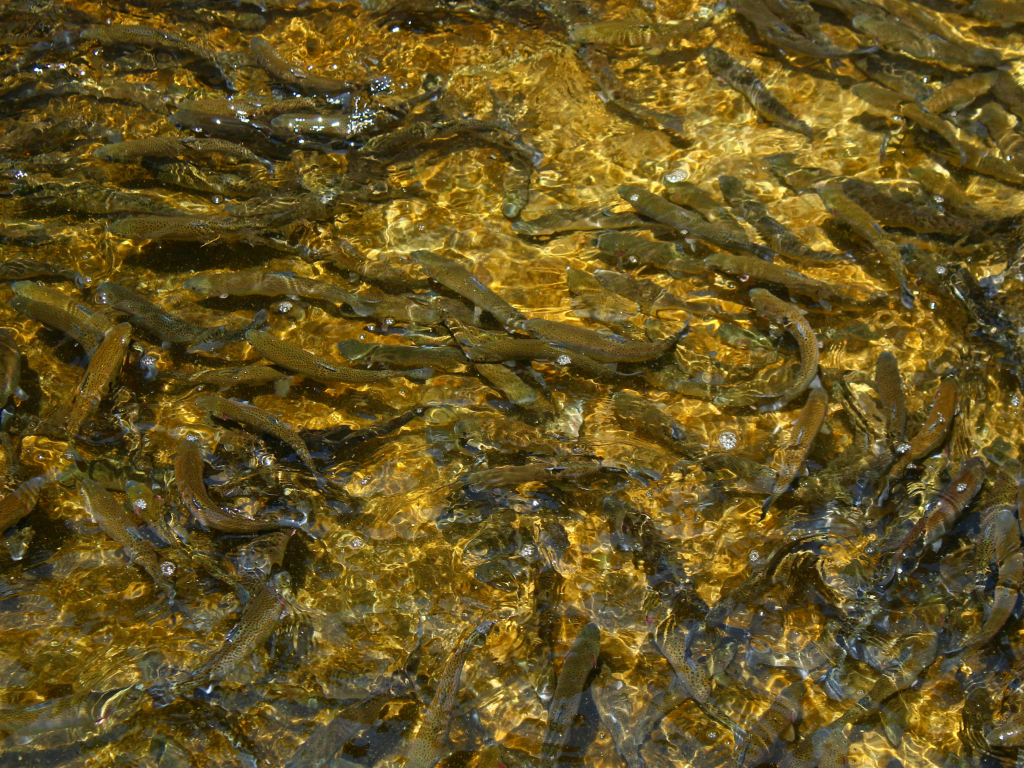
ALAMEDA COUNTY – The season is here, and it’s time to celebrate, the lightning trout arrived this week, and just in time for the upcoming holiday. Mt. Lassen Farms and the East Bay Regional Parks District have a relationship that spans the years. Over those years East Bay anglers have come to appreciate the consistency and the quality of their trout and while these fish are superb, the lightning trout are truly special. This week lakes Chabot, Temescal, Contra Loma, and Quarry received 1,000 pounds with 250 pounds of trophy lightning trout. Trout over 5-pounds are considered of trophy size, but when these fish show up, they are often larger. First developed in West Virginia and introduced to anglers in 1954. This strain was the result of crossbreeding Rainbow Trout with West Virginia Golden Trout. Due to their popularity, they eventually made their way West and eventually became popular as a sport fish in the mid 1960’s. A variant of these fish were planted in Bay Area lakes until the late-90’s but the program dropped off until 2019 when the fish were once again added to the EBRPD fish plant schedule. Lightning Trout can be easily identified by their deep golden yellow bodies, pink or reddish highlights on the lower fin tips and gill plates and a bold bright red lateral line. Aside from their unique coloration, these fish are identical to other Mt. Lassen Farm raised rainbows and possess the same beautiful red-pink meat that we have all come to appreciate. Lightning Trout can be caught using the same methods that work for other trout. Light line with a slide sinker rig with power bait, or tube jigs, spinners, or micro spoons all work. These fish are easy to spot by both anglers and predators, so they quickly learn what to avoid and how to stay unhooked. It is not uncommon to see a half dozen bank anglers all casting for the same solitary trout cruising back and forth along the shoreline just out of reach or even worse, oblivious to anything and everything thrown at it. Lake Temescal – Received 1,000 pounds including 250 pounds of lightning trout. The water is dirty following the rain and action was mixed. There were plenty of bows taken but the lightning were a bit tight lipped and only a few hit the beach. Lures in orange, red or black got the most action and should produce until the water clears. The next several days and the weekend should be very good. The fish are spread throughout the lake and most spots along the shoreline should be productive. There is construction ongoing on the Broadway side of the lake and parking may get tight. Lake Chabot – Received another 1,000 pounds including 250 pounds of lightning but action was mixed. It was tough fishing and will probably take a couple of days for the fish to settle. The lake is in good condition with some stain. With the light stain, try lighter or natural-colored lures. Over the next several days, conditions should improve and brighter colors may become more productive. PowerBait is always a good go-to but keep your gear light. The next several days and through the weekend should be very good. Contra Loma – Received the first 1,000-pound trout plant of the season last week and received another 1,000 pounds including 250 pounds of lightning this week. Several anglers have commented that the lake is actually fishing better than I had previously reported and the combination of recent plants should kick lake action into high gear. The shoreline weeds are still thick, but if you can get out beyond them you should be able to get into the fish. The rock area near the dam, the points at Quail Cove, and the docks should all be good and the lake should fish well over the next several days and through the weekend. The water is only slightly stained. Bright, white- and natural- colored baits should work. If you find stained water switch to chartreuse, red, orange and black. PowerBait is always a good go-to! Quarry Lakes – Bass, cats, bows and gold! Quarry has been fishing very well all season, and this week has been even better. The lake has received several plants including another 1,000 pounds of bows and a load of trophy lightning. There was a scheduled DFG plant on the books, but I haven’t been able to confirm that they were delivered. Lake conditions remain only slightly challenging with some weeds along the shoreline and in particular, heavy weeds in the cove. The peninsula, the outside of the weed bed in the cove and the row are all fishing well. Anglers fishing on the outside edge of the weeds in the cove are targeting fish holding under the weeds and schooling along the dock. The water is slightly stained along the shoreline, and most colors should work. There have been several bass taken, plenty of bows and even some cats. The lake should fish well for the next several days and through the weekend. Lake del Valle – Lake del Valle received a double plant last week but no plants this week. Despite the break, action remains very good. The entire shoreline from the downed tree at the narrows, along the East Swim beach and beyond is holding fish. There are pockets of weeds throughout and if the fish aren’t cruising the open water, they are holding under the weeds. The DFG’s are super aggressive, and most spoons or jigs are taking fish. The Lassens have been equally aggressive, but jigs have been their preferred bait. The water is stained after the rain but bright colors are working when the sun is out, and darker patterns once the clouds move in. For spoons, red, black and red, yellow and chartreuse, blue, blue-green, and white have all been very good. Try jigs patterns in grasshopper, watermelon, pumpkin, pink and pink-white. Powerbait in chartreuse, pink or rainbow can also be a good selection. The fish are cruising close to the shoreline and short casts will generally keep you in the zone. Smallmouth action remains fair. There have been a few bass reported but these have been smaller fish. There have been striper boils following the plants, but the bite has been poor. Shadow Cliffs – Received a double plant last week but no plants this week. Despite the break, trout action remains very good. There has been little change in lake conditions. Some of the shoreline weeds are dying off, but it’s still best to fish from the docks or the point adjacent to the ramp to get out beyond them. The lake is just slightly stained. Black is a good starting color for jigs, but yellow, or yellow-white are generally productive. If you’re new to fishing or just want to buff up on some of your skills, check out the East Bay Regional Parks schedule of basic and intermediate hands-on fishing seminars including: -Trout basics, Friday December 5 at Chabot. -Trout intermediate, Saturday December 6 at Contra Loma, and Friday December 12 at Chabot. Registration is required and classes do have a small charge, but all gear is provided. Check out their web site at: https://www.ebparks.org/calendar. Key word “fishing.” There are also plenty of Volunteer Opportunities, that are a good way to get deeper into park operations, clean up your local park, lake or shoreline. For teens looking for community service opportunities, or if you want to provide your own service proposal for consideration, check out the EBRPD Volunteer web site at: https://apply.ebparks.org/custom/501/opp_search. NOTICE: Golden Mussels have been detected in Contra Loma Reservoir! Due to the detection of Golden Mussels in Contra Loma, know that if you launch your boat in Contra Loma, your boat will be quarantined for 30 days from other lakes. There are additional boat inspections at Del Valle, Shadow Cliffs, Lake Chabot and Quarry Lakes. Prior to launching on any water body: clean, drain, and dry your vessel. Boat bands will only be honored from the Lake they were issued. KNOW BEFORE YOU GO, visit the Invasive Mussels Page for more information on current inspection procedures.
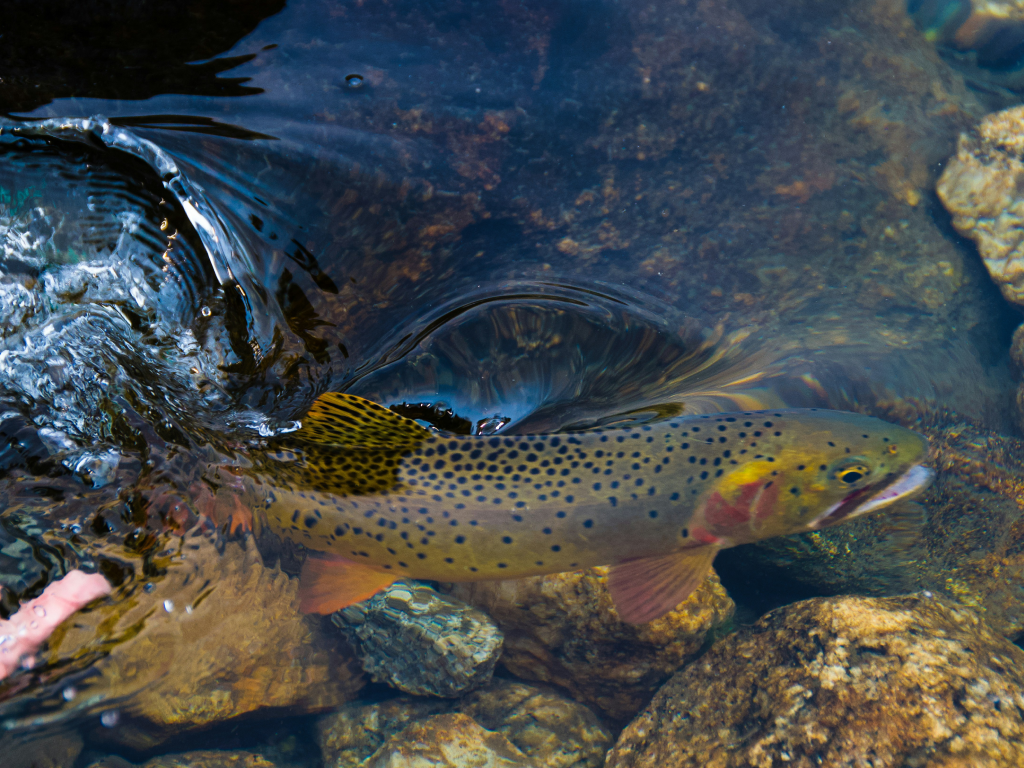
YUBA CITY – Now that the limited salmon season is over on the Feather River, anglers are concentrating on steelhead and striped bass. “Steelhead fishing is best now on the river above Live Oak,” said Brian Willis of Johnson’s Bait and Tackle. “Anglers are catching the fish while drifting salmon roe and soft beads in the riffles. Most of the fish range from 2 to 6 pounds.” He has experienced solid striped bass action on his most recent trips in his boat on the river down from the mouth of the Bear River. “I caught and released a 20 lb. striper, along with fish in the 10 to 17 lb. range, while fishing Evergreen Amazon top water lures,” he reported. Willis also said that one fisherman reported catching a 45 lb. striper on the river below Beer Can Beach on a Megadeath Megadog lure. Other anglers have found success while using black plastic worms on ½ oz. jig heads. Upstream migrating fish totals through the Feather River Fish Monitoring Station between Jan. 1 and Nov. 10 are: 17,712 spring-run Chinook salmon (April 16 through June 30): 17,733; Fall-run Chinook salmon (July 1 through present): 41,492; and Steelhead: 1,249. Feather River flows are at 650 cubic feet per second (cfs) through the City of Oroville with 1,800 cfs being released from the Thermalito Afterbay River Outlet (Outlet) for a total Feather River release of 2,450 cfs downstream. DWR continues to assess Feather River releases daily.
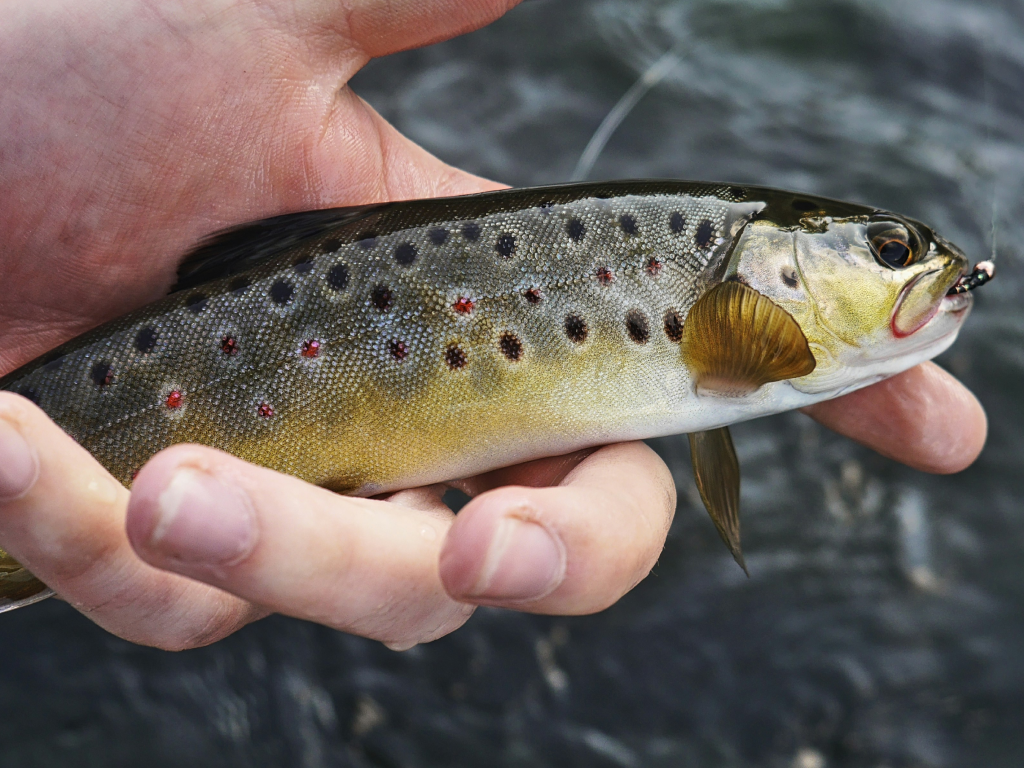
FOLSOM – The fishing for king salmon and rainbow trout at Folsom Lake continues to be tough, but the black bass are active. “I fished a few hours around the Granite Bay side,” reported John Mulhall on the Folsom Lake Fishing Report Facebook Page. “I caught and released 7 bass, with 6 on nightcrawlers and 1 on a Yo-Zuri Pins Minnows. I found some big trees up the North Fork.” Shore fishing for rainbow trout and king salmon should be on the upswing, now that the lake water is turning over with the cooler weather. Try fishing inflated nightcrawlers, Power Bait, Power Eggs and live minnows off the points in the Brown’s Ravine and Granite Bay areas. For black bass, Don Paganelli of Paganelli’s Bass Fishing Experience recommended fishing Robo Worms on drop shot rigs in the creek channels leading into the coves at Folsom. “Use your electronics, to find out where the fish are when the lake level is down like this.,” Paganelli stated. “Target the outside points. Don’t let the low water fool you - you can still catch bass. However, watch the weather. - storms moving through can cause the action to slow down a little or a lot.” The open launch ramps are Granite Bay Stage 1 and Brown’s Ravine Hobie Ramp. Folsom Lake is holding 437,578 acre feet of water, 45 percent of capacity and 110 percent of average. The water level is 409.04 feet in elevation. Here are the boating requirements: Vessels completing the 30-day quarantine may return to Folsom Lake have the seal removed by authorized staff, and be allowed to launch. Boaters wishing to return to the lake in the future will have the option to have their boat sealed upon exiting the water and will not be required to quarantine thereafter as long as the seal remains intact. All trailered vessels are subject to the inspection, quarantine and seal program. Hand-launched, non-motorized watercraft, such as kayaks, canoes, paddleboards, rowing shells, outrigger canoes and rowboats are not subject to the inspection, quarantine and decontamination requirements. Hand-launched watercraft with electric trolling motors, such as fishing kayaks, are also exempt from these requirements. DBW maintains a list of contacts at: https://dbw.parks.ca.gov/inspections. Additional information on the golden mussel prevention program including inspection site locations, frequently asked questions and hours can be found at www.parks.ca.gov/FolsomLakeGoldenMussels.
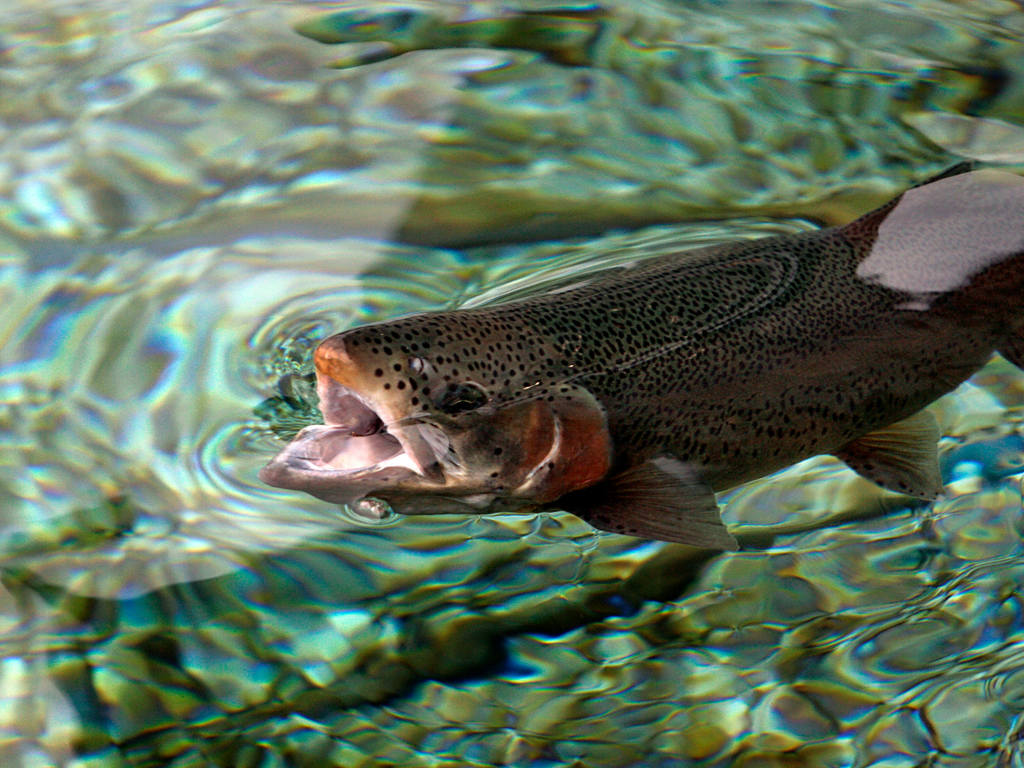
SOMES BAR – While the fall Chinook salmon returns to the Klamath River and tributaries are much better than last year, steelhead fishing continues to be very tough on the middle Klamath River, despite great water conditions, according to Doug Cole Marble Mountain Ranch fishing lodge and guide service. “We had 9 guide days over with the San Jose Fly Caster’s Club. and…OUCH! We totaled 4 adult steelhead over the three days, and a few juvenile fish…sigh…and not a single half pounder,” said Cole. Fishing conditions were ideal. “It rained the morning of Nov 13, but cleared up mid-morning and remained beautiful and comfortable for fishing conditions through the next two days,” Cole stated. “The river flow was 3300 - 2800 cfs during the outing, clarity was around 20,” and temps in the high 40s/low 50s. Everything was beautiful. And the two best adult steelhead were those store bought steelies that we teriyaki smoked for dinner last night,” he quipped. “This has NOT been a good year as far as quantities of fish in the mid Klamath to support sport fishing. However, the river conditions have been appropriate and enjoyable. So, let’s hope for a stronger steelhead population for this sport fishing passion next year,” Cole remarked. “We are not encouraging additional bookings this year due to the low fish counts, but if you want to just experience the canyon float and try for the few adult steelhead in the region. - then come on down,” he concluded
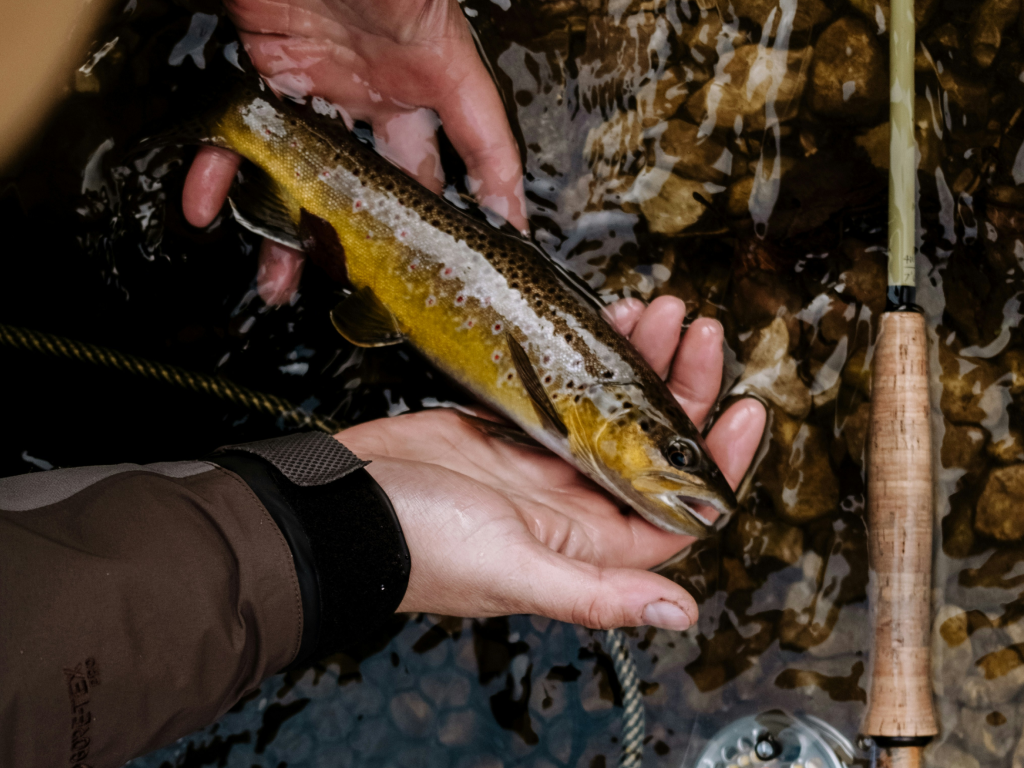
With only a few exceptions, mild conditions have dominated the days, providing excellent weather for fall fishing. Traffic on the Lake Almanor is light. The water level has basically stalled, with very little fluctuation over the last week and currently sits at 4483.2 or about 10.5 feet below full pool. Flows on all the lake’s tributaries are at seasonal norms. Water temperature is now holding in the low 50’s and trending down. The trout are spread throughout the entire lake feeding on the pond smelt population. Much of the fishing focus has been on the east shore as well as both sides of the peninsula. Some pockets of fish on the west shore have been providing action as well. Trout have been caught on a wide variety of offerings recently for the trollers. Slow trolled worms, plastics and trolling flies, along with fast trolled Speedy Shiner and other spoons in bright as well as bait fish patterns have all produced fish over the course of the last week. The cooler water temps have opened up the entire water column to the fish which now can be caught at all depths from the surface down to 25 feet. Recent reports mark the 17-22 foot level as productive for quality fish. The catch is a mixed bag of Rainbows and Browns. Smaller aggressive Rainbows have moved into some areas and will need to be picked through to get the nicer fish. Remember to release these smaller guys responsibly, they are future big fish. Bait fishermen have been netting a few fish at several locations of the west shore. Again, the cooler water temps have the fish moving in close. Fly anglers suspending flies under indicators as well as stripping pond smelt imitating flies on sinking lines are tempting the fish focused on the forage minnows, and with the fish moving shallower, they are easier targets for the fly crowd. Canyon Dam boat ramp is open and should continue to be available throughout the winter subject to access being blocked by snowfall. The USFS west shore ramp north of Prattville, as of today, is currently open but look for this dock to be pulled and ramp to be closed at any time. As always, keep an eye to the weather and be prepared for changing conditions. Report courtesy of the Almanor Fishing Associatio .
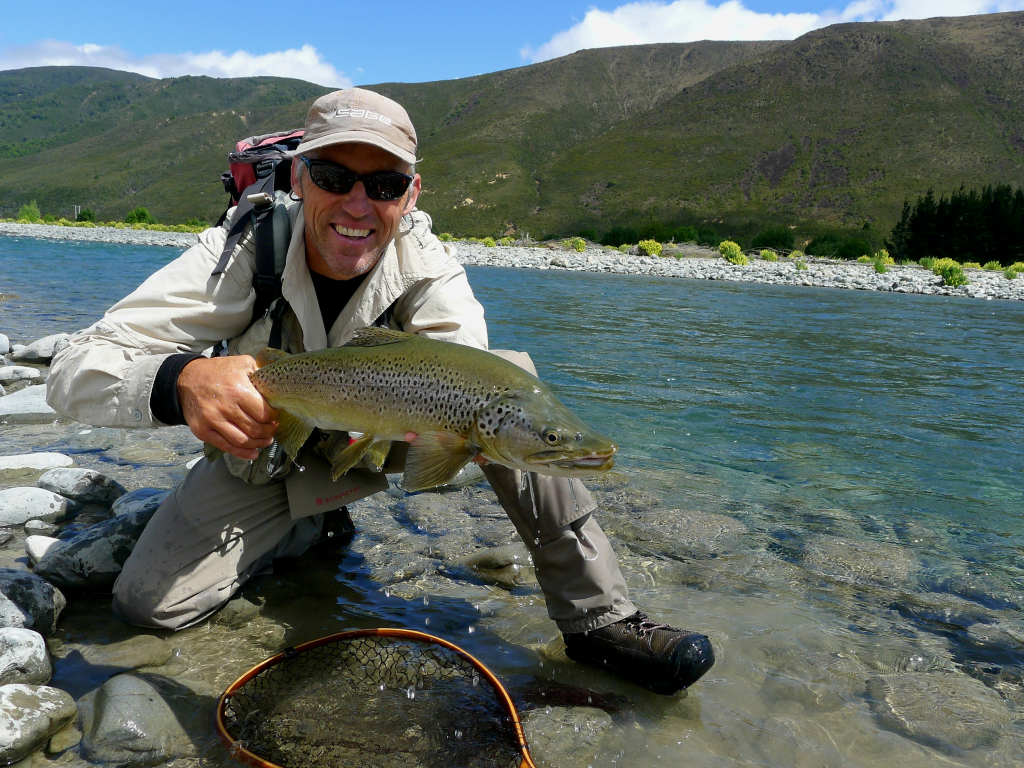
LIVERMORE – Trout fishing is the main attraction at Los Vaqueros Reservoir with the start of fall and winter trout plants. The first plant of the season of 2,000 pounds of Mt. Lassen trout took place on October 24, followed by another plant of 2,000 pounds of Mt. Lassen trout on November 12. Shore anglers have the most success using garlic scented PowerBait followed by night crawlers. Trolling from rental boats is doing fairly well especially in the backs of coves. Light tackle is important for catching trout. 4-6-pound test is plenty. On days the winds allow boats, the marina staff have seen a number of limits as well as anglers with just a couple. Remember: Limit is 5 per angler for the day. Meanwhile, anglers are picking up decent numbers of striped bass while fishing from shore and rental boats. Most of the fish are the 18 to 24 inch range, along with a few larger stripers mixed in. Bait fishing with anchovies is yielding the best success. South Cove, the pier near the marina, Cowboy Cove and Howden Cove are among the better spots to target striped bass. Channel catfish can be caught around the lake. Most of the fish are in the 2 to 5 lb. class, with some larger fish mixed in. The South Cove, Cowboy Cove and Oak Point are among the better spots to target the catfish with anchovies, chicken liver and nightcrawlers. The fishing pier at the Marina Complex is temporarily closed for repairs. Shore fishing and boat rentals remain open. If you are interested in renting a boat, the marina recommends calling ahead to check current wind conditions as they are unpredictable and can impact the ability to safely rent boats to visitors. Wind speeds change suddenly and boat rentals are typically suspended when they exceed 15 MPH and when heavy gusts are forecasted. Remember – rental boats are first come, first served. Weekends and some weekdays sell out quickly. The reservoir is holding 145,000 acre feet of water. For more information, call (925) 371-2628.
NAPA – If you’d like to troll for stripers on the Napa River from Cuttings Wharf, then Captain Dennis Grossi of Grossi’s Guide Service has a report for you. Capt. Dennis tells me that he’s putting his customers on limit fishing. Capt. Dennis is averaging 25 hook-ups a trip, with stripers averaging 5 pounds up to 10 pounds. One ounce Rat-L-Traps continue to be his lure of choice. Sturgeon fishing (catch and release) should also improve on the Napa River. Anglers should use salmon roe, ghost shrimp, grass shrimp and other baits for the diamondbacks.
The only live map of every public and private fish plant in California. Free forever.