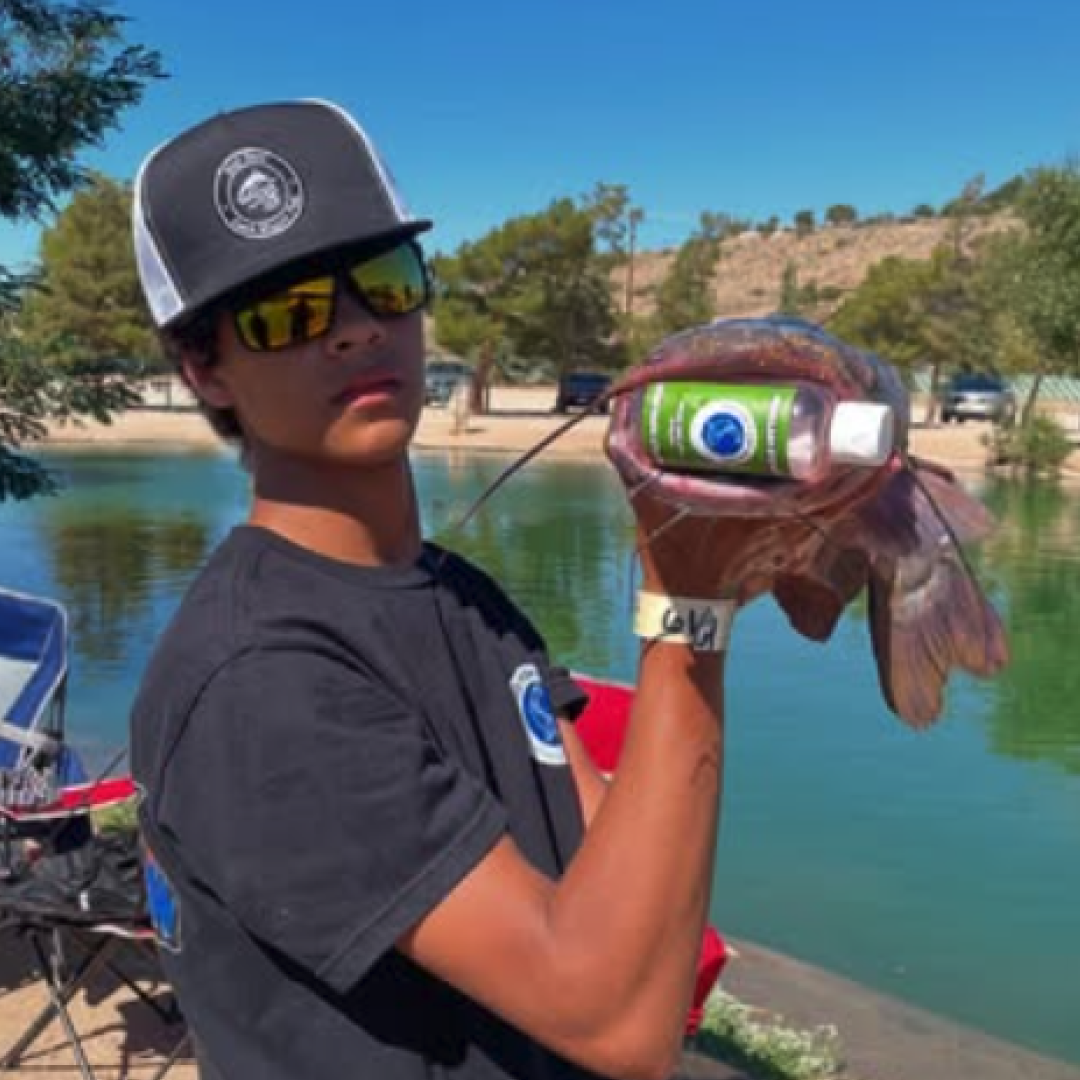
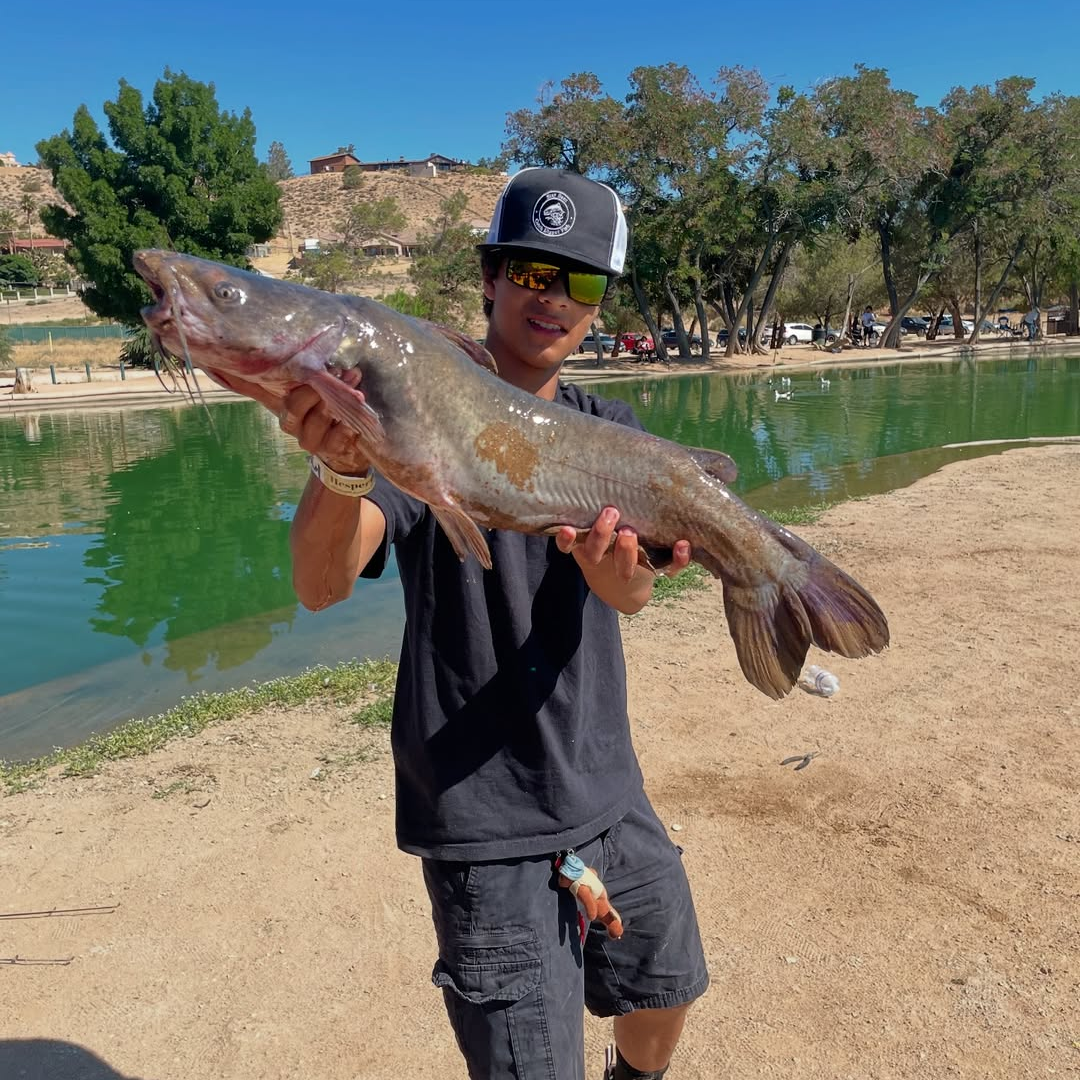
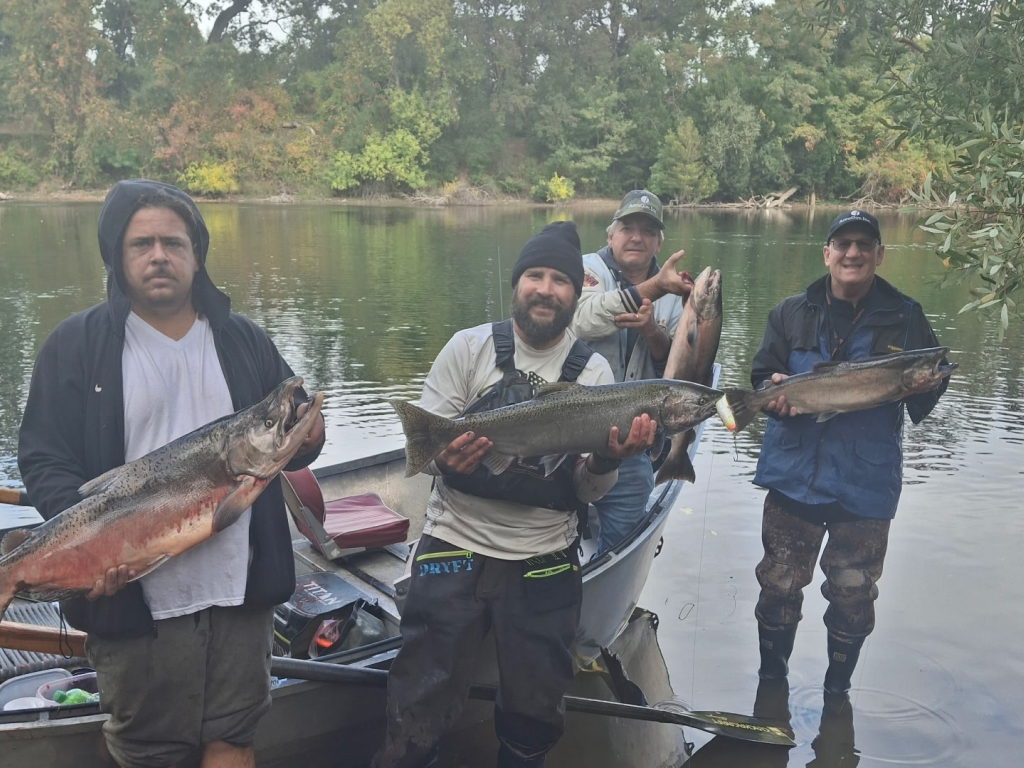
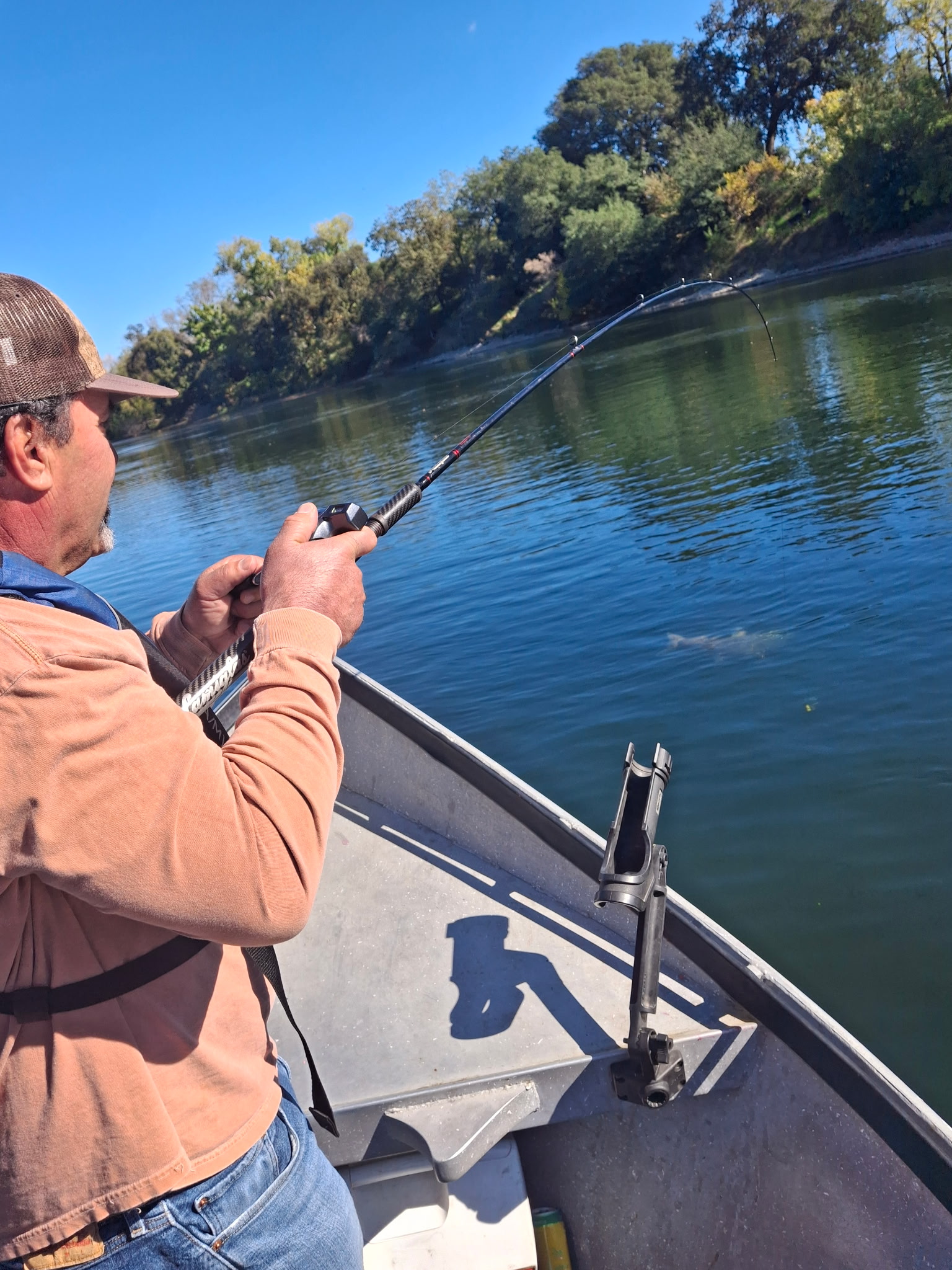
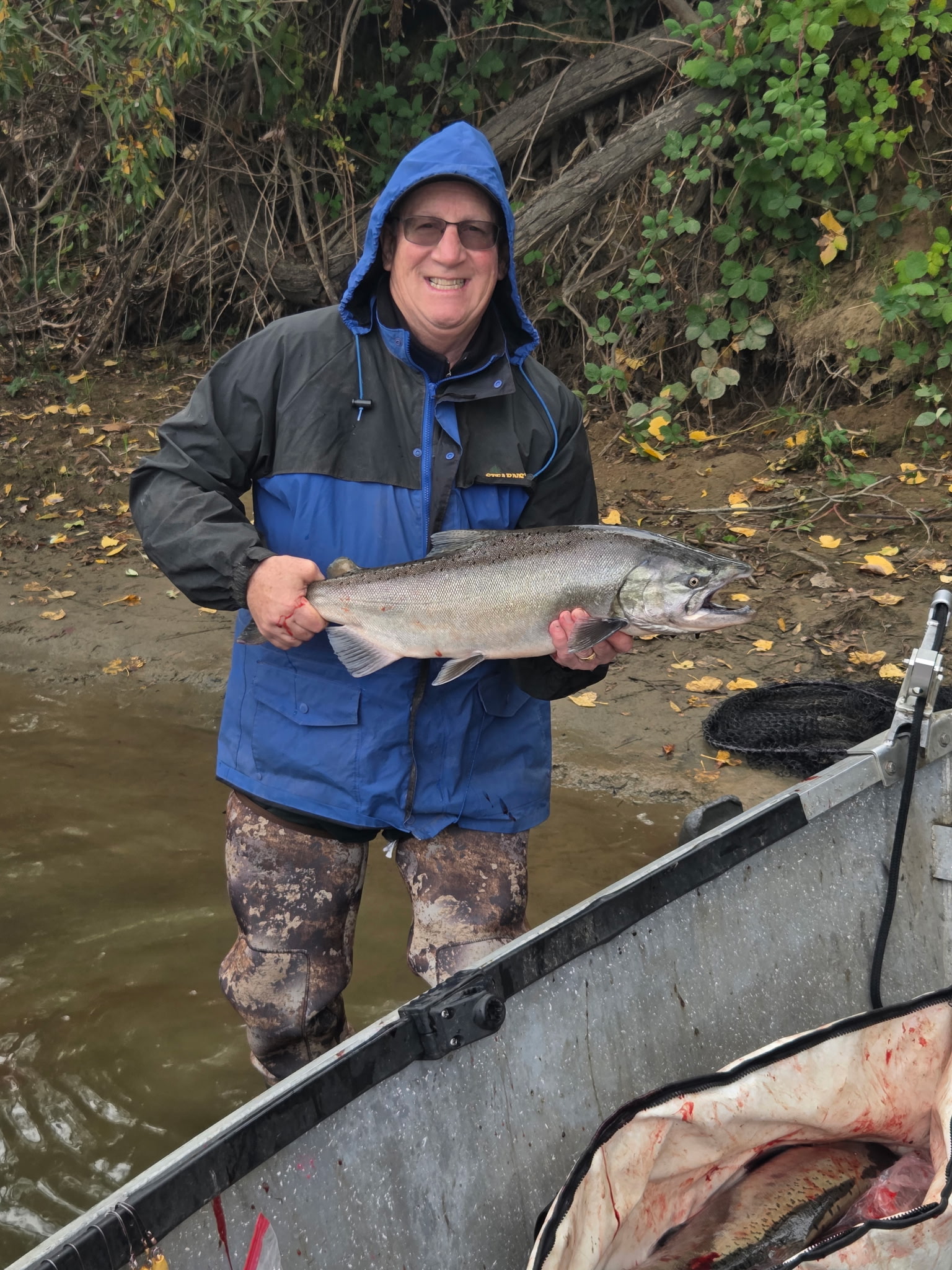
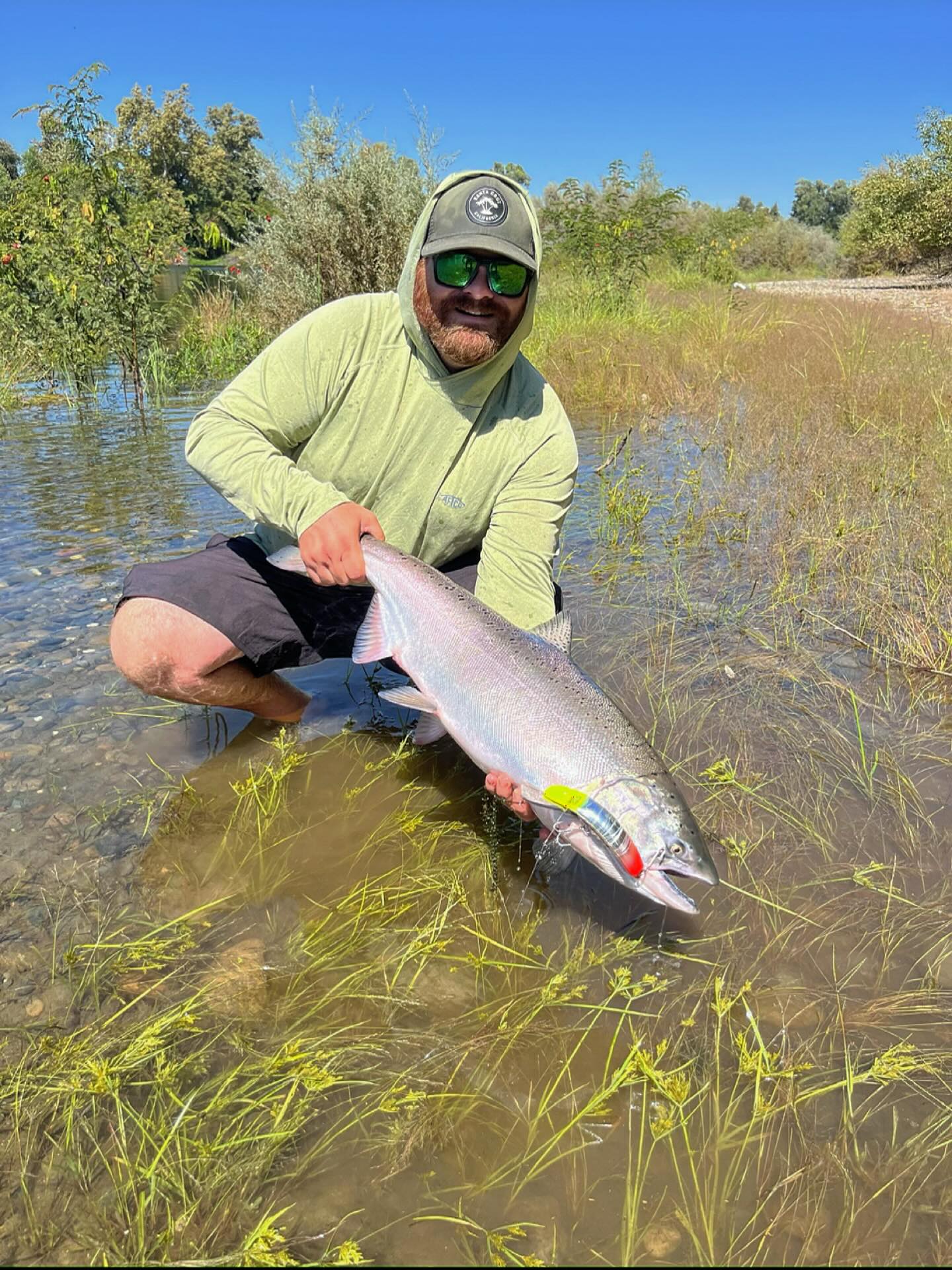
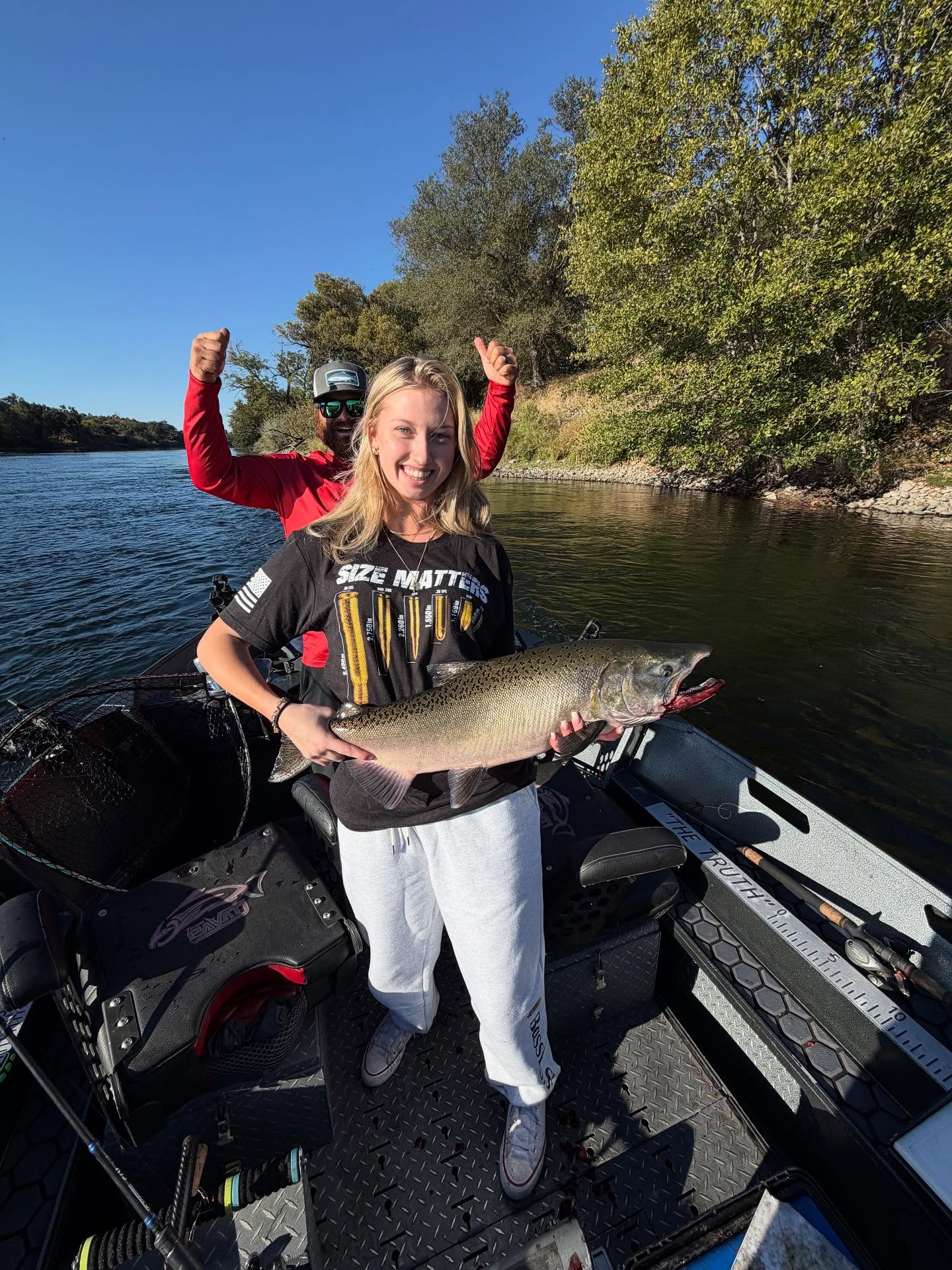
On September 2nd, I decided to go to Santa Ana River Lakes again in the afternoon to fish for catfish and test my luck. I went for the midday session and that ranges from midday up until 11 PM. It was really hot that day. The sun was super hot out with the temperature being in the 90s, but that didnât stop me from going up there. The water was still kind of cool to the touch even with the heat, it wasnât enough to warm up the water as much. From midday up until 7 PM. When it was close to 8 PM, I decided to rebait again using nightcrawlers with marshmallow dipped in hogwild cheese dip bait. I cast as far as I can near the boat dock of the lake and no less than 15 minutes, the rod bent down crazy. The fight was about 5 to 6 minutes, and I managed to land a 5 1/2 pound catfish. After that, the bite kept going for the next three hours. I managed to catch four total that day on a Carolina rig with a 2/0 Circle hook and about a 12-inch leader. The other bait of choice was also shrimp with marshmallow showered in the magic fish water fish attractant, which managed to catch 2 cats that day. Safe to say, as the weather is getting hotter the kitties come out to play at night.
Fish Reports
What's biting across California, newest first.
Huge Half Moon Bay Sea Bass  By Joseph Gonzalez   I live in Pacifica and have been fishing for many years out of Half Moon Bay. This year my buddy and I had a fantastic day catching huge white sea bass! Squid showed up a few weeks prior to the catch and there were seiner boats netting them. A few local boats were out trying to catch sea bass during this time with no luck, so everyone left the spot alone for a period of time. What everyone didnât realize is that these fish primarily feed during the full moon, and the time wasnât right yet. My boat, a 22 foot Boston Whaler Guardian, had some mechanical issues but was ready 3 days before the full moon,. I started buying all the right tackle to catch these fish at my local tackle shop, but they discouraged me from trying, saying that It was too late and the squid had moved on., I told them I was going to try anyway because I know these fish feed on the moon phase. I invited my buddy Pauly Christiansen who is the only local guy I know who has caught a sea bass in the past. We launched my Whaler and headed out in search of bait. We found the squid out of the mouth of Half Moon Bay, and 5 minutes after we pinned the first live squid on we were hooked up! I fought the fish for 10 minutes on 30lb line and it ended up breaking me off. We werenât 100% sure it was a White Sea bass but we were still hopeful. 2 hours later another bite, and this one we landed it turned out to be the 67 pounder. It was an epic day of fishing, and Pauly and I caught 4 huge sea bass of 67, 72, 78, and 90 pounds! All caught on live squid and hooked in halfmoon bay. A trip of a lifetime!  Editorâs note: Joseph Gonzalez added that it was a great honor to be in The Fish Sniffer, following up on his grandfatherâs cover photo on The Fish Sniffer in November of 1984
Jigging for Late Season Kokanee by Jack Naves In the middle of summer, kokanee roam like grazing cattle over open water feeding on plankton.  Catching them can be as easy as showing up and trolling popular lures like spinners or squids. As summer progresses, the bite gets tougher. Late summer and fall, when kokanee start to resemble miniature crocodiles, most folks give up on chasing them and switch to other pastimes. These pre-spawners can be finicky - catching them on trolling gear can be unpredictable. They will typically form tight schools and stage outside of creeks or rivers where they will spawn later in the fall. So how do you get them to bite? Jigging, or âspooningâ, is an old school technique that few Northern California anglers employ for kokanee. If you search the web, you will find lots of information from other states like Washington and Oregon, but not much from California. Kokanee are kokanee, so why not try it here? Back in September of 2011, I decided to challenge myself and imposed self-declared a no-trolling rule on a solo trip to Pardee Lake. Though it took me a while, I was able to knock out a limit of smoker-quality kokes and was back on the road before lunchtime. Letâs look at the gear youâll need to jig up a kokanee limit of your own. Downrigger trolling rods wonât work great for jigging, as they are too limber. Instead, use a fairly stiff medium graphite bass-fishing-type rod thatâs six to seven feet long with a fast tip. Spinning reels make it easier to quickly descend the lightweight jigs, while a line-counter baitcasting reel can help to figure out the depth at which you are fishing. I normally just look at my jig on the sonar screen to determine my depth, so spinning gear is my preference. Whether you prefer spinning or casting reels, spool up with 20-pound test braided line. Itâs crucial that you use braid so there is no stretch in the line. You need to be able to feel the slightest bite and drive the hook home within a split second! Tie your braid to a swivel and then run a four-foot long 20-pound test fluorocarbon leader to your jig. The stiff leader will help to keep your jig vertical. Tie the leader direct to the lure â using a snap may cause the jig to pivot upside down and snag on the leader line. If you feel an odd flutter on the upstroke, this most likely happened, and itâs time to reel up and fix it. Kokanee jigs are solid lead lures that go by the names of P-Line Laser Minnow, Gibbs Minnow, Crippled Herring, P-Line Kokanantor, and Buzz Bomb. I personally like the two-ounce Buzz Bombs the best. However, itâs a good idea to have a range of sizes so you can switch to a heavier jig if the wind creates too much of a drift. The color of the jig will be your preference. Hot pink, glow-in-the-dark, fluorescent orange, chartreuse, and pearl are popular choices. Once you have your rig tied up, itâs time to hit the lake! Once you are on the water, electronics play a crucial role in finding fish. Look for huge schools of kokanee holding in deep water. Iâm not talking about a few scattered fish here and there. You want to see schools that look like giant bait-balls. Usually, they are close to the bottom, but other times they will suspend higher up. It seems like the big schools form better in the late morning or early afternoon. Once you find the fish, itâs bombs away! Iâve found that tipping the hooks with corn is pretty useless, as it rips off immediately when I start jigging. I like to start by smearing some crayfish gel onto the lure â a natural predator of kokanee eggs! Next, Iâll add some kind of target to the hook. I like to cut a small, round, corn-sized section of glow-in-the-dark plastic from a Gitzit or Senko and add it to the hook. Alternatively, you could add a Gulp! Maggot or some kind of commercially available target that wonât come off while jigging. For starters, lower your jig to the top of the kokanee school. You can use a line counter, or what I usually do is just watch the jig going down on the sonar unit. The cool thing about this method is that you can actually see fish rising out of the school to nail your jig! If a fish doesnât grab it on the way down, stop your lure at the top of the school and start jigging. Jigging employs a yo-yo motion that makes the lure jump up and flutter down in the water column. Start by placing your rod tip a few inches above the waterline. Pop the rod tip up six to twelve inches and then follow the jig back down with your rod tip. It is crucial that you stay in controlled contact with the jig as it falls â donât let the line go totally slack on the way down. The up motion gets their attention, but they almost always hit the jig on the way down. The strike will be exceptionally light â almost undetectable to beginners. Set the hook at the slightest tick, tap, bump, slack line, or change in feel as the jig falls. You need a fast trigger â at first you will miss a lot of fish. After a few hours of jigging you will start to figure out what a bite feels like. If you donât get hit, try progressing through the school in five-foot intervals. The fish at the top of the school are usually the more aggressive fish, but the deeper fish will bite as well. One of the toughest parts about jigging is controlling the boat in the wind. An electric motor is almost mandatory, and having a motor that automatically holds your position with âspot lockâ is helpful. You need to keep your jigs vertical, so if your lines start drifting out to the side you need to get back on track with your electric motor. If you canât stay vertical, switch to a heavier jig. When it gets too windy, itâs time to pack away the jigging outfits and start trolling. I recently had the opportunity to fish at New Melones Lake on August 24 with Rj Sanchez of Pine Grove. We located a huge school of kokanee trolling between eighty and ninety feet deep. After boating several nice kokanee, I relayed to Rj it was time to reel up the trolling gear and start jigging. I had marked the school on my GPS, so I proceeded to the location. It suddenly appeared on the sonar screen, so I quickly relayed to Rj to drop his jig while I threw the boat into reverse. By the time I had the boat stopped and started to deploy my jig, Rj was already hooked up! As the boat drifted off the school, I would do a spiral pattern out from the starting point until I found the school again. Within no time, we were limited out and headed back to the dock! This fall when the trolling bite gets tough and the kokanee develop lockjaw, have a couple of jigging rods in your arsenal. When you see big schools on your sonar, try dropping lead to see if they are interested. Youâll be surprised at how addictive it can be.
Photos Photo 1 â Jack with Two Kokanee.jpg These two hook-jawed kokanee slammed a Buzz Bomb jig a New Melones Lake on August 24. The fish were in a huge school right off the bottom at ninety-feet deep when Jack Naves pulled up the trolling gear and descended a spinning outfit loaded with braided line. When late season kokanee get picky, jigging can be an effective way to get them to bite when trolling doesnât work. Photo by Rj Sanchez, Pine Grove Photo 2 â Kokanee with Jig.jpg Buzz Bomb jigs are great tool to have in your kokanee fishing arsenal. The hot pink jig shown here was modified by the author by adding some glitter. These jigs have a unique design, as they slide vertically up and down the leader and are stopped by a rubber stopper above the hook. The design keeps the hook from flipping over and fouling up on the leader. This is a problem you will have with other jigs if you let the jig fall too fast. Photo by Jack Naves, Fish Sniffer Staff Photo 3 â Spinning Outfit.jpg Light spinning gear like the outfit show above is a good way to target late-season kokanee using jigs. This 30-series spinning reel spooled with braid and teamed up with a graphite bass rod makes for the perfect combo. Ditch the noodle trolling rod and go with a bass-fishing-type setup like this for kokanee jigging success. Photo by Jack Naves, Fish Sniffer Staff Photo 4 â Buzz Bomb.jpg This image illustrates how the author tips his Buzz Bomb jigs with a small cut piece of glow-in-the-dark Gitzit or Senko. The piece is cut to match the size of a kernel of shoe peg corn, but wonât fall off after being jigged like corn will. Late-season kokes are often deep enough so that glow-in-the-dark shows up nicely below the eighty-foot depth. Before descending it, be sure to add your favorite scent to the lure like crawfish gel. Photo by Jack Naves, Fish Sniffer Staff
Catching Multiple Species at Bucks Lake!
By Paul J. Kneeland
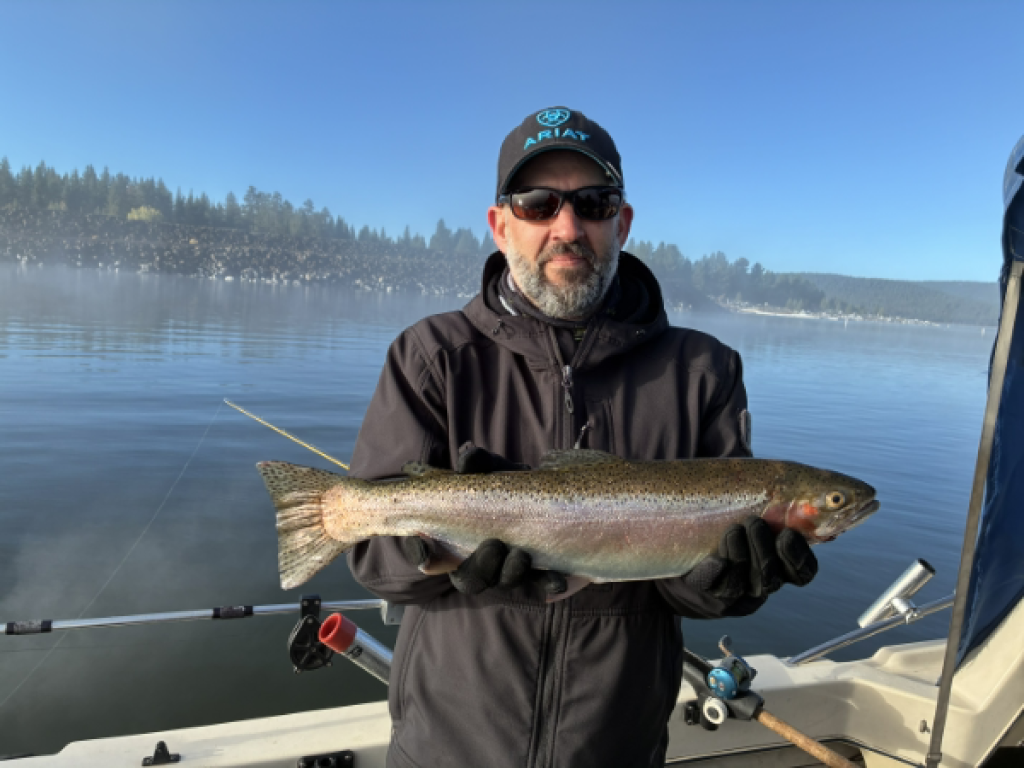
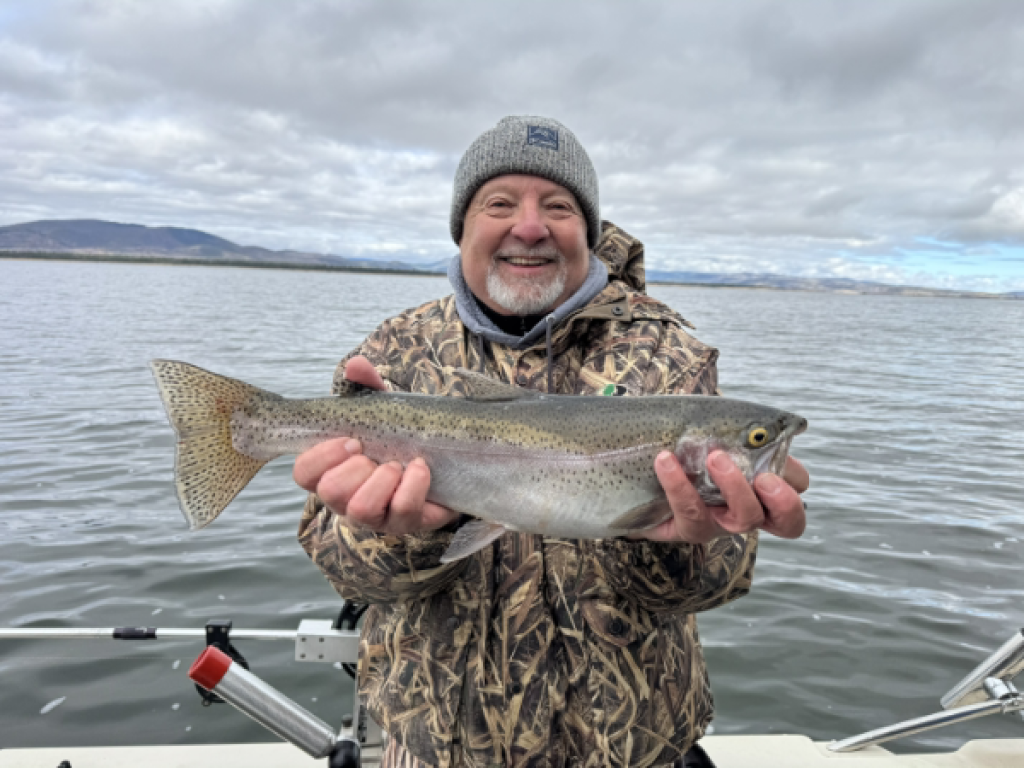
John Brassfield of Foresthill and I took a quick trip to Bucks Lake with his truck and boat in late August. We drove up Hwy 162 over the green bridge at Lake Orovilleâ the road was curvy but smooth and well paved. As we traveled up in the afternoon and saw huge thunder clouds forming â and we were headed right up to them! The drive was through huge areas of burns from the Dixie Fire from a couple years ago, and the burnt remains of all the trees got to be kind of depressing. We arrived at Bucks Lake about 4:30 in the afternoon and got our campsite at a private camp. It was in view of the lake, but surrounded by mostly RVs and trailers. It was a big open site that was easy to pull the boat in and out of . The big thunder bumpers were to the north and east of us and we didnât get any rain. We took a tour around the lake and saw where the fire came right down to the Mill Creek bay, but the rest of the shoreline was unscathed with no fire scars in view. We had excellent burgers at the Lakeshore Resort on the deck overlooking the lake. We went back to camp and built a small campfire in the pit, and watched the light show from the lightning in the northeast.  As darkness fell, we could see thousands of stars, and saw dozens of satellites floating through the night sky. About midnight I woke up on the cot outside with rain hitting my face. I was under the awning that was on Johnâs camper shell, so I adjusted closer to the truck, and then the rain stopped and the stars came out again. Tuesday morning, we were up at 5:30, made coffee and broke camp. We launched at Sandy Point on the Mill Creek cove. As we got on the water, we noticed the lake looked kind of murky. Not muddy, but just kind of cloudy like snowmelt or something. Visibility was about 5 to 6 feet. In dark water like that we usually go with bright chartreuse or fluorescent colors. The water temperature was 69 degrees when we started, and up to 70 in early afternoon. Air temperature at day break was a balmy 59 degrees and warmed up to about 80 in the afternoon. We started trolling right out of the ramp, and I immediately got a hit on the âTrout Candyâ Hot ticket spoon at 49 feet deep. Just as John was getting the net the trout shook his head and got off. I thought maybe it was a German brown because of the color of the tail I saw as he dove away. Later we caught a couple of small mackinaw, and I decided that was the species that got away. We were using our normal summertime procedure â trolling deep off the downriggers at 2.2 mph over the creek channel. I caught several fish on the âTrout Candyâ Hot Ticket and also on the bright yellow/red âHot Chicksâ color of a Speedy Shiner. John did well on a yellow winged Tasmanian devil and watermelon Speedy Shiner. We were marking dozens of fish on the graph at 30 to 50 feet deep out in the deepest part of the lake and in front of the dam.  We trolled through them time and again, and did catch a few trout. We finally decided they must be schools of kokanee, so we switched to kokanee gear and went through all the marks again. I was using a Vanceâs watermelon dodger with a pink Uncle Larryâs spinner and a Paulina Peak orange/UV dodger with an orange micro hootchie. John used a pink dodger and a pink wiggle hootchie. We slowed down to 1.3 to 1.5 mph and got a little frustrated with all the fish on the graph that WERENâT biting! Finally, I managed to hook a 11 inch kokanee on the micro hootchie. Then 2 more on the same rig. John didnât get a kokanee, but he did catch 2 absolutely gorgeous rainbows of 2 and 3 pounds on the pink wiggle hootchie setup! Those rainbows were some of the prettiest I have ever seen, covered with black dots down to their bellies and a bright red stripe on the side. We finished the day with 16 trout landed, including 4 mackinaw, 1 German brown and 11 rainbows from 12 to 18 inches. Plus, the final 3 kokanee that went home with me and were on the barbeque that evening. Four different species in one day on one lake is very unusual and lots of fun. A very good trip to one of our favorite lakes.
Cutlines:
Photo 1 â John Brassfield shows off a fat 2 1\2 pound rainbow caught on a pink wiggle hootchie at Bucks Lake Photo by Paul Kneeland, Fish Sniffer staff
Photo 2 â A gorgeously spotted and colored rainbow trout taken trolling at Bucks Lake in late August. Photo by Paul Kneeland, Fish Sniffer staff
Photo 3 â Paul Kneeland with a bright 2 pound rainbow caught on a âHot Chickâ colored Speedy Shiner at Bucks Lake. Photo by John Brassfield, Foresthill.
Victory: Broad Coalition Stops Governorâs Trailer Bills to Fast-Track Delta Tunnel
SACRAMENTO - A broad coalition of Tribes, environmental justice groups, family farmers, fishing groups, conservationists, Delta communities and elected officials celebrated victory in their campaign to stop Governor Gavin Newsomâs trailer bills to fast-track the Delta Tunnel, a project that would destroy the imperiled Sacramento-San Joaquin River ecosystem and Delta communities.
At midnight on Sept. 10, Newsomâs Delta Tunnel trailer bills died after no legislator stepped up to carry them forward because of the massive opposition to the bills.
In a statement, Delta Caucus Co-Chairs Senator Jerry McNerney (D-Pleasanton) and Assemblywoman Lori D. Wilson (D-Suisun City) applauded the defeat of what they called âthe governorâs controversial proposal to fast-track the costly and destructive Delta Tunnel Project.â
The proposal that sought to greatly accelerate the construction of a 45-mile-long underground tunnel that could cost upwards of $100 billion through the fragile Delta region is not advancing this year after the Legislature rejected the governorâs plan.
âDefeating the tunnel fast-tracking proposal is a major victory for California and the Delta, and for the communities, farms, and historic resources surrounding the largest estuary on the West Coast. The tunnel project not only would devastate much of the Delta region, but is also unaffordable and unnecessary,â said Sen. McNerney, whose district includes the heart of the Delta region.
âWe want to thank Senate and Assembly leadership for protecting the fragile Delta region and the thousands of Californians who called on the Legislature to reject the fast-tracking plan. Assemblywoman Wilson and I stand ready to work with the Legislature and governor on alternatives that will cost far less and will safeguard Californiaâs main water supply system without inflicting major harm to it, such as fortifying Delta levees and increasing water recycling, water efficiency, and groundwater storage,â added McNerney.
âI am relieved to see that the proposed Delta Tunnel trailer bills did not move forward,â Assemblywoman Wilson said. âOnce a short-sighted policy, always a short-sighted policy and no amount of money, including the attempted $200 million payoff to Delta communities, can make up for the lasting harm this project would cause. This conversation has gone on for decades, and make no mistake: alongside Senator McNerney and our Delta Caucus partners, we will continue to stand strong and fight for the Delta and the communities who call it home.â
âLast month, the governor renewed his call for the Legislature to approve his fast-tracking plan for the Delta Tunnel Project, even though the plan was not included in this yearâs state budget.
âThe governorâs proposal released in May would have greatly weakened environmental and judicial review of water plans for Sacramento-San Joaquin River Delta, while giving the state a blank check to float bonds to pay for the water tunnel,â Wilson concluded.
Restore the Delta also applauded the defeat of the environmentally destructive trailer bills.
âWorking in close collaboration with the Delta Caucus, co-chaired by Senator Jerry McNerney and Assemblymember Lori Wilson, and with the leadership of Senate President Pro Tem Mike McGuire and Assembly Speaker Robert Rivas, advocates ensured that proposals advanced by Governor Newsom, the State Water Resources Control Board, the California Natural Resources Agency, and the State Water Contractors did not move forward in this legislative session,â according to a statement from Restore the Delta.
âThe defeated trailer bills would have stripped Tribes and Delta communities of their ability to participate in CEQA review of the Bay-Delta Water Quality Control Plan and would have advanced construction and bonding for the controversial Delta Conveyance Project, including unlimited bonding authority for the Department of Water Resources,â the group stated.
âDelta communities and allies across California stood up to defend clean water, fisheries, local economies, and environmental justice â and we won,â said Barbara Barrigan-Parrilla, Executive Director of Restore the Delta. âThis victory shows that the people of the Delta will not be silenced, and that Californiaâs laws protecting public participation, water quality, and the environment cannot simply be swept aside.â
Barrigan-Parrilla noted that the opposition was âbroad and vocal.â Last week, more than 50 organizations from across the state formally opposed the trailer bills, while thousands of Californians sent emails and phone calls to legislators urging them to reject the package.
âThis is a victory for transparency, for Tribal inclusion, for Delta farming communities, and for every Californian who depends on healthy rivers and fisheries,â Barrigan-Parrilla added. âWe are grateful to legislative leaders who listened and stood with us to uphold Californiaâs water laws. We are grateful to our organizational partners and supporters from throughout California.â
Scott Artis, Executive Director of the Golden State Salmon Association, also weighed in on the defeat of the controversial trailer bills:
âGovernor Newsom marked the 175th anniversary of Californiaâs statehood by praising our shared history and future in his State of the State letter. Yet, he was attempting to write salmon, fishing families, and entire coastal communities out of Californiaâs future with his Delta Tunnel and CEQA trailer bills.
âCalifornia wonât be the Golden State if it destroys its rivers, silences Tribes, or sacrifices working families for the benefit of a handful of wealthy water contractors. These bills would have done exactly that. They would gut environmental protections, eliminate due process, and lock in a water grab that could finish off already imperiled salmon runs. Make no mistake, both the Delta tunnel and the cynical âvoluntary agreementsâ are an attempt at a massive water grab at the expense of salmon and salmon fishing jobs.
âOur statehood anniversary should be an opportunity to celebrate the people and natural resources that built California. Instead, Governor Newsom is joining the Trump Administration in pushing salmon-killing proposals that threaten to erase an iconic species, cripple an entire fishing industry, and abandon river and coastal communities that depend on salmon.
âGolden State Salmon Association and our partners thank the legislature, and particularly Senate President Pro Tempore Mike McGuire and Speaker of the Assembly Robert Rivas, for rejecting these reckless and cynical trailer bills. Californians deserve solutions that restore rivers, protect jobs, and honor our heritageânot schemes that will be remembered as the moment California turned its back on its people and its salmon.â
Here is what Sierra Club Water Associate Organizer, Layne Fajeau, had to say about the death of the trailer bills:
âWe are incredibly proud of the California legislators who stood against the Newsom administrationâs attempts to subvert crucial environmental review processes on behalf of powerful water wholesalers and agencies. Senators McNerney, Allen, Blakespear, Assemblywoman Wilson, Senate Pro Tem McGuire, Speaker Rivas, and the entire Delta Legislative Caucus deserve immense praise for standing up for communities and species that depend upon a healthy Delta ecosystem.â
Gary Mulcahy, Government Liaison with the Winnemem Wintu Tribe, pointed out, âIn this day and age, with the current state of things, it is good to see that âchecks and balancesâ and the voice of the people can still prevail. To the fellowship standing on the bridge and shouting, âThou Shalt Not Passâ, and the army of clear minded thinkers supporting them, we say, thank you.â
In a press conference at the State Capitol on Friday, Sept. 5, Malissa Tayaba, the Vice-Chair of the Shingle Springs Band of Miwok Indians, emphasized the destructive impact the trailer bills would have on California tribes if they had passed.
âThe CEQA trailer bill would eliminate the opportunity for analysis and review of tribal cultural impacts in water quality control plans â it is an erasure of the commitments the Governor and the legislature have made to repair relationships with California tribes. CEQA is a critical element to inform policy choices regarding Bay-Delta management. Without CEQA analysis, much of the Delta Reform Act becomes meaningless,â Tayaba said.
âOur people and our region are not a sacrifice zone. We will continue to speak out to protect and maintain our culture,â Tayaba concluded.
If built, the Delta Tunnel would hasten the extinction of Sacramento River spring and winter-run Chinook salmon, Delta and longfin smelt, Central Valley steelhead, green sturgeon and other fish species, according to independent scientists and fish advocates.
The Bay-Delta is now in its worst-ever ecological crisis, due to massive water exports to Big Ag oligarchs and Southern California water brokers, pollution and other factors.
The Delta smelt population has become functionally extinct in the wild. No Delta smelt have been found in the California Fish and Wildlifeâs Fall Midwater Trawl Survey in the Delta for the past seven years. Commercial fishing for salmon in California ocean waters has been closed for three years, due to the collapse of Sacramento River and Klamath River fall-run Chinook salmon populations.
The tunnel would take even more water out of the Sacramento River before it flows through the Delta, making the ecological crisis worse than it already is.
Fall Salmon Opener Yields Salmon Limits, Fishing for Rockfish Open at All Depths
SAN FRANCISCO â The Marin County Coast was the hot spot for the four day fall ocean salmon season that ran from September 4 to September 7 from Point Reyes to Point Sur.
Cat Kaiser, Vice President of Operations and Engagement for the Golden State Salmon Association (GSSA), shared her experiences fishing during the limited opportunity to target salmon this year.
âI fished 3 of the 4 days of the season,â Kaiser said. âThursday was spent working to help restore these amazing creatures, but being on the water and seeing so many friends out there was the best!â
âAs happy as I was to share the opener with everyone out there working hard, doing what we love, and feeling grateful for the chance to fish when we can, it was also a bittersweet reminder of just how precious this resource is and what our fishery could and should be,â stated Kaiser.
âA few scattered days are not a true âseason,â and having zero days for the commercial fleet is truly heartbreaking. As the new Vice President of Operations and Engagement for GSSA, I do solemnly swear to work every day toward bringing back a strong, healthy salmon fishery for California,â she added.
Kaiser said she was honored to kick off day one âwith my passionate and hard-working friends, Unforgettable Fishing Adventures, and of course my salmon sister Annie Nagel for an episode of Angler West TV.â They departed for the fishing grounds out of Fishermanâs Wharf in San Francisco.
The 6 people fishing aboard the boat, along with the two crew members, landed 16 salmon, full limits, while trolling with anchovies off Double Point with Captain Virginia Salvador.
âAnnie caught the largest fish, a solid 20 pounds,â said Kaiser. âI caught my limit of salmon weighing around 12 pounds each. It was wild going out of the Golden Gate that morning with all those boats to take advantage of the limited season.â
The next trip on Saturday was a GSSA all ladies trip aboard the New Captain Pete out of Half Moon Bay. This trip featured Captain Melinda Dodds and an all-female crew including Maddie Day, who just got her captainâs license, and Meghan Fox.
The fishing had slowed down from its fast pace on Saturday, but the girls landed a 27 lb. king and other hard-fighting Chinooks.
âThe great part was that the girls kept great attitudes and energy despite the slower fishing this day and we snacked on delicious food. We had a dance party during a whale show on a flat calm ocean in the sun. We fished in tank tops and Grundens,â Cat noted.
Before this trip, the Anglerettes Fishing Club in San Diego donated stickers, mini-tackle boxes and Fish Fiemd Hair ties scrunchies in cool travel bags with the logo, âSupport your local Anglette.â
âIt was all about women supporting women from SoCal to NorCal,â Kaiser noted.
The third day was another all-girls trip with 7 women, Captain Virginia Salvador of Unforgettable Fishing Adventures and the deckhand, Brian. Two of the girls, Amanda Brannon and Rosalie, caught their first-ever salmon on this fishing adventure.
âThen the fishing was really slow for hours,â she said. âMost people were struggling. Then I dropped a new bait down at 18 pulls and five seconds hooked the hardest fighting salmon I have ever caught,â she continued.
âIt was 25 pounds on the scale, but it felt like a much bigger fish. I got it to the boat at least five times before it took off on another run. It was the most I ever had to finesse a salmon in,â Kaiser explained.
âThe 25 pounder was the Hail Mary big fish we needed. After that fishing slowed down again. We did catch a lingcod weighing about 14 pounds while trolling on Sunday along the beach,â she said.
âI was really happy to see women captains and crew following their dreams working hard while creating a happy peaceful vibe through lights out moments to the slowest times,â she said. âThe vibe was great both times.â
Now that the four day fall salmon season, is over, anglers aboard private and party boats are fishing the Marin County Coast for lingcod and rockfish.
Boats are catching limits of rockfish, along with good numbers of lingcod. And anglers now will have increased opportunities to catch lingcod and rockfish off the Marin County Coast and throughout the rest of the stateâs coastal and offshore waters.
On August 14, 2025, the California Fish and Game Commission adopted emergency changes to the stateâs groundfish regulations so that recreational ocean fisheries are no longer constrained by quillback rockfish (Sebastes maliger). Fishing opportunities in northern and central California were reduced in 2023 due to low estimated quillback rockfish abundance:
âA new stock assessment completed earlier this summer indicates it is no longer necessary to restrict groundfish fishing to specific depths north of Point Conception in order to avoid quillback rockfish, allowing anglers to take advantage of expansions to open fishing areas. The Commission acted to rapidly change the regulations to allow additional opportunities before summerâs end,â according to the announcement from the CDFW.
Over the last few years, the California Department of Fish and Wildlife (CDFW) collaborated with federal partners, fishing groups, and anglers to gather data and improve scientific knowledge of quillback rockfish off California. The information was crucial in informing the new stock assessment, which indicates the stock is at a healthy level and not overfished.
This finding reverses results from a 2021 stock assessment which relied on very limited data from the California stock. Retention of quillback rockfish, however, remains prohibited in all waters statewide until recommendations for sport and commercial fishery catch limits are developed for California quillback rockfish in conjunction with those for other nearshore groundfish species.
âThis action is the result of hard work by a lot of people,â said Tim Klassen, an appointed advisory member for the groundfish sport fishery and a charter boat captain in Eureka. âThe Commission and CDFW moved quickly to implement these changes and worked collaboratively with fishermen to achieve a result that protects our fisheries and the people that depend on them. This is what good fishery management looks like.â
With restored access to all-depth fishing for northern and central California, a sub-bag limit for canary rockfish (Sebastes pinniger) is necessary to keep catches within the federal California recreational harvest guideline for this species.
Therefore, a new two fish sub-bag limit will apply for canary rockfish, statewide. Additionally, vermilion (Sebastes miniatus) and sunset rockfish (Sebastes crocotulus) will be managed together as a species complex, meaning that they are considered the same species for regulatory purposes (e.g., sub-bag limit) due to their nearly indistinguishable appearance.
These changes are intended to roll back restrictions that were put into place to avoid quillback rockfish, which are very rarely seen south of Point Conception.
Anglers should review the Summary of Recreational Groundfish Regulations page for the most up-to-date information before going fishing. If anglers encounter a quillback rockfish, CDFW strongly encourages using a descending device to return it to depth. When fishing in ocean waters from a vessel a landing net is always required, and when fishing for or possessing groundfish, a descending device is required to be carried aboard.
Marin County Coast Facts:
Groundfish Regulations Summary Update:
- Effective August 28, 2025: Recreational regulations allow take of rockfish, cabezon, greenling and lingcod in all depths for state waters in the Northern, Mendocino, San Francisco, and Central Groundfish Management Areas through December 31, 2025. There are temporarily different regulations for rockfish, cabezon, greenling and lingcod in federal waters in these Management Areas. Regulations in federal waters may vary by management area. Before fishing, anglers should verify if their planned fishing location is in state or federal waters and what regulations apply in each water area. The state waters boundary line can be viewed on the Ocean Sport Fishing Map: https://cdfw.maps.arcgis.com/apps/webappviewer/index.html?id=c00c82e1f32a49e99c747e2411e3439e
Updates to federal regulations are expected in mid-September. Check back frequently for updates to federal regulations.
Charter boats: Sportfishing boats from throughout the Bay Area target salmon, halibut, striped bass, lingcod, rockfish and other species on San Francisco Bay and outside of the Golden Gate during their respective seasons.
Fishermanâs Wharf, San Francisco: Unforgettable Fishing Adventures (415) 656-656-5318; Gatecrasher Fishing Adventures, (925) 497-717; the Bass Tub, (415) 456-9055; Lovely Martha, (650) 619-6629; Silver Fox Sportfishing, (415) 367-5600; and Flash Sport Fishing Charters, (510) 851-2500.
Berkeley Marina: New Easy Rider, (707) 422-2050; California Dawn, (510) 417-5557; Pacific Dream, (510) 993-4414; Happy Hooker, (510) 223-5388; Hookâd Up Sportfishing, (707) 655-6736; and Goldeneye 2000, (510) 610-0888. For more information, call the Berkeley Marina Sportfishing Center, (510) 849-3333.
Emeryville Sportfishing Center: New Huck Finn, C Gull II, Kingfish, Diamond, Scallywag; Pacific Pearl, Oakland Anglers II, Lady K, Playn Hooky and other boats. For more information, call Fish Emeryville, (510) 652-3403.
Paulâs Staff Tackle 4408 Â Paul Kneeland fished Bucks Lake with John Brassfield of Foresthill in Johnâs 18 foot Duckworth. Â They caught rainbow trout to 19 inches using a Daiwa North Coast 8 foot ultralight graphite rod with a Okuma Convector low profile line counter reel loaded with 8 lb test Okuma Soft Steel line.. They trolled yellow winged Tasmanian Devils and bright yellow/red Speedy Shiners off the Canon Downriggers at 25 to 60 feet deep and 2.3 mph.
Pyramid Lake Opens October 1st!
We in Northern California are very blessed to live close to what I consider to be the best trout fishing in the world! Pyramid Lake, Nevada, is a world class trout fishery that is the home of the World Record Lahontan Cutthroat trout of 41 pounds. Pyramid is the only habitat in the world for the Cui-ui fish that has been around for over 2 million years. The lake is widely acclaimed as the most beautiful desert lake, and has been attracting fishermen for decades. Pyramid is the largest lake in Nevada, covering over 125,000 acres and with a maximum depth of 350 feet. It is slightly larger than its famous neighbor, Lake Tahoe. It is fed by the Truckee River, which flows out of Lake Tahoe and through the city of Reno, before dumping into the south end of Pyramid Lake. It is located 35 miles north of Reno There are two separate species of Lahontan cutthroat inhabiting the lake, the Pilot Peak strain and the Summit Lake strain. The Pilot Peak strain trout grow extremely fast, feeding on Tui Chubs and Cui-ui, and fish up to 31 pounds have been caught in the last few years. Studies show that they can grow at an astonishing rate of up to 5 pounds per year, with 4 year old fish weighing 20 pounds!  Today, the average size trout is 4 to 7 pounds, and if an angler doesnât land one over 10 pounds in a day of fishing, he tends to be slightly disappointed! There is no other trout fishery in the world that I know of where an angler would be even a little disappointed with 4 to 9 pound trout! The Trout Season at Pyramid runs from October 1st through June 30th. Bag limit is two fish per day between 17 and 20 inches, or one over 24 inches plus one 17-20 inches. No trout can be kept between 20 and 24 inches.
Pyramid Lake is entirely within the Pyramid Lake Paiute Reservation. You donât need a Nevada fishing license, but you do need a Tribal Permit to recreate on the lake. For more information, and to buy permits, go to www.pyramidlake.us, or call the Ranger Station at 775-476-1155
Cutline: Photo 1 â Huge Lahontan Cutthroat trout are caught every year from 15 to 30 pounds and more! Photo courtesy of Pyramid Lake Paiute Tribe.
Donât Miss the Shasta Lake Fall Trout Derby
The Fall Trout Derby at Shasta Lake is happening this October 11 and 12, 2025. The water level at Shasta is only down about 70 feet and all launching facilities are in full operation. We are all anticipating a great Fall Trout Derby!
The Fall Trout Derby is hosted by the Shasta Lake Business Owners Association. The Derby features two full days of fishing with a 4 trout weigh in per team. A team is one or more anglers fishing from the same boat. The 4 trout weigh in can only include one German brown trout per day. This derby promises a minimum of $9000 in Prize Money. The Derby entrance fee of $175 includes both days of fishing, plus a great dinner at the Lakehead Lions club, and a fun raffle. The weigh in is held both days at the Basshole and Brews parking lot in Lakehead.
New for this year is the ability to use bait for the derby. Also, the weigh location is now at Lakeshore Inn at 20483 Lakeshore Drive in Lakehead.
This is always a very fun derby with lots of camaraderie. Shasta Lake is huge, and the trout are in excellent condition this year with the high water conditions. Donât hesitate, there is a maximum of 250 anglers allowed in the derby.
There are several places to rent a cabin during the derby, including Sugarloaf Cottages (800-853-4432) or www.shastacabins.com, and Tsasdi Resort (530-238-2575) or www.tsasdiresort.us There are also campgrounds and even houseboats available to fishermen at this time. Basshole and Brews features excellent food and drinks after a long day of fishing. Contact them at 530-962-3050 or www.bassholebrews.com
For more information, go to www.shastalaketroutderby.com, or contact Harold Jones at Sugarloaf Resort at 800-853-4432.
Silver Horde for excellent Pyramid Lake Spoons and Plugs!   Silver Horde is a top manufacturer of salmon and trout fishing lures and accessories. Whether trolling for kings in the ocean, trying to fool Alaskan silvers or just to catch rainbow trout and cutthroat trout in Northern California lakes, lures and accessories from the folks at Silver Horde/Gold Star are some of the best fish catchers around. We have had great luck fishing with Silver Horde spoons and cut plugs at Pyramid Lake. They are one of our first go to lures to start the day. The Kingfisher Spoons in 3 3/8â length in bright chartreuse and orange colors have caught many nice cutthroat for.  The Silver Horde cut plugs work extremely well to lure the big trout to the net. The cut plugs have a very active wobble action, punctuated by an extreme cut to the left or right as the plug is trolled at speed. We use the 4 inch size that work the best at 2.5 to 4 mph.  Kingfisher & Kingfisher Lite Spoons Silver Horde Kingfisher Spoons have proven themselves for trout and landlocked salmon throughout Northern California, especially in lakes like Shasta, Oroville, Folsom, Don Pedro and more. The Kingfisher spoon is a thin wobbler with a great fish attracting action at trolling speeds from 1.8 to 3.5 mph. They come in four sizes that range from 2 inches long to 3-3/8 inches. Over 50 color choices in standard, glow and Ultra Violet finishes are available. The Kingfisher spoons are rigged with stout hooks with welded rings for durability. The Silver Horde larger commercial spoons such as the S2B5 and S2B6 with the hammered finish have been particularly successful at Pyramid Lake for big cutthroats. These hammered spoons in bright colors really do well.  Silver Horde Plugs for Salmon and Large Trout All Silver Horde plugs are handmade and finished using time-honored techniques. Manufactured from high impact, top quality plastic and equipped with corrosion resistant rigging and super sharp hooks (two No. 1 treble hooks). These plugs are available in a wide variety of fish getting colors including âDouble Glowâ and Ultra-Violet finishes. They are proven salmon killers in the ocean and recently have been very popular for huge Lahontan Cutthroat trout in Pyramid Lake!   To see the wide variety of products, visit the Silver Horde website at www.silverhorde.com
Cutline:Â Brian Garcia of Alta shows off a fat 10 pound Lahontan cutthroat caught on a 4 inch Silver Horde plug.
The Thomas Lures Speedy Shiner the âgo toâ fast trolling trout and salmon lure    âThe âSpeedy Shinerâ style of lure appears to date back to the 1960âs,â according to Peter Ridd of Thomas Lures, makers of the Speedy Shiner. âThe lure originated in Maine. Back in those days a lot of companies were turning out spinning gear. It was customary then to offer a line of lures to go with your gear. The Speedy Shiner style lure was knocked off by a lot of different companies and there have been a lot of slightly different configurations of the spoon we market today.â These days our Speedy Shiners are offered in three different sizes â 2 ½, 3 Âź and 4 inch models. They are also available in over 30 fish catching colors. Color is less important when trolling fast in the 2.5 to 4 mph range then when moving slowly at traditional trout speeds of 2.0 mph or less. And Speedy Shiners are very speed capable, with a great wiggling action from 1.8 up to 4 mph! If water clarity is good, go with natural colored lures. That means chromes paired with hues of blue or purple for spoons. If the water clarity is poor, super bright stuff like florescent orange can give you an edge. When the light level is low either early or late or when the sky is overcast, black can be an absolutely deadly color that few anglers ever think to try. For more information about Speedy Shiners visit them at Thomas lures â www.thomaslures.com
American River Salmon Move Into River Steelhead, Stripers Offer Solid Action
RANCHO CORDOVA â Releases to the American River remain low at 1640 cfs, but the fall full moon has arrived. âSo salmon have started to make their way up the river,â reported Kailyr Perry of Kailyrâs Guide Service.
âBank fisherman should toss spinners and spoons and drift eggs under bobber for best salmon success,â he advised.
Boat anglers should backtroll or anchor up with Kwikfish, Bradâs Killer Fish and plugs. Side drifting or boondoggling salmon roe is also effective for catching the Chinooks.
âStripers and summer steelhead remain in good numbers. We are using jerk baits and paddle tails for stripers; as we go into this fall transition the bite will explode,â he stated.
âWeâre catching steelhead up to 8 lbs., but most will be 2 lbs. to 4 lbs.,â Perry added. âDue to lower releases from Folsom and Nimbus dams, we will not get more water until late October or November unless we get heavy rains.â
- Dan Bacher
Camanche/Pardee Lakes Shore Anglers Get Ready for Trout Plants
BURSON â Fishing pressure remains light at both Camanche and Pardee reservoirs, due to the closure of the lake to private boats including kayaks. Trout plants at both reservoirs will resume in the fall after the surface water temperature cools down.
But catchamericafishing reported âtrout limits for the crew renting pontoon boats and running Power Baitâ on Camanche over the Labor Day weekend, so there are plenty of holdover rainbows in the lake to be caught.
The most recent fishing report from the Lake Camanche Recreation Company was when Victoria Flemings landed an 8.9 lb. channel catfish, winning first place in the Lake Camanche Catfish Competition. The derby featured 45 entries.
The boat ramps remain closed through the end of 2025 for launching outside water craft, although shore fishing, mussel-free rental boats, and camping are still available at Pardee and Camanche reservoirs.
Due to the spread of the golden mussel recently discovered in Northern California, the East Bay Municipal Utility District (EBMUD) will keep boat launches closed to private vessels for the 2025 season. âThis decision eliminates one of the primary ways that mussels spread, helping EBMUD keep its commitment to protect the environment and the public water system on behalf of its 1.4 million customers in the East Bay,â the agency said in a press release.
- Dan Bacher
Collins Lake Channel Cats, Panfish Roam The Shoreline
OREGON HOUSE â Catfish, panfish and black bass offer anglers their best chance of catching fish at Collins Lake now, although anglers fishing in deep water continue to catch some holdover rainbow trout.
âYour best bet for the catfish is to fish mackerel and crawlers from the shore,â advised Cal Kellogg at fishcallogg.com. âChannel cats up to 6 pounds are being caught by anglers fishing early and late in the day from dam to the campgrounds.â
One angler reported catching crappie and redear sunfish while fishing nightcrawlers and small jigs around brush and structure.
âIf you want to catch trout, you need to fish deep, around 40 feet deep, until the surface water temperature cools down and the fall turnover begins,â he tipped. âYou should troll with soft plastics, Berkley Gulp, PowerBait and Trix minnows. You can also drift Power Bait at the depth where the fish are holding.â
For spotted and largemouth bass, anglers should use soft plastics on drop shot rigs, swimbaits and spoons around offshore structure and bait schools.
The lake level is 26 feet from full. The surface water temperature is 77.3 degrees and the water is clear.
The Collins Lake Resort is preparing a trout planting schedule, tentatively starting mid-October, according to Ed Palma. Look for improving trout action with the arrival of fall rainbow plants and cooling water temperatures.
- Dan Bacher
Davis Lake Catfish and Black Bass Offer Best Late Summer Action
PORTOLA â The surface water temperature at Davis Lake is cooling with the cooler weather. The surface temperature was in the mid to high sixties at press time.
After rainbow and brown trout fishing slowed down during the âdog daysâ of August, the action is appearing to perk up, at least for trollers.
âOne angler came in today with three nice trout, a mixture of rainbows and browns,â said Jeanne Graham. âHe was trolling Baby Simon lures at 15 feet deep.â
Graham hasnât heard any reports from bank anglers or fly fishermen lately, but shore fishing and fly fishing should also pick up with the cooler weather. Bank anglers interested in hooking trout should toss out PowerBait and nightcrawlers at Mallard.
The brown bullhead bite is best on the north end of the lake at this time. Anglers should use worms and prepared dough baits for the 1 to 2 lb. catfish.
The largemouth bass are still hitting soft plastics and worms around the lake. South of Eagle Point and north of Lightning Tree are two of the better spots to target bass.
On July 23, the California Department of Fish and Wildlife planted 20,000 subcatchable rainbows in the reservoir.
Davis is holding 67,900 acre feet of water, 82 percent of capacity and 124 percent of average.
- Dan Bacher
Don Pedro Lake Trollers Battle Rainbows and Kings
LA GRANGE â The rainbow trout and king salmon fishing continues to be superb on Don Pedro Reservoir this September.
âI had another incredible day with return clients, Greg, Angela and Don, at Don Pedro,â said Monte Smith of Gold Country Sportfishing after his most recent trip. âThe fish were happy to see us and couldnât wait to jump in the net. They had 14 rainbows, 3 king salmon and one spotted bass. There were a few missed and lost fish also in the game. The weather was perfect with a little breeze.â
The rainbows ranged from 1 to 2-3/4 pounds and the kings went up to 2 pounds. They trolled with custom spoons at 45 to 65 feet deep. The shallower rods, at 45 to 55 feet, produced most of the fish, Smith noted.
On his previous trip, Smith reported fast fishing for rainbows and kings.
âIt was a short trip. It took a little over two hours to land 10 fish, all rainbows, and lose 10 in the process. It was a great day with guys Arik and Mark,â he stated. âThey also caught and released five bass, including two largemouths and two spotted bass.â
The rainbows ranged from 1 to 2 pounds. Again, Smith trolled with homemade spoons at 45 to 65 feet deep.
âWeâve seen a lot of kings from 2-1/2 to 3-1/2 pounds this season,â he added. âNext year those fish will be 4 to 6 pounds,â Smith concluded.
Don Pedro Lake is holding 1,902,345 acre feet of water, 94 percent of capacity and 114 percent of average. The lake level is 819.64 feet elevation.
- Dan Bacher
East Bay Lakes Roundup Perfect weather, light crowds and decent fishing!
ALAMEDA COUNTY â The weather is perfect, school is in, and the crowds are light, seasonal plants may have ended but there is still plenty of action to be had.
Lake del Valle - Paul Clouse and Al Hurwitz continue their quest for DV smallies and are starting to see some decent numbers. Last week the pair took a total of 12 fish (the one Bluegill and 11 Smallmouth). The smallies were mostly on the dink side, except for one weighing 2 pounds. The fish were mainly caught on the western shore of the lake opposite Swallow Bay trolling 1/4 oz Panther Martin Spinners in a salamander pattern at 16-21 feet below the surface in 20â30-foot water columns at a speed of 2.0-2.4 mph.
Largemouth remain another solid target, with a decent morning and evening bite and with water temperatures slowly dropping the bite window is stretching longer into the day. Additionally, the fish are moving into deeper water and are a bit easier to target in the cleaner water. Catfish are still more than available, panfish are at about their largest size of the season, and there are still some outliers such as the occasional striper. Weedless plastics, chatter baits, shallow divers and spinners will all work for bass.
Cut baits like anchovies and sardines are best for the cats and worms under a bobber or small jigs should produce both crappie and bluegill. There was a surprise DFW trout taken this week
A caution advisory for algae remains in effect but has had little effect on the fishing. The water level is good, and water temperatures have been between 75 degrees in the morning and 79 degrees in the afternoon.
Contra Loma â There has been little change to conditions, and the bite remains slow for mostly dink bass. Catfish action has been fair and should remain consistent for the next several weeks. There should also be a decent crappie bite. There is a caution advisory posted for algae.
Construction Notice - Intermittent Closures. Construction continues for the Uplands Facilities Improvements Project and North Dock Repair. Impacted areas include: West Shore Picnic Areas, East Shore Parking Area, and intermittent trail closures on the West Shore Trail near Channel Point and the north fishing dock. The swim lagoon remains closed.
Lake Temescal â Things are slow. Catfish action remains decent and there are still plenty of smaller panfish. Currently there are weed mats formed by filamentous algae and while it is not necessarily a health hazard, it has made finding open water a bit of a challenge. The lake should clear once the temperature drops. The Park District is installing an Oxygen Saturation Technology (OST) system into the lake in spring of 2025. There may be some limited park disruptions, but the addition of the system should be great for the water quality.
Lake Chabot - Continues to produce a decent number of smaller bass on plastics. There should still be plenty of catfish action and you can still count on a sunfish bite. If youâre searching for bass, try throwing plastics and crank baits along the West Shore Trail, or along the East Shore Trail out to Racoon Point, Possum Cove or by boat fishing the shallows near the Warm Water Landing.
Catfish action should be good for anglers fishing the shoreline across from the marina. There is a caution advisory posted for algae and algae may be present on much of the shoreline.
Shadow Cliffs â Remains slow with only a moderate mix of dink bass, some smaller sunfish and a fair catfish bite. Try fishing sardine wraps, anchovies and chicken livers with scent applied from the point closest to the boat launch, or the dock on the far side of the tube. The early morning and late evening are generally most productive.
Blue gill action has been good, and they are starting to reach some decent size. Try a mix of lures including small spinners, jigs and worms under a bobber. Fishing from the docks is generally most productive. There is a caution advisory posted for algae.
Quarry Lakes Park including Horseshoe Lake, Lago Los Osos, Shinn Pond â There has been little change in the action. The Horseshoe bass bite remains slow with mostly dinks but catfish should still be on the feed. There is a danger advisory due to algae at Niles Swim Beach and the beach is currently closed to swimming.
Lago Los Osos bass action has been good but for mostly dinks and the occasional fish to 2-pounds. Shinn bass action has been moderate with the occasional fish to 1.5-pounds.
Please Note: There have been some changes to the personal watercraft inspection process so please call ahead to if you are planning to launch on any of the EBRPD lakes. Itâs better to be prepared than get turned away.
Please send me your pics! Or reach out to me for additional information at email: ctw1930@gmail.com, or by text at 571-481-8040.
- Chuck Wolf, EBRPD Anglerâs Edge
Napa River Trollers Score Big on Striped Bass
NAPA â If youâd like to troll for stripers on the Napa River from Cuttings Wharf, then Dennis Grossi of Grossiâs Guide Service has a great report for you.
Dennis tells me that he experienced the best month of August heâs had on the water since he began guiding. Dennis has been putting his clients on limits to early limits of stripers on every trip.
Dennis is having his clients troll ž and 1 ounce Rat-L-Trap chrome and chartreuse lures 120 to 150 feet behind the boat for stripers averaging 6-7 pounds. The last of the outgoing tides have been the best, but the incoming tides have also been working for him. The good thing is that Dennis hasnât had wind issues.
- Ken Baccetti, President of the California Striped Bass Association (CSBA), Isleton-Delta Chapter
Los Vaqueros Reservoir South Side of Reservoir Opens Back Up to Public, Catfish Is Best Bet
LIVERMORE â From September 2-4, the south side of the watershed was fully closed, including Los Vaqueros Road and the Los Vaqueros Marina. But on September 5 the road reopened to the public.
âWeâre glad to welcome visitors back to the South side today after the temporary closure,â according to the Los Vaqueros Marina staff. âRoad repairs are still underway, so please continue to drive with caution. As always, we appreciate your patience.â
Meanwhile, there have been six plants of channel catfish in Los Vaqueros this summer.
The latest plant by Tsai Enterprises was on August 19 when 1,000 pounds of catfish were stocked in the reservoir. They also stocked 1,000 pounds of channel cats on July 15.
Big fish honors go to Ricky, who caught a hefty channel catfish off the fishing pier. The size of the fish and the bait the fish was caught on were not provided.
For those targeting catfish, chicken liver and anchovies are the best choices of bait. There has been a steady number of catfish being caught around the reservoir. South Cove, Cowboy Cove and Oak Point are some of the popular spots, according to the Los Vaqueros Marina. Expect to catch channel cats averaging 2 to 5 pounds, along with some bigger fish.
âStriper fishing is mixed with both shakers and legal sized fish being caught from around the reservoir,â the marina reported. âCut anchovies or shad are the baits of choice, either from shore or a boat. Cowboy Cove and Howden Cove seem to be the hot spots for stripers. Just a reminder: stripers need to be 18 inches or more to be legal. Please release the small fish as quickly and carefully as possible. They are the future of our striped bass fishery.â
Although trout plants are suspended until the fall, there are still plenty of rainbow trout out in the lake for anglers to catch. The last plant of the spring of 2,000 pounds of Mt. Lassen trout went into the lake on May 14.
âShore anglers have the most success using garlic scented PowerBait followed by night crawlers. Trolling is doing fairly well, especially in the backs of coves. Light tackle is important for catching trout. 4-6-pound test is plenty. Fishing has been good. On days the winds allow boats we have seen a number of limits as well as anglers with just a couple. Remember: Limit is 5 per angler for the day,â the marina stated.
If you are interested in renting a boat, the marina recommends calling ahead to check current wind conditions as they are unpredictable and can impact the ability to safely rent boats to visitors. Wind speeds change suddenly and boat rentals are typically suspended when they exceed 15 MPH and when heavy gusts are forecasted. Remember â rental boats are first come, first served. Weekends and some weekdays sell out quickly.
The reservoir is holding 145,000 acre feet of water. For more information, call (925) 371-2628.
New Melones Lake Go Deep For Kokanee Salmon
ANGELS CAMP â The kokanee season is near its end at New Melones Lake, but Kyle Wise of Head Hunter Sportfishing reported top-notch fishing for kokanee at this Mother Lode reservoir.
âQuick limit from New Melones this morning,â said Wise after his latest trolling adventure. âWe saw easy pickings while pulling Mag Tackle and Paulina Peak gold dodgers with Apex lures, tipped with Pautzkeâs fire corn and herring gel down to 110 feet.â
On a previous trip, he reported, âIt was a fun morning on New Melones with three new clients and newbies to Kokanee fishing, they were greeted with a great bite and ended up with limits without losing one single fish.
âThere were lots of familiar faces on the water this morning and Stan came thru like always, breakfast bananas were hurled at my boat and ate immediately. John Dahl and Joe were out as well,â Wise said.
Wise used Paulina Peak Tackle gold dodgers paired with Turtle lures and apex lures down to 110â with Pautzkeâs fire corn and herring gel.
Boaters interested in participating in the new seal program can obtain a quarantine seal to attach to your boat and trailer at this time. Please visit the Glory Hole boat launch location between 8 a.m. to 4 p.m. to obtain one from a park ranger free of charge, to begin the 30-day quarantine period prior to any future boat launching at New Melones.
For questions about this suspension and the new protocol, contact a New Melones staff member at 209 459-7290 or visit the New Melones website.
New Melones is holding 1,635,838 acre feet of water, 68 percent of capacity and 120 percent of average.
- Dan Bacher
Lake Oroville Fishing Pressure Light for Kings and Rainbows Despite Great Bite
OROVILLE â Since so many anglers are fishing the Feather River for the chance to catch their first river salmon in 3 years, fishing reports from Lake Oroville have been scarce.
However, Bret Brady of Bare Bones Guide Service reported top-notch fishing on this most recent adventures at Oroville.
âFishing has been fantastic,â said Brady. âWe are catching rainbows up to 5 lbs. and kings up to 4.5 lbs. Rainbows are coming from 55â65 feet, while the kings are coming from 85â95 feet. Fish are in great condition and actively feeding.â
âThere is very little fishing pressure,â he advised. âFocus on finding the baitâfish are concentrated wherever bait is present. Use Uncle Larryâs Pearl Squid (both colors), a 360 flasher in various colors, and a 5.5-inch dodger at 2â2.3 mph for best results.â
David Derby confirmed the excellent salmon and trout fishing on the lake on the Lake Oroville Fishing Reports Facebook Page:
âWe caught five kings and three rainbows this morning west of the green bridge 80â down. The fish were still biting when we left. We had a fun day,â he reported.
Meanwhile, Inspectors for DWRâs invasive mussel prevention program at Oroville found suspected golden mussels during a routine inspection of a pontoon boat on September 4.
âThe pontoon was previously moored at the Pittsburg Marina and had been power washed prior to traveling to Oroville,â DWR reported in its weekly update. âThanks to DWRâs mussel inspection program, the boat was prevented from launching at DWRâs Oroville facilities.â
âStaff immediately contacted the California Department of Fish and Wildlife (CDFW) for further inspection and decontamination at another facility. The vessel was quarantined and will not be allowed to launch at a DWR reservoir until CDFW confirms that it is free of mussels,â DWR continued.
DWR launched its mandatory invasive mussel inspection program for the Oroville facilities â Lake Oroville, Thermalito Forebay, and Thermalito Afterbay â in May 2025. Inspection and vessel decontamination services remain free. More details about DWRâs mussel inspection program are available at water.ca.gov/mussels.
The launch ramp hours are daily from 7:30 a.m. to 9 p.m. at the Spillway and Bidwell Canyon ramps.
The Limesaddle and Loafer Creek facilities are open daily from 5 a.m. to 9 p.m.
The Thermalito Afterbay at Monument Hill ramp is open daily from 1.5 hours before sunrise to 1 hour after sunset.
The Thermalito Forebay at the North Forebay ramp is open daily from 8:00 a.m. to sunset.
Lake Oroville is holding 2,232,380 acre feet of water, 65 percent of capacity and 111 percent of average. The lake level is 811.51 feet in elevation.
- Dan Bacher
Russian River Largemouth Bass Were Biting Before Low Flow Closure
GUERNEVILLE â The Russian River is closed to all fishing, due to the CDFWâs low flow closure that requires flows to be above 300 cfs at the Hacienda Crossing for anglers to fish. The flows were 170 cfs at press time, according to Scott Heemstra at Kingâs Sport & Tackle.
Before the low flow closure, Andrew Ahn, fishing guide, reported catches of both largemouth and smallmouth bass on his last fishing adventure on the Russian:
âMy good friend Bob, a client from my first year guiding, took me out yesterday and today. Yesterday was a photo safari of our local wildlife: we got otter, mink, and birds galore.
âToday we fished and we fished hard. My only goal was to get him a three pounder! And I got him a three pound two ounce largemouth.
âThe fishing wasnât horrible but we lost a lot more fish, including some better ones, then we brought in. Nobodyâs fault; sharp barbless hooks and good fighting bass seem to be fishermanâs banes some days.
âThe big surprise was Bob got the biggest smallmouth so far this year at about a pound. Man do they fight, we thought it was another giant largemouth.â
On their previous trip, Ahn reported:
âMac asked to go out again today and he asked Steve to join him. I was more than happy to go out with these two great fishermen. Heck, Steve became a regular this year and is the best Senko man this year.
âThe bass didnât oblige us for what I was hoping to be an epic day. I donât know what was going on, but the bass sure werenât playing like a normal late August day. I worry the water is getting too picked on; but since this week is the last week I will do the best I can.â
âIn the end they brought in about a dozen fish between them. Biggest around 2 lbs. or so. But they did get one double up between them.â
Sonoma Regional Parks has lowered and removed the summer dam at Healdsburg, according to Kristine Rue, Maintenance Supervisor.
- Dan Bacher
Lake Berryessa Catfish, Salmon and Bass Highlight Early Fall Catches
SACRAMENTO â Cal Kellogg of fishcalkellogg.com reported experiencing the âmost interesting trip Iâve ever had on Lake Berryessaâ while fishing with Nate Kelsch from Big Nateâs Guide Service. Their target was lunker catfish â and they caught those, as well as a smallmouth and largemouth bass.
âWe went into a cove and marked what we thought were channel catfish,â said Kellogg. âThe fish were exploding on bait that jumped onto the shoreline to flee the big predators.â
âOver 40 feet of water, we put squid and anchovies on our hooks. Kelsch hooked and landed a channel cat over 20 pounds at 15 feet below the surface. We missed another fish and I then I hooked and landed a catfish weighing about 12 pounds,â Kellogg continued.
âWe also caught and released a 3 lb. smallmouth on an anchovy and a 3-1/2 lb. largemouth on a whole squid,â noted Kellogg. âThere didnât appear to be any small catfish there â there were only huge marks on the fish finder.â
The kokanee, king salmon and rainbow trout action at Berryessa is also going strong.
On his latest trolling adventure, Nate Kelsch reported, âToday I had the pleasure of taking Dave, Amy and Lyle out on Berryessa for a potluck trip and they absolutely smashed the donkeys, scoring the largest kokanee that Iâve seen since 2021, big king salmon and some beautiful trout. What a day! These potluck trips are a blast as I try to get you a nice combo of what this amazing fishery as to offer.â
âI canât preach enough about the Tackle that we are using, which is all available in my Kokanee Kit from Catch America!!! These 6 in Offset Dodgers. Tpex lures and Uncle Larryâs Spinners, tipped with Chrome Killer Corn, are unstoppable on all species! We fished from 40 ft to 95 ft and had success at all depths at speeds from .8 to 1.5 mph.â
Kelsch is now booking potluck trips, catfish trips and crappie/bass trips on Berryessa.
Black bass fishing continues to be solid at Berryessa. âThere were a lot of firsts this week on Berryessa,â said Don Paganelli of Paganelliâs Bass Fishing after his most recent guide trip. âTwo anglers caught their first top water bass and first dropshot bass. I am sure they will be trying these the next time they go out. The spoon bite is just about to start; it should be a great fall bite.â
Reclamation now requires all boats launching at Lake Berryessa to participate in a seal program to prevent the spread of invasive golden mussels. All vessels wishing to launch at Lake Berryessa will be inspected, according to the Bureau of Reclamation:
A red quarantine seal will be applied for 30 days during which the vessel will not be permitted to launch. Vessels that have finished the 30-day quarantine may return to the lake and have the seal removed by authorized staff and will be allowed to launch.
For questions about this new protocol and vessel decontamination, contact BOR-Berryessa@usbr.gov.
Lake Berryessa is holding 1,382,092 acre feet of water, 86 percent of capacity and 117 percent of average.
- Dan Bacher
Eagle Lake
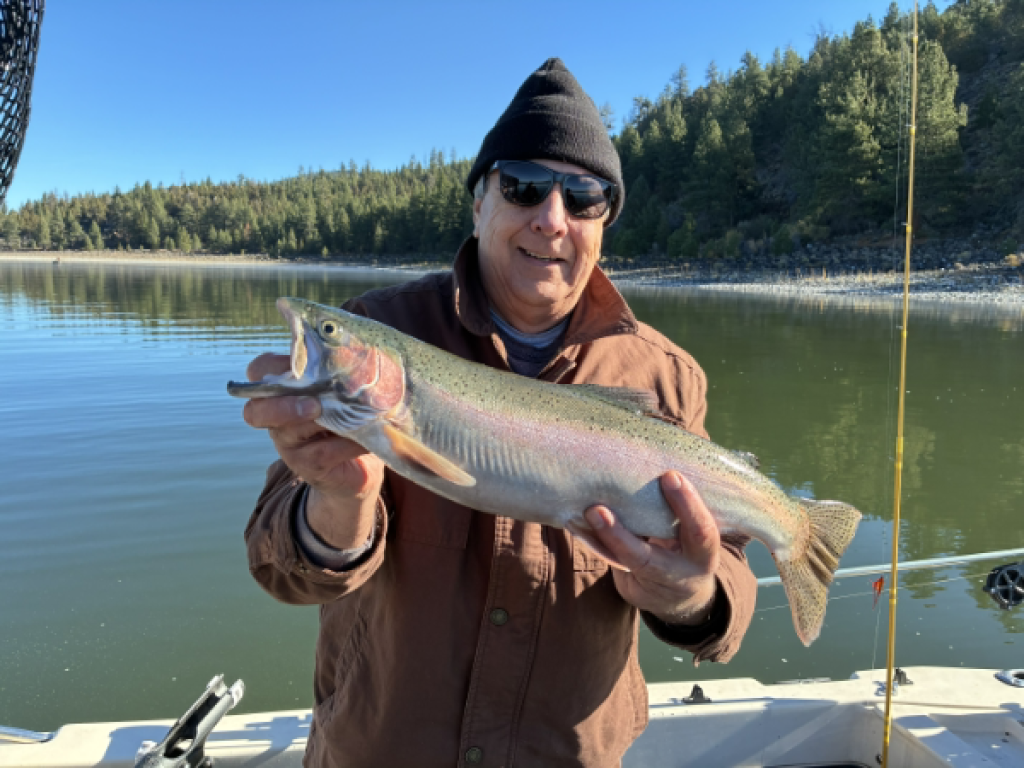
Fat Rainbows reward fishermen at Eagle Lake.
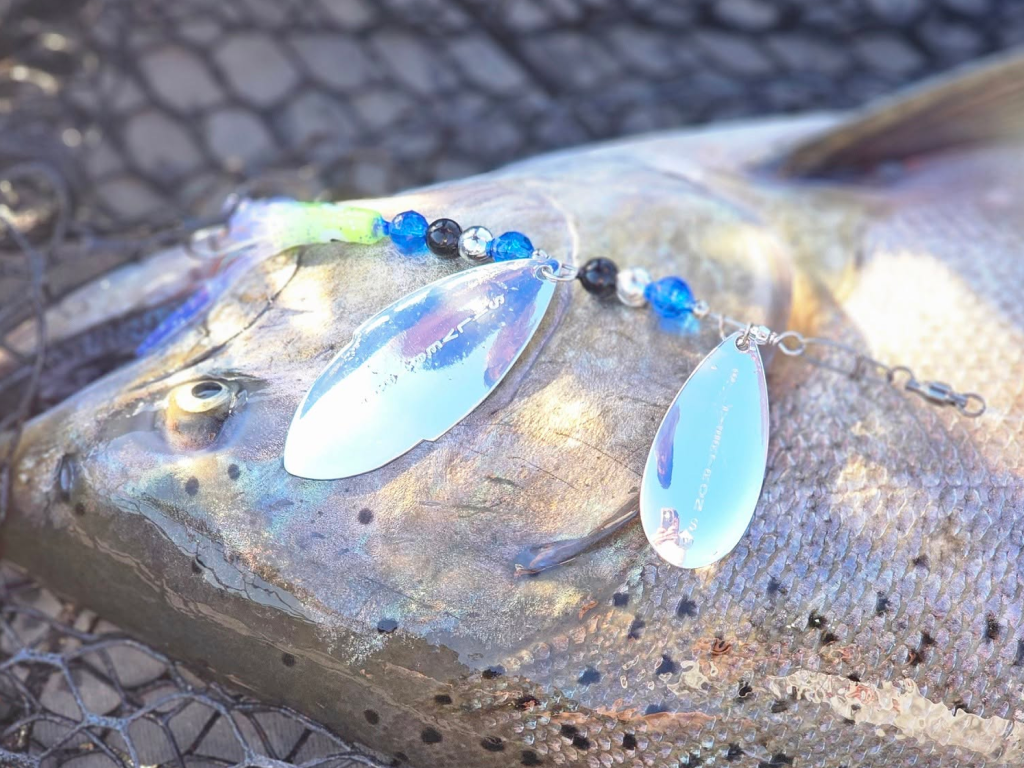
Tim Noxon of Fish Traveler Guide Service gave us this report from Eagle Lake. The fishing has been kind of slow at the lake with people struggling to find the trout.  Some of the fish we are taking trolling are tipping the scales in the high 3 to high 4 lb range.  We did pick up a 5lb 1oz ELT a few weeks back as well. Right now we are catching these fish trolling naked night crawlers over shallow structure in deep water. We keep the bait near the structure on the edge of deep water, trolling slowly with the nightcrawler wiggling nicely. The trout fishing will pick up as the lake cools off in the coming fall weather. As the bite picks up trollers will catch them on Thomas Bouyants, Excel and Needlefish spoons, as well as the traditional Jay Fairs trolling flies. October and November are usually the best months to catch big Eagle Lake rainbows. You are welcome to check in with me anytime for a current report before heading up to Eagle Lake to fish. Tim Noxon, Fish Traveler Guide Service. 916-201-4648 or www.fishtravelerguideserviceeaglelake.com Looking to rent a cabin for the fall season? Contact John & Linda Hembree at 209-768-5581.