NOV 16TH '25 Collins Lake
CDFW, not private plant
500lbs. trout planted View guide →

What's biting across California, newest first.
CDFW, not private plant
1000 at SS pond, NS, and SS. +250 Lightning at SS Pond
Red and gold spoons working well
CDFW plant. Peninsula, cove, and row holding fish. Outside weeds and dock best.
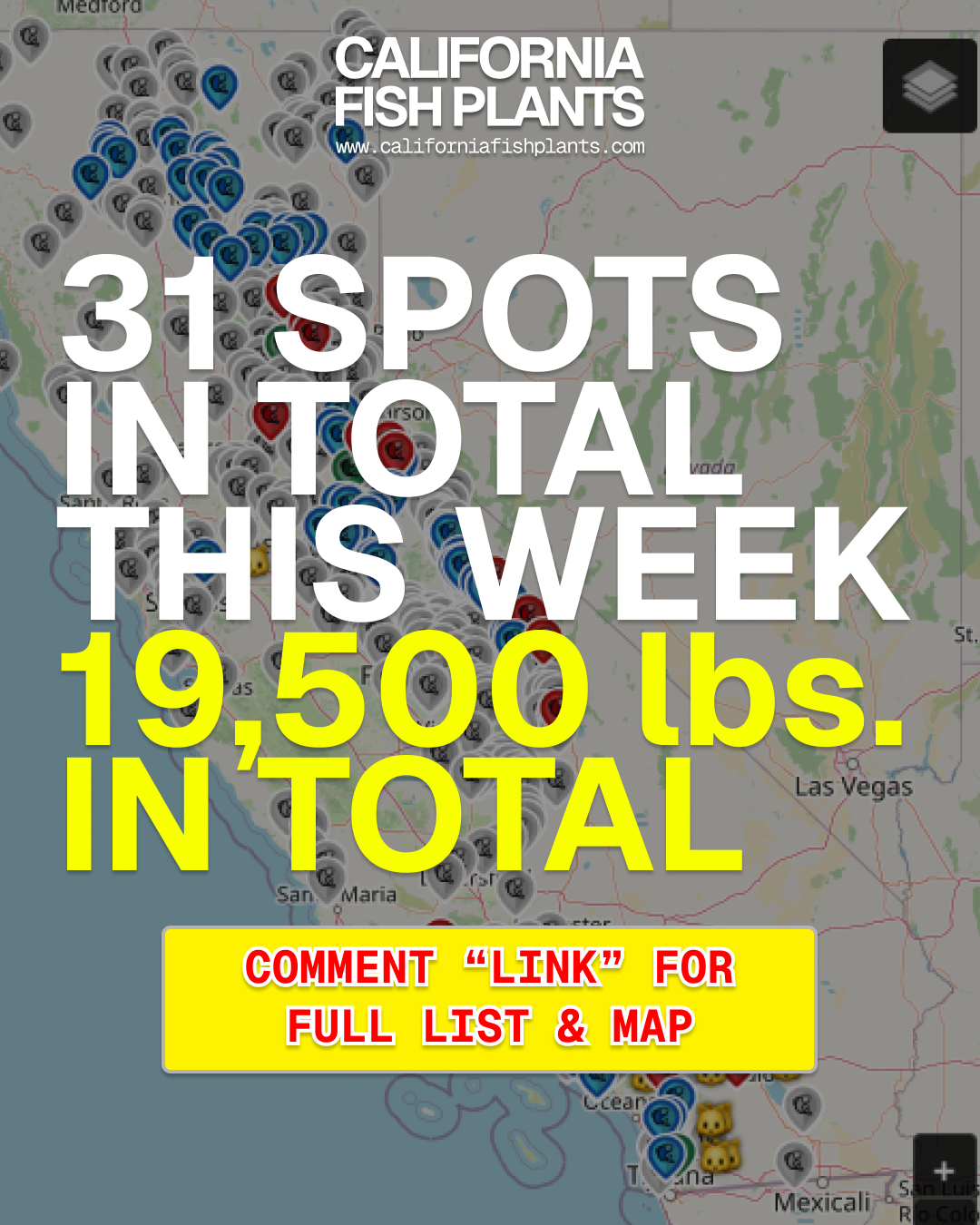
🎣 California Fish Plants for 11/16/2025 - 11/22/2025 19K lbs Trout Following 35.4K, Sheeesh With November’s crisp air cooling California’s waters, trout are feeding aggressively before winter sets in. This week, California is expected to have 19,000 lbs. of trout planted across 31 locations. With unannounced plants, last week saw a revised total of 35,400 lbs. of trout across 42 locations. Yes you read that right.
1000 lbs at south shore pond, 1000 lbs at south shore ramp
Planted in lakes 2 and 6.
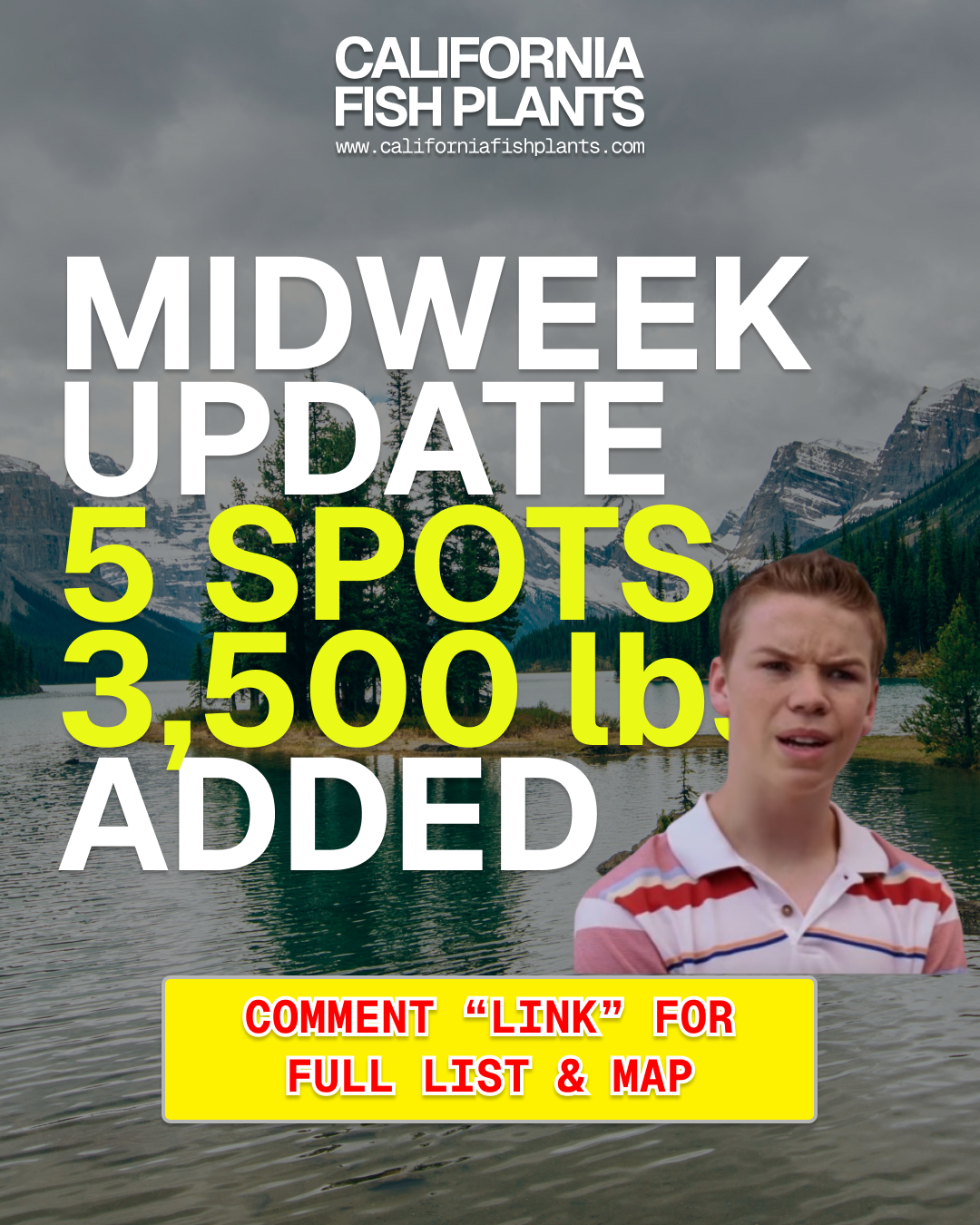
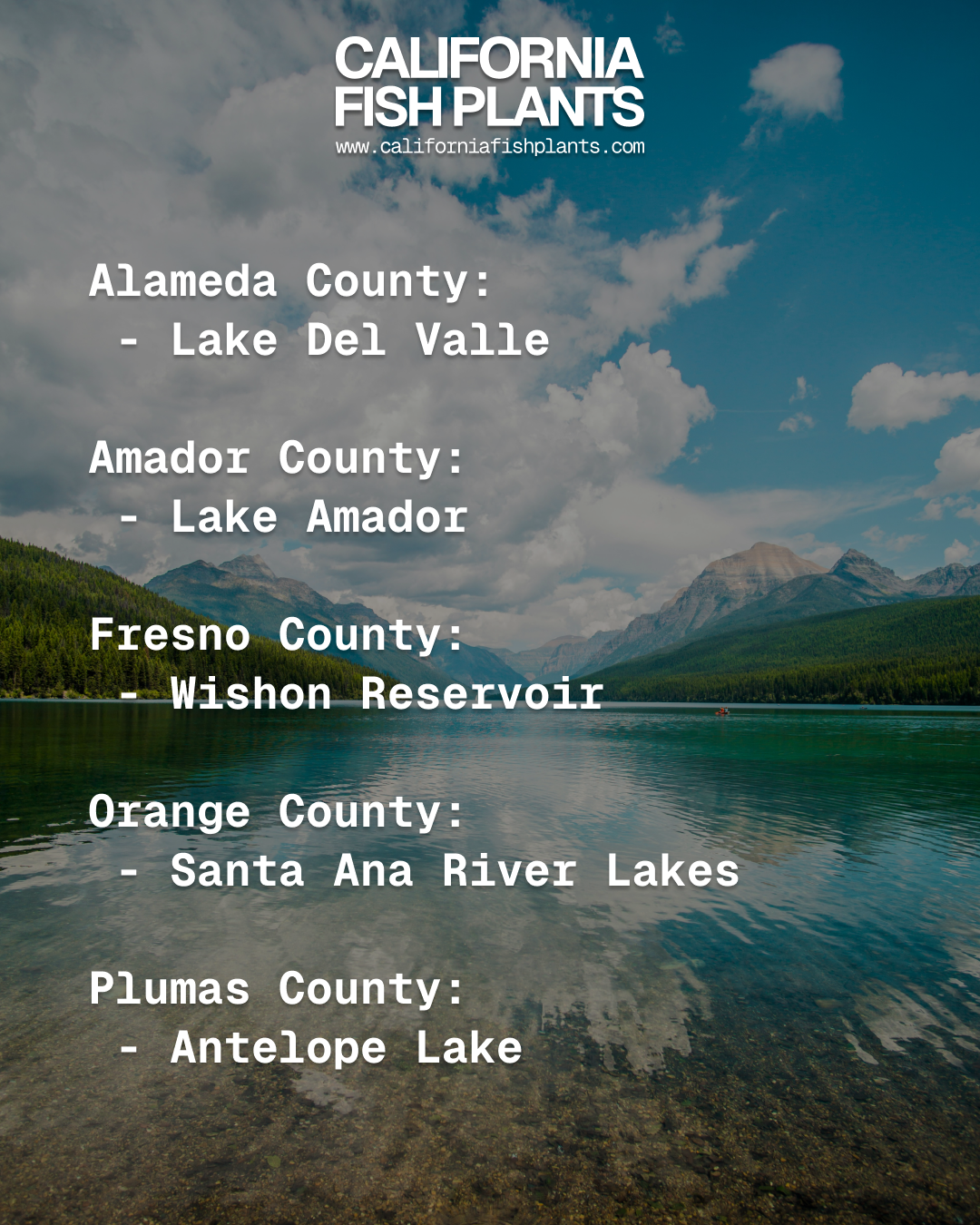
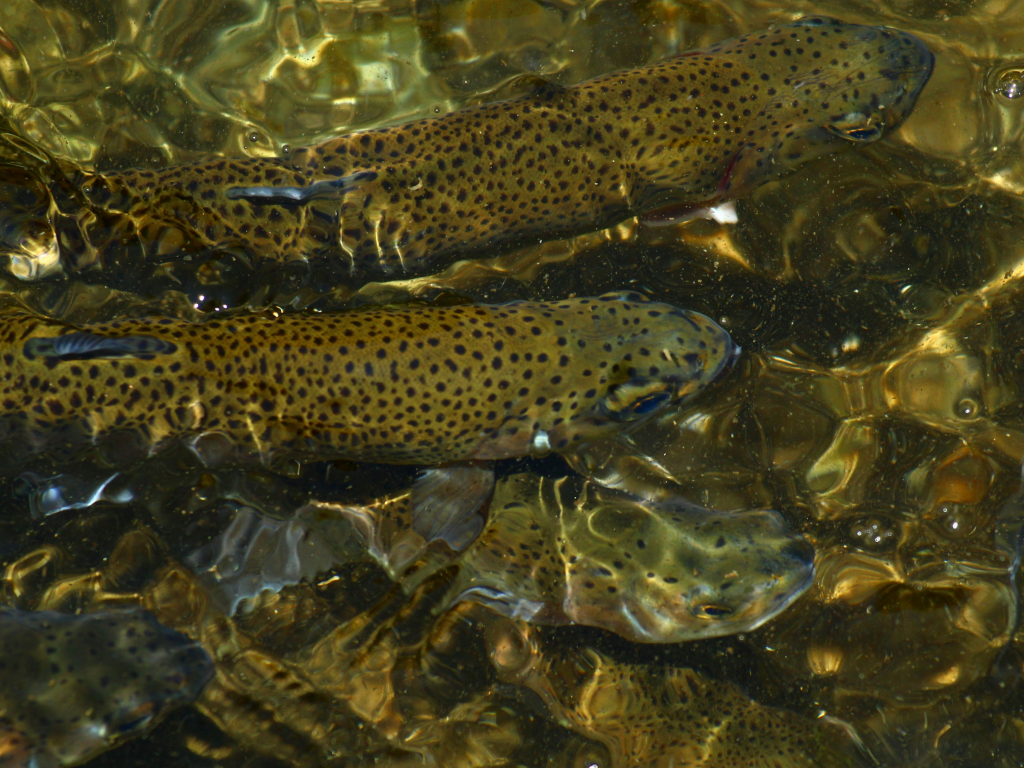
🎣 Mid-week Fish Plants for 11/9/2025 - 11/15/2025 Trout are swimming higher. Hey anglers, here’s your midweek update. 5 additional spots are planting fish, bringing totals to 19,500 lbs. of trout across 31 locations. Colder weather is pushing the trout up higher, but this rain across the entire will make most waters murky. Consider darker colors but with flash, sparkle whether you’re fishing off the bank or trolling.
We will start adding much more gear to the shop, all are tailored to California waters made by California anglers. Stay tuned
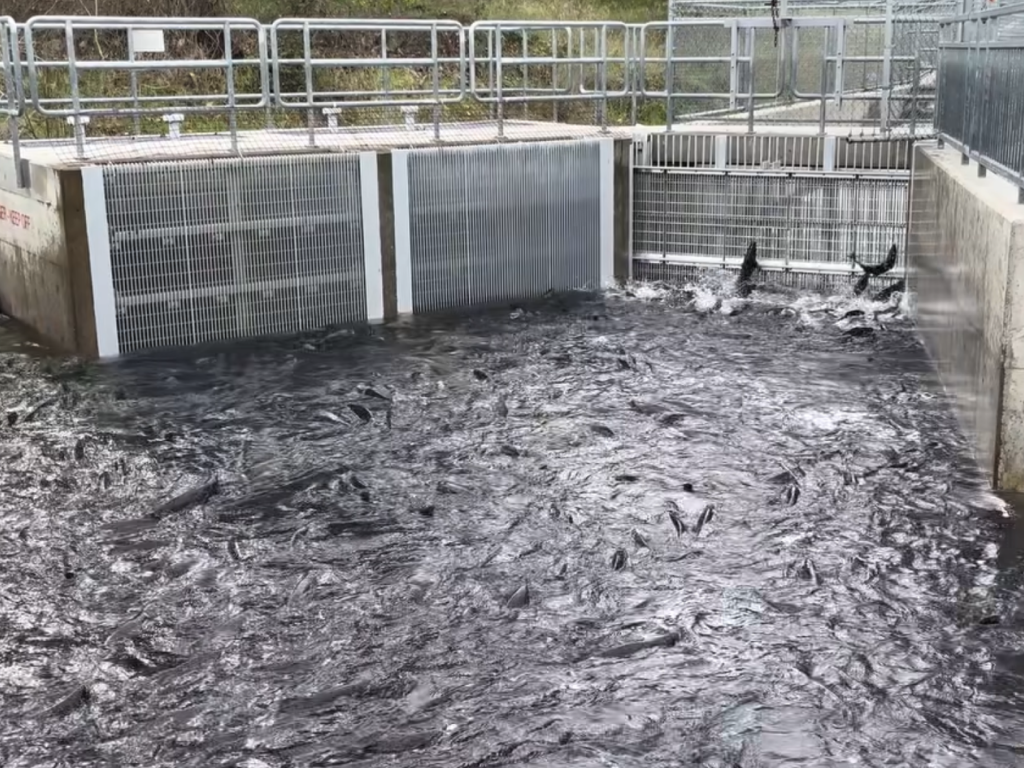
American River, CA – Following the opening of the Nimbus Hatchery fish ladder last week, California Department of Fish and Wildlife staff started spawning fall-run Chinook salmon on Monday, November 10. On that day, crews processed 146 adults and collected 423,360 fertilized eggs. These eggs will hatch in late December. The resulting fish will rear at the facility and be released as smolts next spring to support American River salmon returns. Spawning of fall-run Chinook continues through mid-December. Steelhead trout spawning will follow, running from late December into February.

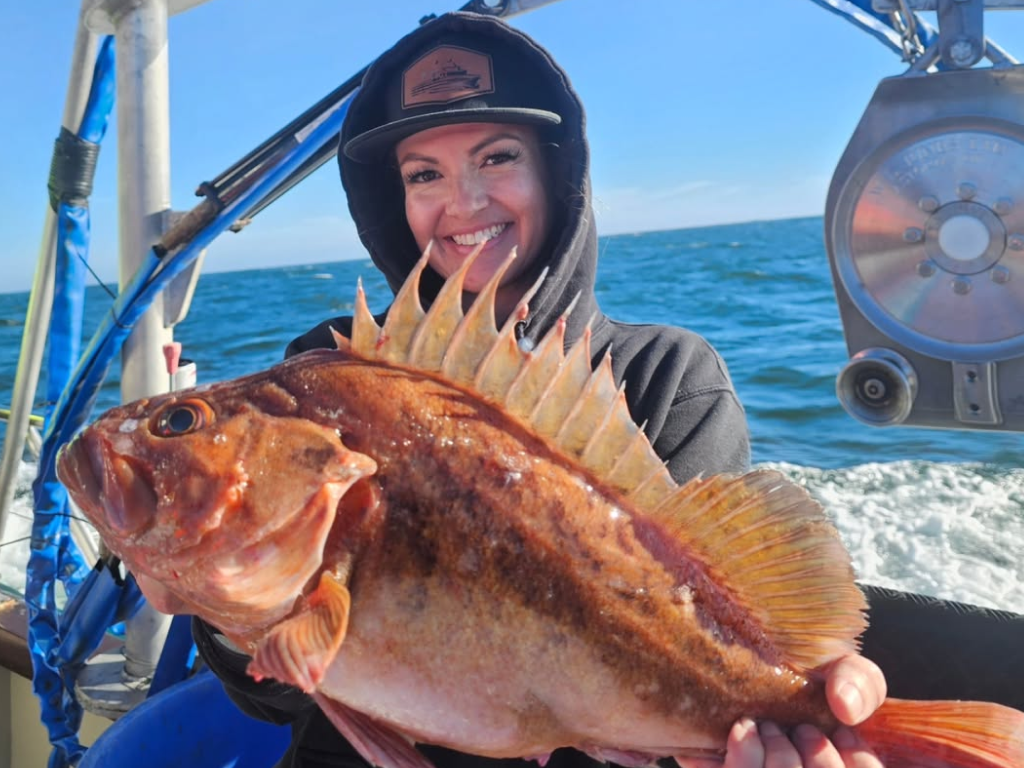
San Francisco, CA – Tanya fished a crab/rockfish combo trip from Fisherman’s Wharf. The boat limited on rockfish in one hour. Anglers worked depths of 130 to 170 feet. Purple flies tipped with squid produced steady action. Rockfish remain abundant in Bay Area waters, with Dungeness crab adding to combo-trip catches.
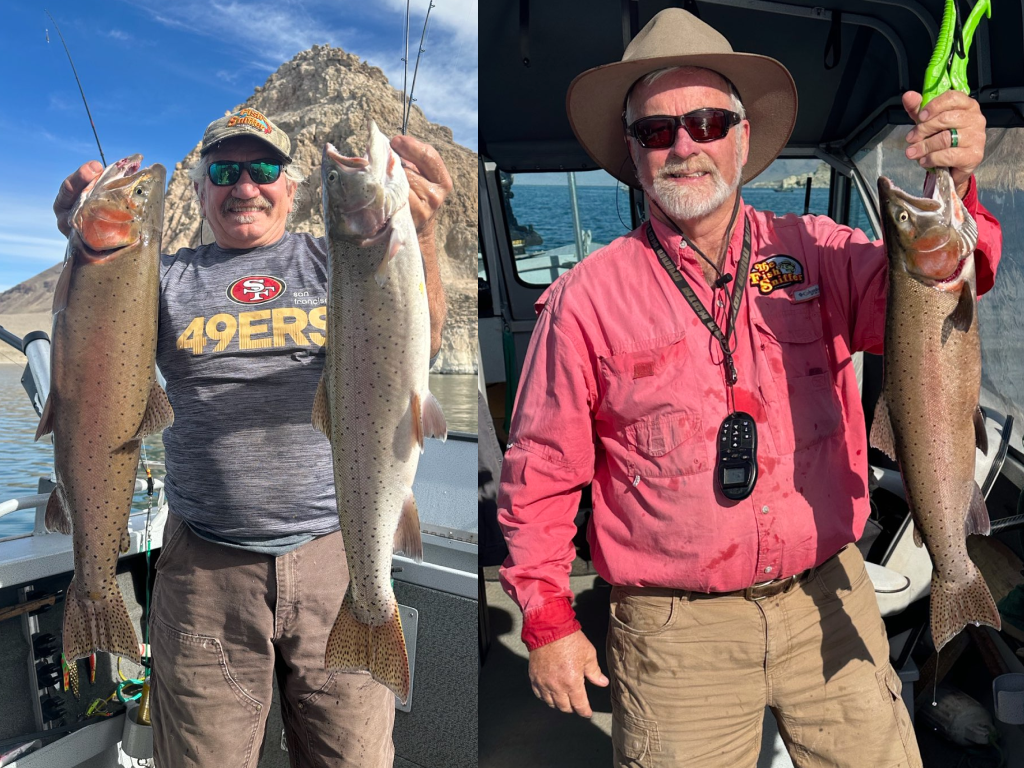
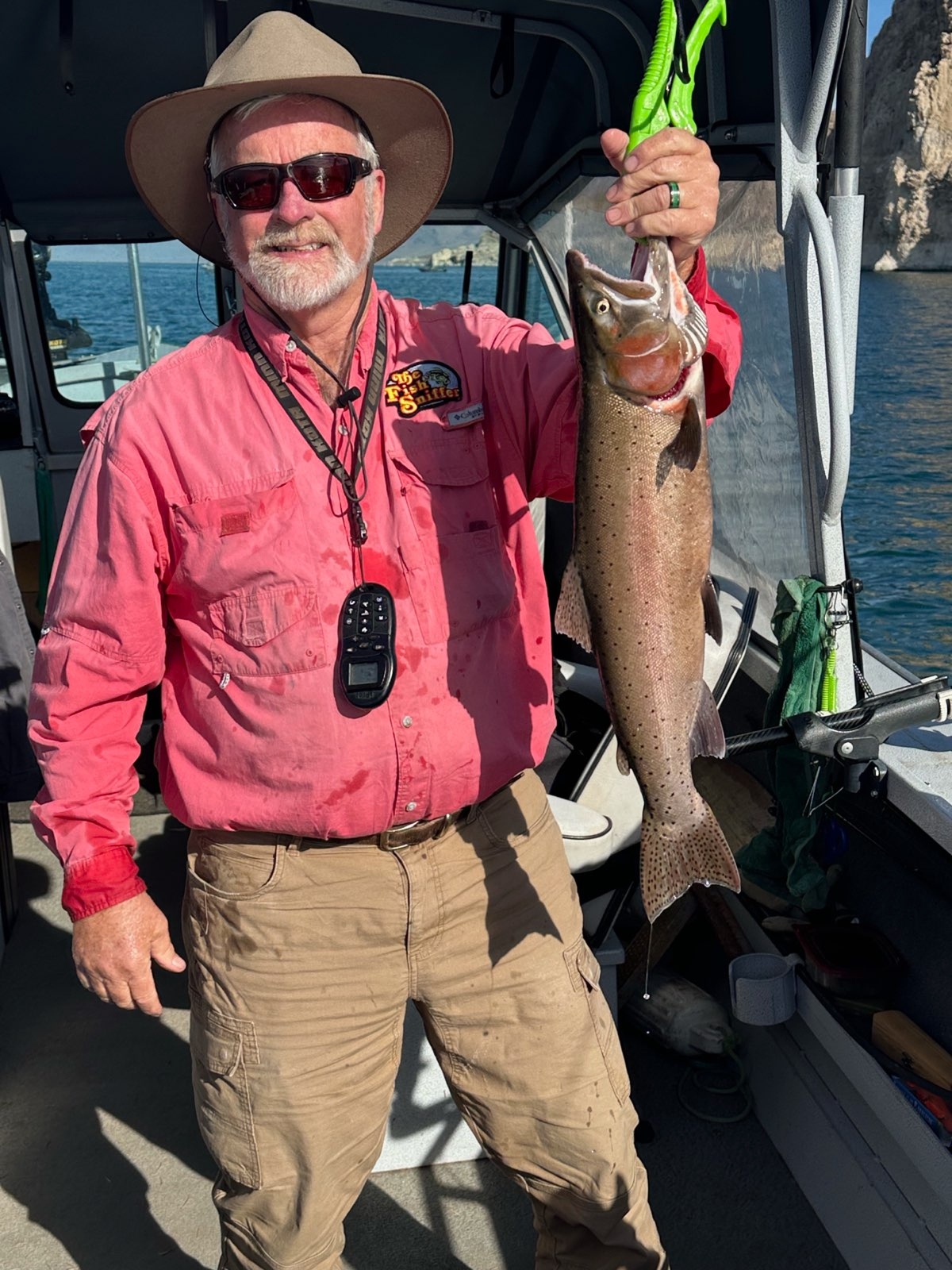
Pyramid Lake, NV – Paul Kneeland and friends fished Pyramid Lake on November 11. The day ran slower than average with no large fish landed, yet the group boated 27 cutthroat up to 7 pounds. Cooler weather and post-front conditions appeared to moderate the bite. Steady effort on ladders and deeper shelves still produced consistent mid-sized cutthroat. Full report with tactics and photos from Kneeland’s outing will appear in the next issue of Fish Sniffer magazine, available in two weeks.
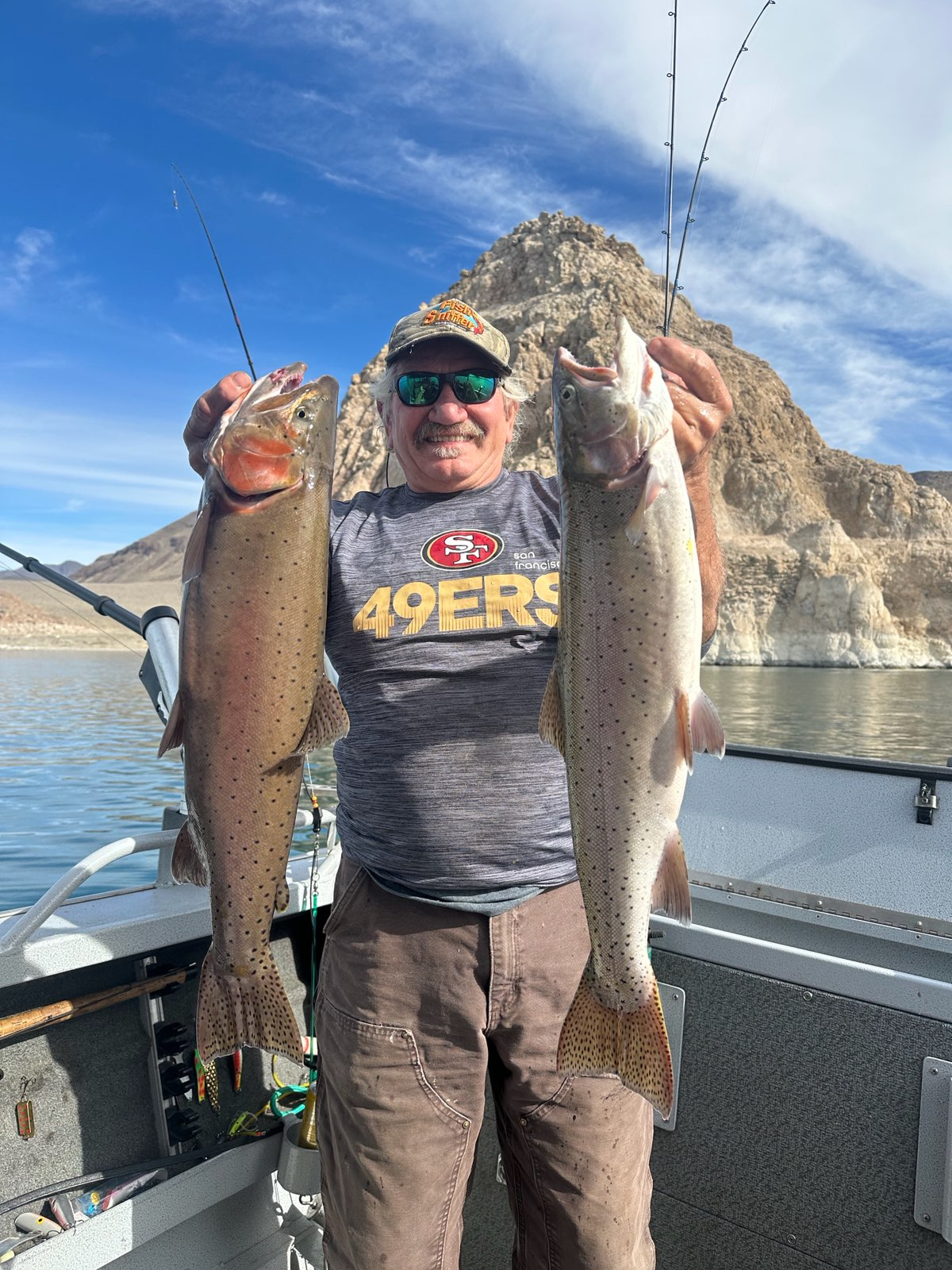
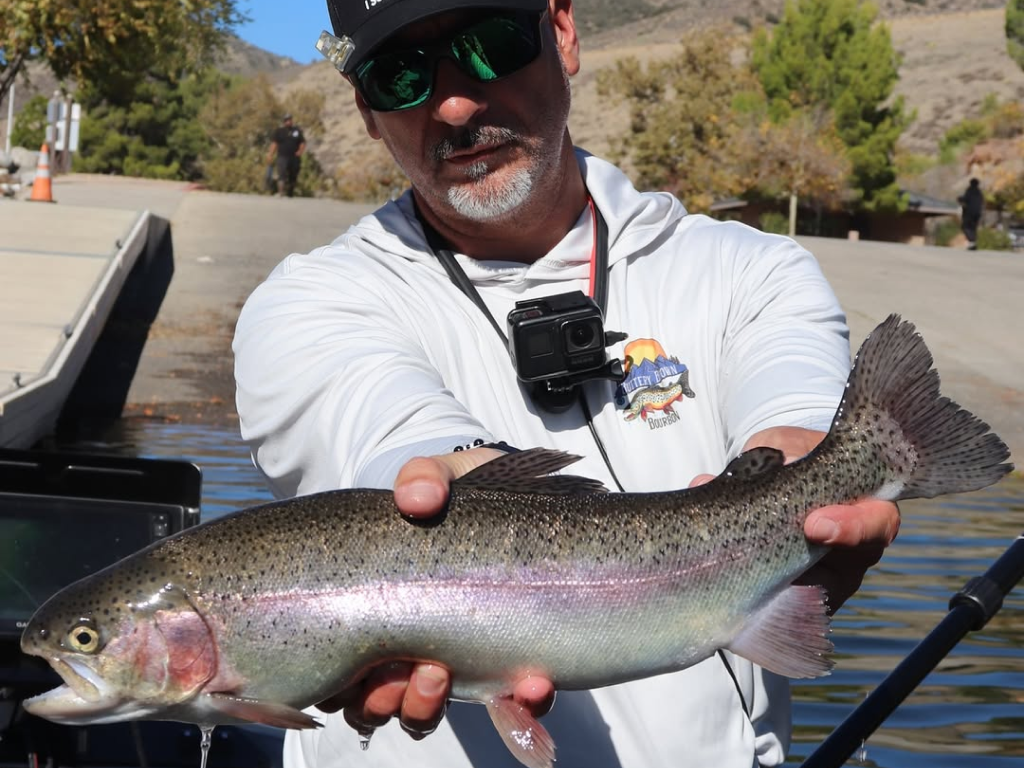
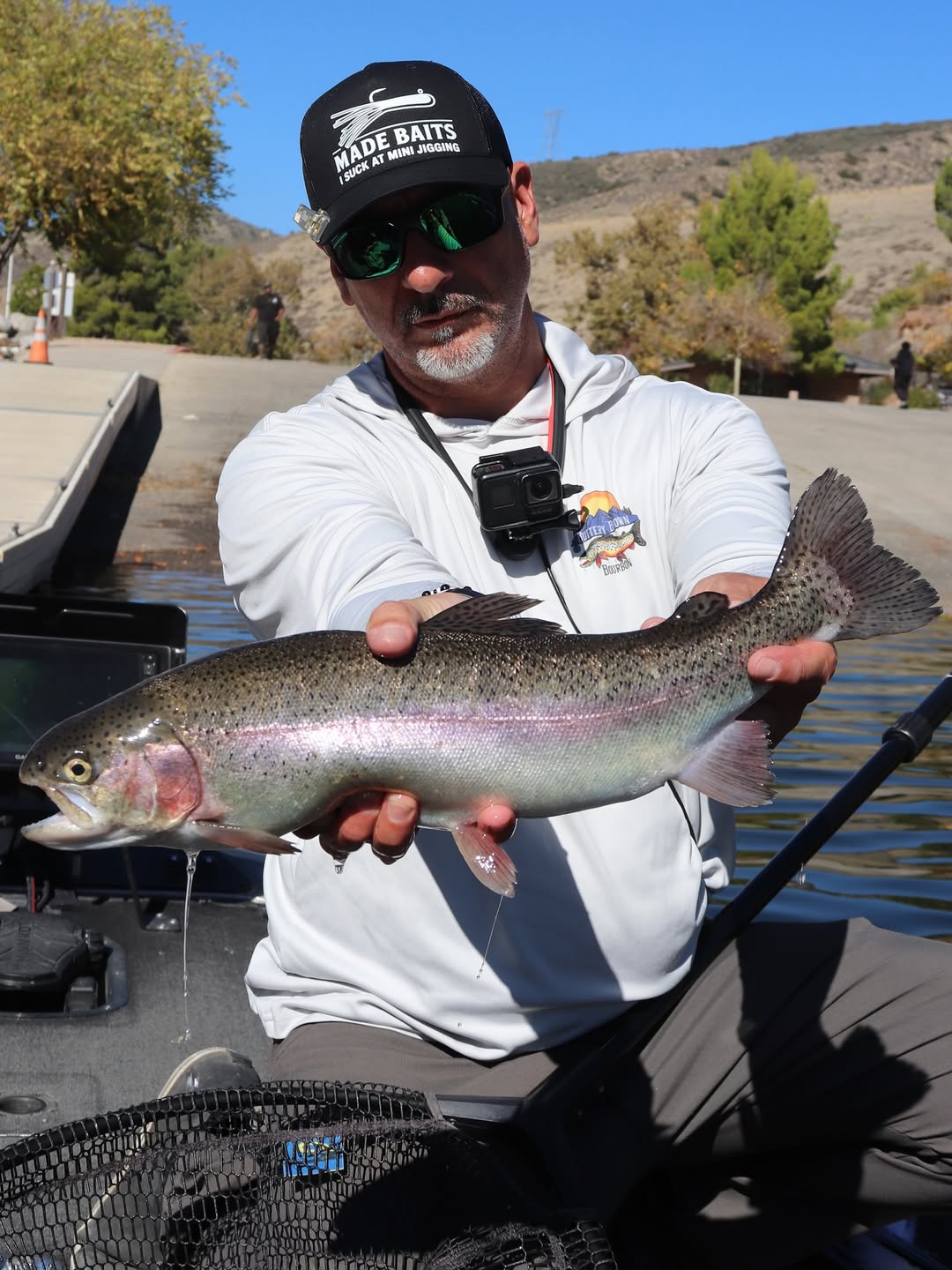
Pyramid Lake, Los Angeles County, CA – While Pyramid Lake fishing in Nevada continues to produce, the other Pyramid Lake in Southern California kicked off trout season with fresh plants and active fish. Recent rains stained the water dark, but anglers found success in the murk. On October 27, the lake received 5000 pounds of rainbow trout. The new stockers now hold in 5 to 15 feet of water, mixing with resident stripers and crappie. Mike Cooper reported steady action using a MADE Baits Minnow Beetle in 1/16-ounce size. The dark beetle color and small blade worked well on a steady retrieve. Cooper fished with guide Lorenzo of Guppies Fishing Adventures. He noted schools moving through, with one healthy stocker hitting subsurface before committing on the drop. Trout set hard after the initial swirl, showing strong post-plant aggression. With cooler weather and ongoing plants, Pyramid Lake remains a solid early-season option for SoCal trout anglers.
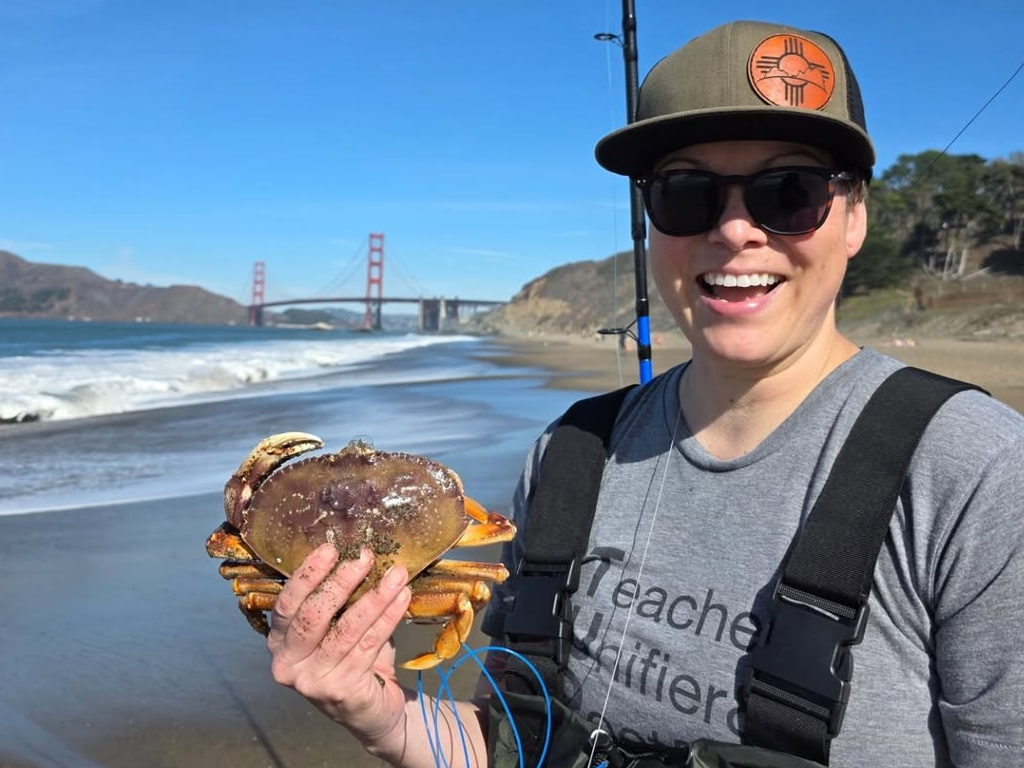
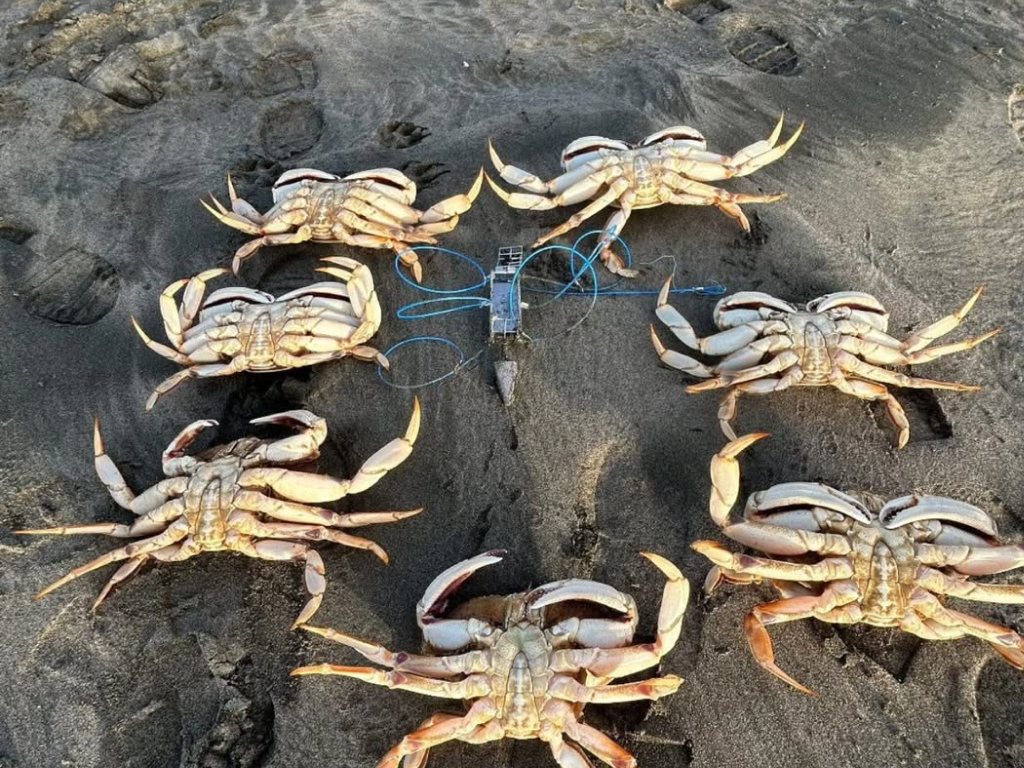
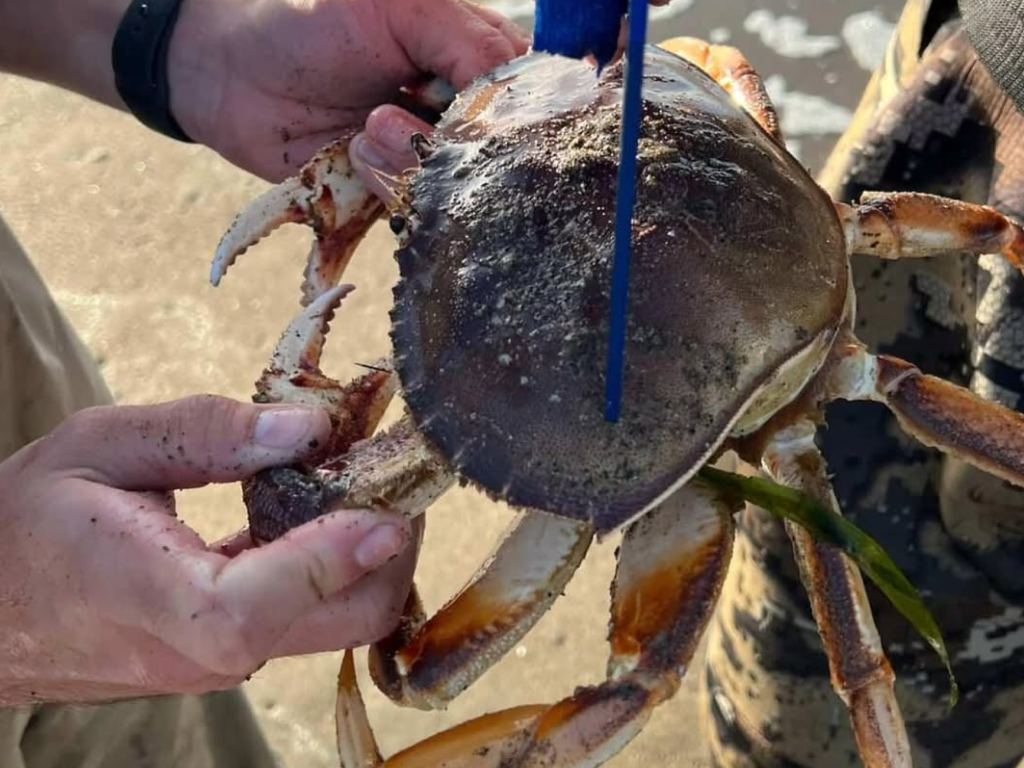
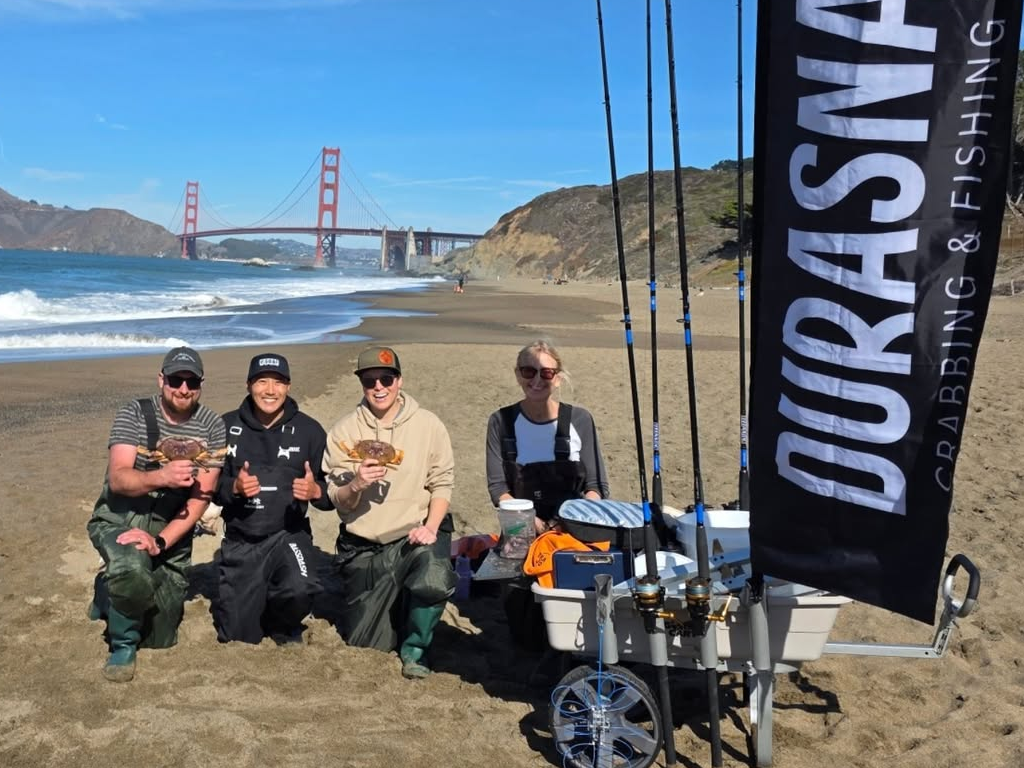
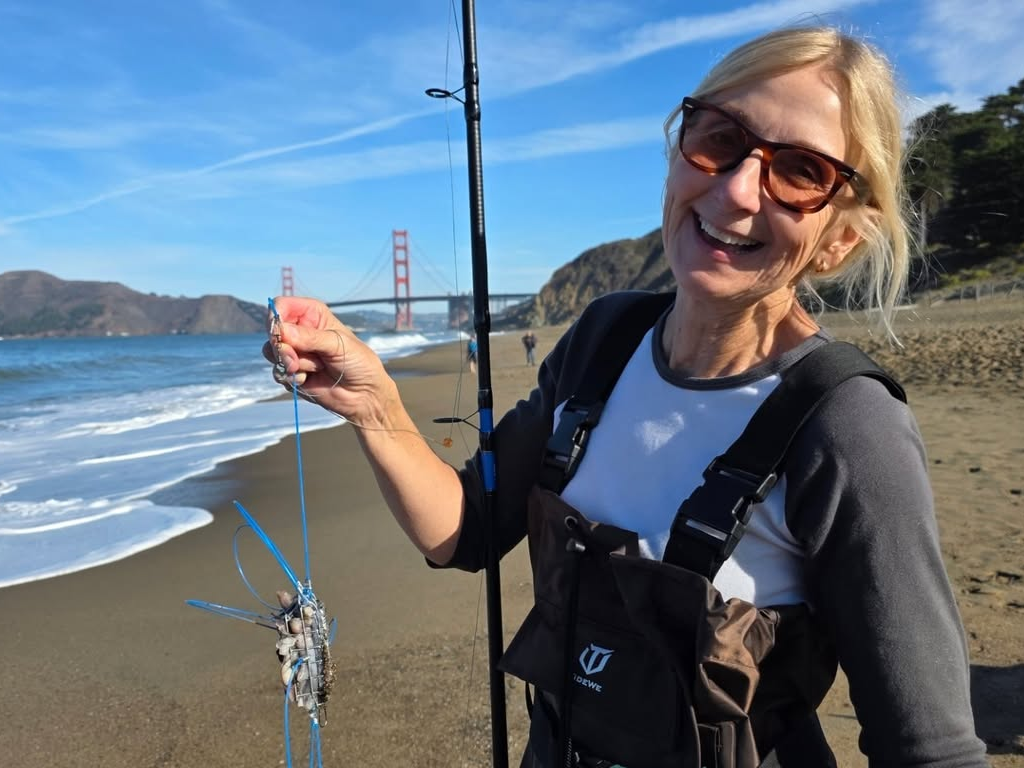
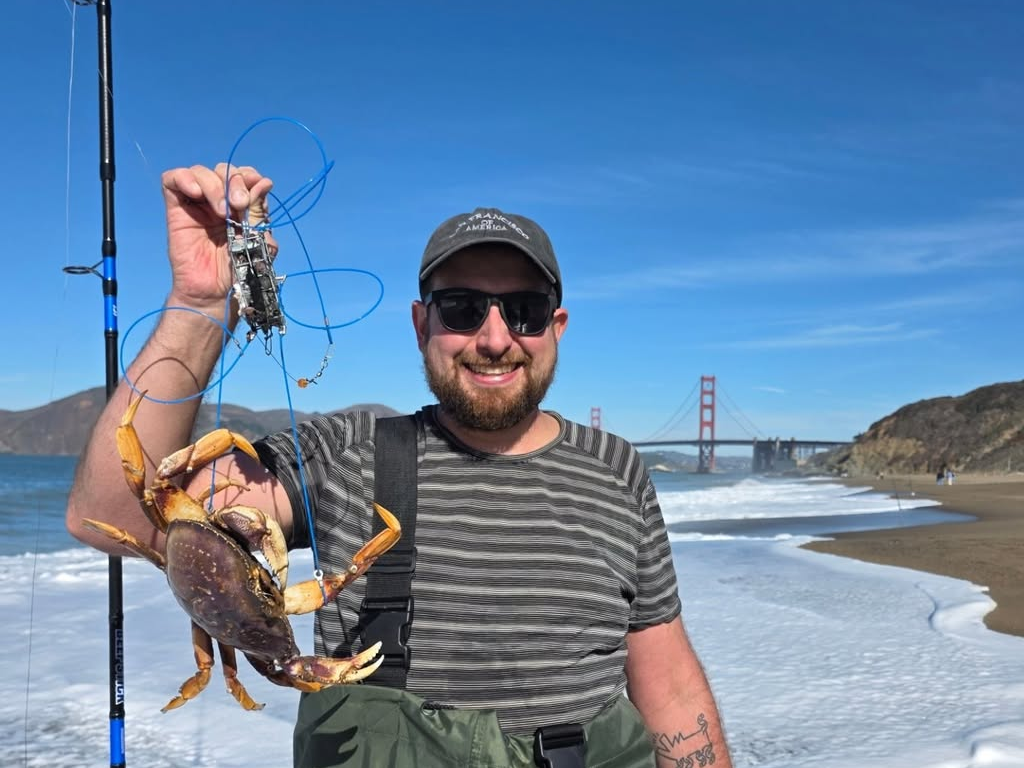
Pacific Coast, CA – Lawrence Ngai of Durasnare kicked off the beach crab snaring season with a standout group session. He always puts his clients on Dungeness and red rock crabs, and the clear skies, light winds, and minimal crowds delivered ideal conditions for hands-on learning along the surf line. Ngai guided anglers through the essentials. He taught casting snares into breaking waves, executing steady retrieves against powerful currents, and maintaining gear in the productive strike zone. The focused instruction paid immediate dividends, with clients landing 2 keeper Dungeness crabs plus steady action on California’s notorious red rock crabs that filled coolers and left the group energized. Ngai reconnected with a client from a previous Durasnare trip. The returning angler reported that just one week after his guided session, he launched solo at Torpedo Wharf and boated 25 red rock crabs. He now owns his own crabbing setup and beach cart. “That’s the most rewarding part,” Ngai said. “Teaching the skills and watching clients go out independently and crush it.” Prime weather and open beaches persist. Durasnare reports the surf-zone crab bite remains wide open right now. From novices to seasoned snare casters, crabs come steadily for those using Lawrence Ngai’s proven techniques and snares.
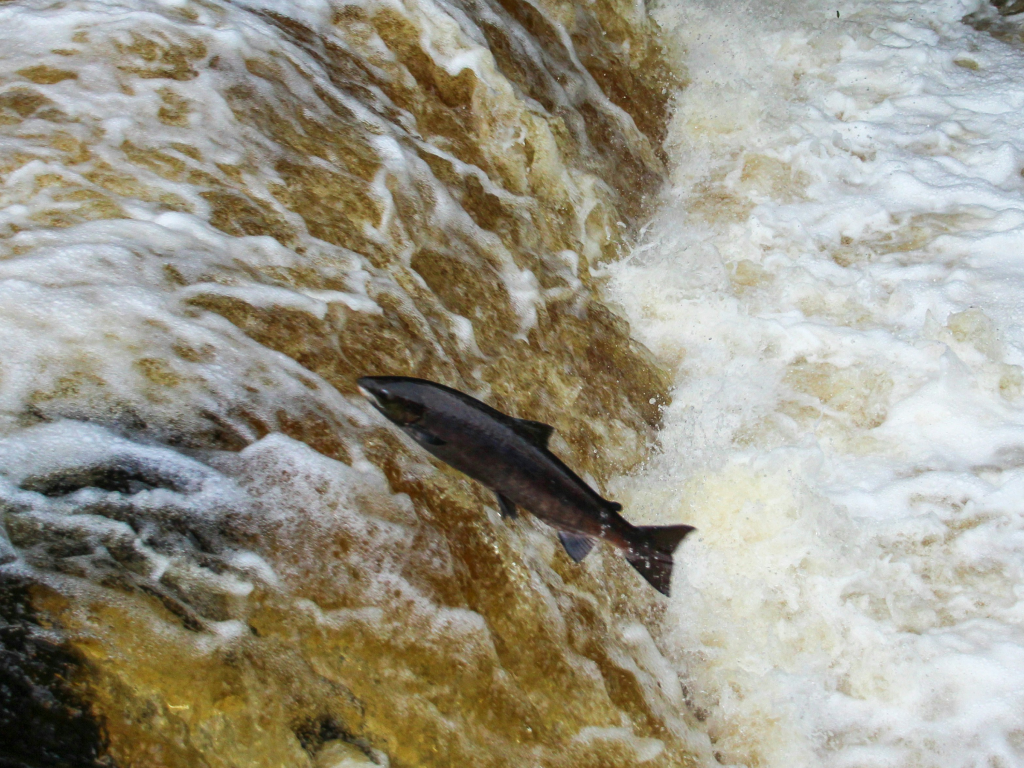
SACRAMENTO - Commercial salmon fishing on California’s ocean waters has been closed for the past three years, while only a very limited recreational salmon season has been allowed on the ocean and three Central Valley rivers this year, due to the collapse of the Sacramento River and Klamath River fall-run Chinook salmon populations. However, there is some very welcome news regarding the Klamath River, where the removal of four dams was completed one year ago. I spent many hours fishing the Klamath River and its largest tributary, the Trinity River, for salmon and steelhead before the four Klamath dams were removed. In fact, I experienced my best two days ever of salmon fishing anywhere on the Klamath River in September of 2012 and on the Trinity in September of 1986. First, on last Friday, Native American Day in California, Governor Gavin Newsom signed California AB 263. This bill, introduced by Assemblymember Chris Rogers on behalf of the Karuk Tribe, Yurok Tribe and California Coastkeeper Alliance, extends emergency water regulations for two key Klamath River tributaries, the Scott and Shasta Rivers, until January 1, 2031, or until permanent rules are adopted by the State, to protect struggling salmon populations. “The Shasta and Scott rivers are currently under emergency regulations that took tribal voices and our state’s fisheries into consideration when they were developed,” said Assemblymember Rogers in a statement after the bill passed by the State Legislature in September. “Maintaining minimum flows on these tributaries will help the critical salmon restoration projects in the Klamath watershed continue to flourish. The temporary flow requirements maintained by AB 263 will provide certainty to farmers, fishermen, and tribal communities alike.” “AB 263 was introduced in partnership with the Karuk Tribe, California Coastkeeper Alliance, and the Pacific Coast Federation of Fishermen’s Association (PCFFA). The bill would maintain river flows for at-risk salmon runs on two critical Klamath River tributaries – the Scott and Shasta Rivers,” Rogers explained. “Flow minimums were set by the State Water Board during the drought emergency declared by Governor Gavin Newsom in 2021 and, under this legislation, would stay in place until the Board promulgates long term flow rules. Amendments taken in the legislative process added a five year sunset date and a requirement for the State Water Board to hold an annual meeting to gather feedback from local stakeholders.” Rogers noted that most of the wild Chinook salmon found in the Klamath River are born in the Shasta River. The Shasta River features cold water flows fed by springs and glaciers. The Scott River is also a significant producer of Coho salmon. In fact, the majority of the wild Southern Oregon/Northern California Coho salmon, a state and federally endangered species), spend part of their lifecycle in the Scott River. So these two rivers are critical to restoring salmon in California. Joseph James, the Chair of the Yurok Tribe, hailed the passage and signing of the bill in a statement. “The passage of AB 263 is a critical step toward protecting the lifeblood of our people — the Klamath River and its salmon. Tribes have fought to protect our water, fish, and culture, and this bill extends the safeguards we need while long-term flow rules are developed. This is real progress for the health of the river and everyone who depends on it,” said James. “Klamath dam removal was just the first step in rebuilding our salmon fisheries,” said Karuk Chairman Russell ‘Buster’ Attebery. “We must protect flows in key salmon nurseries like the Scott and Shasta Rivers.” Fishing organizations also celebrated the passage and signing of AB 263. “To improve conditions for fish, sufficient flows instream are necessary,” said Angelina Cook, Restoration Associate with the California Sportfishing Protection Alliance. “Yet lack of enforceable regulations render California’s rivers vulnerable to dewatering. AB 263 establishes measurable thresholds which empower agencies to limit excessive water withdrawals. Passage of AB 263 is a significant step to reverse trends toward extinction of a keystone species in the third most productive salmon-bearing river in the contiguous western United States.” Governor Gavin Newsom signed AB 263 as part of a legislative package that benefits Native Americans in California. “Native American Day is a celebration of Native culture and achievements, an acknowledgment of what Native peoples have endured, and a day to honor their resilience and all that they’ve protected. Today’s legislation reaffirms our work to address historic wrongs and furthers the state’s promise to tribes of inclusion and accountability,” said Newsom. However, it must be pointed out that Newsom continues to move forward with the Delta Tunnel and Sites Reservoir projects and Big Ag-backed voluntary agreements that are strongly opposed by the Winnemem Wintu Tribe, Shingle Springs Band of Miwok Indians and other tribes and tribal organizations. Second, in more good news about the Klamath River and its tributaries, a video camera operated by the Oregon Department of Fish and Wildlife (ODFW) captured a Chinook salmon ascending the fish ladder at Keno Dam on the upper Klamath River on Sept. 24. This was the first picture of a salmon ascending the upper bays of the ladder since four hydroelectric dams were removed on the Klamath River last year, according to a press statement from the CDFW. “It’s a positive step for salmon because the majority of spawning habitat in the Oregon portion of the upper Klamath basin is above Keno Dam, Link River Dam, and Upper Klamath Lake,” the ODFW wrote. ”While salmon were observed on the Keno Dam fish ladders last year, this is the first image of a salmon passing the dam, with the video showing a salmon leaping the last pool of the ladder to the exit of the dam.” The cameras had been installed by ODFW and the Bureau of Reclamation just one day prior as part of efforts to monitor Chinook salmon migrating above Keno and Link River dams, the agency noted. “Salmon are again reminding us of their resiliency as they return to a portion of river basin that hasn’t seen salmon for more than 100 years,” said ODFW Watershed Manager Phil Milburn. “That salmon have so quickly shown us they can pass this key barrier renews our sense of optimism for this population and comes after years of work by Tribes, agencies, and other partners.” “Oregon has high standards for fish passage and it will take some work for Keno Dam to meet those standards and ensure enough salmon can get to historic habitat,” Milburn stated. “We are already working with partners including the Bureau of Reclamation to improve fish passage.” The ODFW said the detection at Keno Dam closely follows the first confirmation of the year that fall-run Chinook salmon are again returning to Oregon’s portion of the Klamath River. On Tuesday, Sept. 23, 2025, a Chinook was detected on another ODFW video system on a tributary of the Klamath River a few miles downstream of Keno Dam. “While four hydroelectric dams were removed from the Klamath River last year, Keno Dam and Link River Dam remain in operation. Both provide water for irrigation purposes and Keno Dam is also necessary for flood control in the region. Both dams are currently managed by the Bureau of Reclamation,” the agency pointed out. “Passage above Keno Dam is just one obstacle in their long migration to historic spawning grounds and salmon will face additional challenges. They also need to navigate Link River Dam (at the outlet of Upper Klamath Lake), swim through Upper Klamath Lake and find suitable spawning habitat and a mate in the hundreds of miles of streams that enter the lake. Upper Klamath Lake’s nutrient rich shallow water, poor water quality during certain times of year and unscreened diversions throughout the Basin will be a challenge for salmon,” the ODFW added. As fall-run Chinook salmon return to Oregon’s portion of the Klamath River this year, the ODFW, with its tribal, state and federal government partners, said it will again monitor for spawning in this stretch of the river. In 2024, more than 500 adult fall Chinook were confirmed to have spawned in habitat in the previous hydroelectric reach below Keno Dam. “That was the first confirmed successful reproduction of Chinook salmon in Oregon’s portion of the Klamath River Basin in over 100 years,” the ODFW concluded. The video is available here: https://www.youtube.com/shorts/34j17WKdySk In fall 2024, CalTrout and their partners installed a SONAR fish counting station at the entrance to newly reopened habitat on the Klamath River ‘The SONAR recorded more than 9,600 fish crossing this historic threshold, marking the beginning of population reestablishment, and we estimate 7,700 of those fish were Chinook salmon,” reported CalTrout: https://caltrout.org/news/1-year-anniversary-klamath-dams
SACRAMENTO - For the first time in three years, anglers this fall had the chance again to catch big, bright fall-run Chinook salmon on the American River, the crown jewel of the Sacramento Metropolitan Area. Kailyr Perry of Kailyrs Guide Service reported hot fishing while fishing the American from a drift boat in different sections of the river from Sailor Bar to Howe Avenue over the past couple of months before the salmon season closed on October 31. He said his clients caught their one fish limits of Chinook salmon most days while doing both day and evening trips. He is fishing both plugs and roe under bobbers. For example, on October 12, Spenser, William and John Nichols of Sacramento hooked 7 and landed 2 Chinooks over 20 pounds while fishing with Perry on the stretch of river from Sailor Bar to Rossmoor Bar. They landed the 2 kings while using chartreuse/orange Brad’s Killer Fish. After I arrived at the river, Spencer proudly held up his beautiful buck salmon weighing over 20 pounds, the first Chinook he has ever caught, as I snapped a few photos. But the salmon and steelhead populations of this unique urban fishery are in jeopardy as the California Department of Fish and Wildlife (CDFW) says it plans “significant reductions” in Chinook salmon and steelhead trout production at the Nimbus Fish Hatchery beginning in fall 2025, due to cutbacks in federal funding for the facility. “As a result, CDFW will reduce fall-run Chinook salmon smolt production by 50%, from 4.5 million to 2.25 million. Steelhead trout production will also be cut in half, from 430,000 to 215,000. deviating from standard hatchery practice,” said Steve Gonzalez, CDFW information officer. The Nimbus Fish Hatchery serves as a mitigation facility for the Nimbus and Folsom dams, with production targets outlined in the jointly developed “Plan for the Protection and Maintenance of Salmon and Steelhead in the American River.” The plan, developed in 1953 with the US Fish and Wildlife Service, recommends juvenile salmon production sufficient to yield 18,847 returning adults - 72% of the historical benchmark of 26,177 salmon returning from the ocean. “The U.S. Bureau of Reclamation (USBR), which owns the Nimbus Fish Hatchery and contracts with CDFW to operate the facility, has established the Nimbus budget at $2.5 million for the fiscal year (July 1, 2025, to June 30, 2026,” Gonzalez stated. “This is below the $3.16 million required to maintain historical production levels and falls short of meeting federal mitigation obligations under the Fish and Wildlife Coordination Act. Exacerbating the problem, budget reductions are compounded by increasing production costs, tariffs, and inflation. To give an idea of cost, fish food alone can exceed $500,000 annually at standard production levels,” Gonzalez said. Gonzalez noted that these reductions come at a critical time for fall-run Chinook recovery. After three years of closed commercial fishing and limited recreational opportunity, due to the collapse of the fall-run Chinook populations on the Sacramento and Klamath rivers, the hatchery’s output is essential to rebuilding stocks and supporting fisheries across the state. “Fall-run Chinook salmon smolts from Nimbus contribute substantially to ocean sport and commercial fisheries, inland salmon fisheries, and adult salmon returning from the ocean in the Central Valley - supporting both local economies and recreational opportunities. Steelhead from the hatchery also sustain a popular fishery in the lower American River,” he continued. Nimbus hatchery produced fish currently account for approximately 90% of the run in the Lower American River, and between 7% and 30% of the ocean harvest annually, Gonzalez noted. The long-term consequences of reduced output at Nimbus are expected to affect future abundance forecasts and the broader fishing industry. In response to my question about how the difference between $2.5 million and $3.16 in federal funding would result in a 50 percent cut to salmon and steelhead production, Gonzalez replied, “There are certain fixed costs associated with operating the hatchery that remain constant regardless of the number of fish produced. These include essential expenses such as utilities, permits, staffing, and facility maintenance. Because of these static costs, there’s not a direct dollar-for-fish ratio in the hatchery budget.” “When the U.S. Bureau of Reclamation capped funding at $2.5 million, it created a constrained budget scenario. The more flexible, proportional costs—such as fish food, fuel for transporting and planting fish, net pen rentals, and carcass disposal—are directly tied to the volume of fish produced. As a result, any budget shortfalls have to be absorbed by reducing these variable components, which ultimately limits fish production,” Gonzalez said. Here are some more details from Gonzalez on the funding: • The current agreement started in state fiscal year 2020. There have been 8 “modifications” to extend and add funds to this agreement since that time. Modifications occurred at various times to fund the hatchery, and money is at times carried across fiscal years. • Between September 2020 and September 2025, a total of $14.7 million has been added to the agreement through modifications to fund the hatchery and this is on average $2.94 million per year. • This year only $2.5 million has been made available for the entire current fiscal year through June 30, 2026. At this level of funding, the CFDW is making a number of standard production and release practices and having to reduce production in order to work within the funding we have. • According to the US Bureau of Labor Statistics $1 dollar in 2020 is now the equivalent of $1.92 due to inflation. This highlights that funding in 2020 is not the same or sufficient to support the same level of production in 2025. • $3.16 million would allow the CDFW to produce salmon and steelhead at the historic level of production at the hatchery, but would not cover additional associated expenses. • “We are not being defunded, but USBR is not keeping up with increasing costs of production and not adjusting what they are providing to support the hatchery,” Gonzalez concluded. I reached out to the Bureau of Reclamation for their comments on the negotiations between the CDFW and Reclamation, but they hadn’t responded as of press time. In response to the alarming news, the Golden State Salmon Association (GSSA) said the proposed reduction in salmon and steelhead production would have a dramatic impact on the salmon fishing industry and coastal, tribal and inland communities. “The loss of millions of juveniles from Nimbus would be devastating for the state’s struggling salmon industry, as well as the communities that depend on salmon,’ said Scott Artis, Executive Director of the Golden State Salmon Association. “It’s crazy that DOGE is apparently making this illegal and reckless cut that threatens fishing jobs. We work on salmon issues every day - but we’ve not met anyone from DOGE trying to understand our issues.” Decades ago, the American River produced 200,000 adult salmon, GSSA noted. As late as 2002, the river saw a run of 150,000 salmon returning to the 22-mile long river. “Until our natural salmon runs recover, hatcheries are the life support system that can keep salmon fishing alive. Simply put, salmon jobs can’t survive if the Bureau cuts this key life support mechanism,” added Artis. In addition to Nimbus, the federal government also funds the Coleman Hatchery in the upper Sacramento River watershed that was constructed to mitigate salmon losses resulting from the construction of Shasta Dam. Similar funding cuts are reportedly being considered for Coleman, mirroring the reductions already announced for Nimbus, according to the GSSA. “My understanding is that once you pay for the infrastructure and staff to run a salmon hatchery, the difference in cost between producing two million and four million fish is not great. We’re talking about pennies per fish. DOGE cutting salmon hatchery funds is akin to cutting FDA food inspectors. It’s a thoughtless, reckless action that harms large parts of society, in this case, salmon communities and families in California,” said John McManus, GSSA board member. The GSSA said the reckless cuts would “undermine decades of progress” and break faith with California’s fishing families, Tribes, and communities that depend on salmon. The group is calling on the Bureau of Reclamation to fully fund hatchery operations at Nimbus and Coleman fish hatcheries.
Season Opener. No fishing on Nov 17 and 18 (Lake maintenance)
Planted at Pelican Lake
Season Opener for trout
Top Lake planted
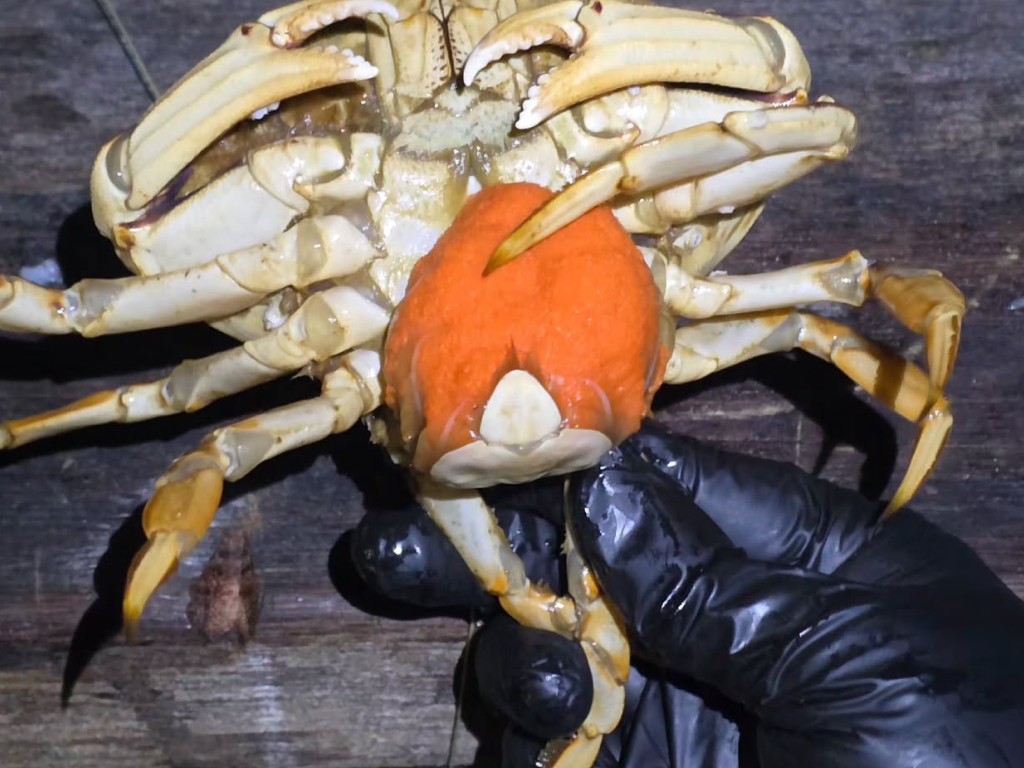
The 3rd Annual Crab Snare Fishing Derby for the Cause has started, and everyone along the Northern California coast is talking about it. Some people say female Dungeness crabs have been harder to find this month on the West Coast. Others think they’re just hiding in deeper water. But in the South Bay, many anglers are actually catching big male jumbo crabs with no problem at all. It really depends on where you go, which makes this year’s derby even more exciting and unpredictable. There’s one rule everyone needs to remember. Female Dungeness crabs are not allowed to be taken home. For our derby, they must be released back into the ocean. To enter the contest, you have to measure a live female crab with our official jumbo crab gauge. Then you must record your measurement and the release in one long, unedited video. After that, the crab goes safely back into the water. If you need more details, all the rules are easy to find at vivid snares dot com. You can still sign up, and when you do, you get a free jumbo crab gauge by pick up only at Sharp Park Market in Pacifica. This is the only tool you’re allowed to use for measuring during the derby, so everyone has a fair chance to win the title belt. There’s also a big topic everyone is talking about. Our glow in the dark Vivid Snares are completely sold out in stores and online. Some people think certain fishers bought a bunch early to gain an advantage. Others say it doesn’t matter at all. Whatever you think, if you want to know when they come back, make sure to join our newsletter. Subscribers hear about restocks before the public. One more important thing. This season has strong King Tides, which can make the ocean dangerous. Always check tide charts and warnings before going out.

Trout are holding 10-20’ in the morning, 15-30’ in the afternoon. Released in middle of the dam. Use silouette with flash like Fish Thugs Green Ice.
Spoons are working well off the bank
Docks and Quail Cove best. Fish beyond weeds. Try MADE motivation if water is stained
Planted at large lake
The only live map of every public and private fish plant in California. Free forever.