JAN 13TH Lake Amador
4 lber caught using spinners near spillway


What's biting across California, newest first.
4 lber caught using spinners near spillway
Limits being caught on spoons
Jigs working well along shorelines and also trolling if you can get on the water. Aim top 30’ along coves
Brown jigs working well with scents
Minnow and trout patterns working well along weed lines
🎣 California Fish Plants for 1/11/2026 - 1/17/2026 California adds another 26,400 lbs trout this week! 🐟 Winter’s chill is prime time for hooking hungry trout, and anglers across California have plenty to look forward to. The upcoming week brings generally mild and stable weather, perfect for getting out on the water. This week, California is expected to have 26,400 lbs. of trout planted across 35 locations. Including unannounced plants, last week saw a revised total of 49,905 lbs. of trout across 63 locations. 🚨🗺️ Quick heads-up: based on all your feedback, we’re bringing back Pro Maps. This time, access is exclusive to shop customers only (no direct subscriptions available). Every purchase earns you points in our new system, so the more you spend on gear from top California tackle makers designed specifically for our local waters, the more days of Pro Maps access you unlock. 📅 The official launch is coming before February 2026, though we may roll it out even sooner since most of our maps are already ready. This exclusive info stays available only to the community that supports California-made fishing tackle. And if you grab anything from the shop before the official Pro Maps launch, you’ll earn triple points to get you started strong.
Darker colored jigs working well
Spoons with brighter shades and white working well in top 20’ of water
Brighter color jigs working well in top 15’ of water from shoreline
Spoons with white working to produce rainbows on days with sunlight
AM bite is stronger, especially with purple, pink, or red spoons
Darker color jigs (pumpkin, black, etc.) working well to create contrast against murky waters.
Darker colored minnow patterns working well in slightly stained sections of the lakes. Fish are in top 20’ of water.
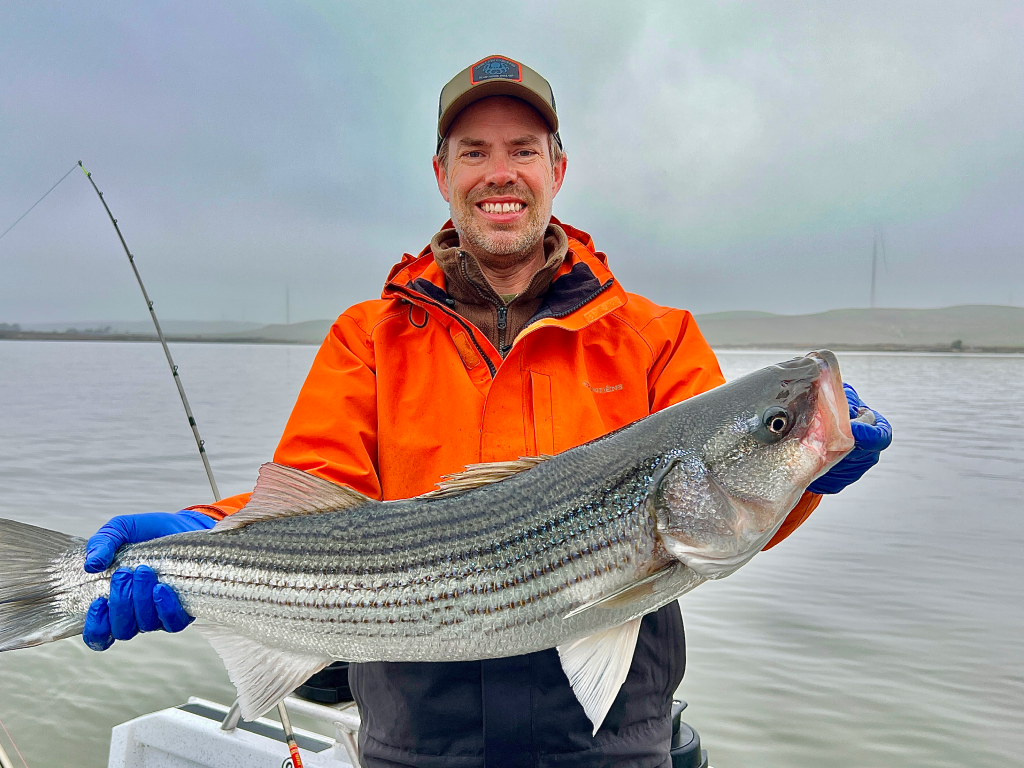
The Fog Bowl of 2025 by Jack Naves This past December, we experienced an odd weather pattern the likes of which most of us have never seen. For more than three weeks, an inversion layer trapped a blanket of fog over the Central Valley in a weather capsule straight out of science fiction. The good news was that the menacing Delta winds were at a standstill. On the other hand, the total lack of direct sunlight slowly turned down the dial on water temperatures in a torturous-like manner. I was lucky enough to spend four straight weekends on the California Delta chasing striped bass during the weather event. Not surprisingly, the action ramped down in direct correlation with the plummeting water temperatures. On Sunday, November 23, Gary and Anthony Mattis joined me on a foggy morning drive to the West Delta. The fog was so thick that I had to slow considerably at the Highway 12/160 interchange to figure out what was going on. Caltrans had Highway 160 closed for pothole repairs, so we crossed the iconic Rio Vista Bridge and meandered over to Sandy Beach, a Solano County park. After launching the boat in twilight, it was still too foggy to safely run west to my striper hot spot. Instead, we anchored off Sandy Beach for the end of the incoming tide, but nothing was biting. Once it was clear enough, we ran west and set anchor on the outgoing tide soaking chicken livers. It was a slow tide, so rather than waste away for several hours until a bigger tide started, I decided to troll. We trolled Rat-L-Traps west along weed lines near Sherman Island for three small striped bass including one keeper. I’ve had the Mattises out several times, and it seems like we always hit slow days when we fish together. After struggling all morning, I was thinking it was going to be more of the same, but then the incoming tide started to trickle upriver. After anchoring in one of my favorite spots near Collinsville on the Sacramento River, some of the other boats around us started picking up stripers on bait. I looked down at my starboard side drift sock; it was barely swinging in the current. “Patience,” I thought to myself. Only moments later, Gary’s rod got slammed and we had another nice keeper in the boat. As the current ramped up, the bite busted wide open. We had limits in no time and raced back to the cleaning station with striped bass up to eight pounds. The plot unfolded in a classic manner, with early challenges followed by a sudden flurry to end the day in grand fashion. The water temperature during that trip capped out at 58 degrees, but the fog would soon change that. I made it out with my entire family the following weekend on November 28. We ran to the same spot first thing in the morning, but this time the incoming tide was already flowing at full steam. The current ripped past our anchored boat as we pitched rods armed with chicken livers in every direction. It didn’t take long for the striped bass to find our baits. This time, the bite was wide open right out of the gate. We limited by ten o’clock on quality six to eight pounder stripers, releasing several others along the way. The water temperature was 56 degrees, and the bite was on fire! After such a momentous day on water, I convinced Jason Carlisle of Elk Grove to join me the very next weekend. On Saturday, December 6, Jason and I made a late morning start out of Brannon Island State Park. I was trying to avoid the still present fog and slow morning tide. We arrived at around nine o’clock on a small outgoing tide, so I anchored in deep water hoping to catch strong currents. In 33-feet of water, I made my first cast. After about twenty minutes and no bites, I was about to reel in to check my bait when the rod started pumping. I immediately knew that the fish had my bait, so I slowly started reeling to pick up line and pin the 8/0 circle hook. At first, the rod loaded up soft, but then it pumped violently. It seemed like an average fish until I had it up rear the boat. Suddenly, the fish ripped line off the bait caster and made a dash for the bottom. “This is a nice fish” I remarked to Jason. I was thinking it might even be close to a twenty-pounder. After more than five minutes, we had the twelve-pounder netted and into the bottom of the boat. The circle hook did a perfect job of hooking the striper in the corner of the mouth, so I revived and released the fish using my grip tool. That fish ended up being our biggest striper of the ‘fog bowl’ period. Jason managed a nice six-pounder on his last cast, wrapping up a slow day of fishing in December’s foggy gloom. The water temperature was down to 53 degrees. The very next weekend on December 13, I returned to the still-present fog, this time with Mick Berklich of Sacramento. The water temperature was down to 49 degrees – not a good sign! As we feared, it was slow, although we managed three small keepers plus a last-minute Sacramento Pike-Minnow that had us fooled into thinking we had striper limits. Soon after the trip, a storm system finally blew into Northern California that swept away the persistent fog. Sunlight warmed our faces for the first time in nearly a month. I fished through it all - experiencing Delta striper action that ranged from ice cold to red hot. Those of us who lived through it will likely never forget the Fog Bowl of 2025.
Hot fishing in Magdalena Bay!
By Paul J. Kneeland
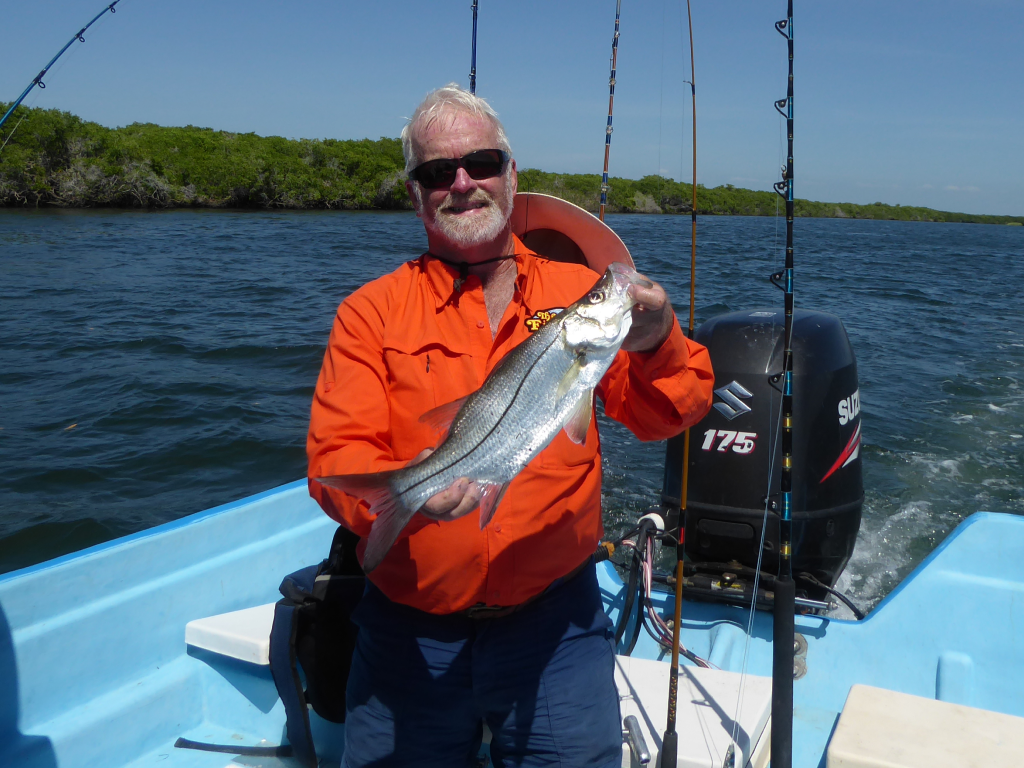
Last September, my brother Ken from Merino, Colorado and I took a trip to Magdalena Bay, on the Pacific coast of the Baja Peninsula. Magdalena Bay is located about halfway down the Baja Peninsula, is 31 miles long, and features mangrove swamps in the north and south ends of the bay. We fished with the folks at Baja Pirates in the small fishing village of Adolfo Lopez Mateos on the north end of Magdalena Bay. We have fished the Baja area many times out of Cabo San Lucas and Los Barriles, but we wanted to try something different. We were intrigued by the mangrove fishery in the bay, and the wide variety of species of fish that spend time in the mangroves. We were looking forward to catching some species of inshore fish we hadn’t seen before, as well as the offshore species we were familiar with. We stayed at Baja Pirates new facility in Lopez Mateos. It was still under construction, but there were 2 fully furnished rooms with great air conditioning, firm beds and huge showers. The kitchen/dining room was almost completed, but no air conditioning yet. The weather was unseasonable warm for late September, and we really appreciated the cool air in our rooms. Our host Gabriel was very congenial and went out of his way to take care of our every need. The boats and tackle are all of top quality and set up for both inshore and offshore fishing. We fished from a 26 foot panga with a center console and a 175 hp. Suzuki outboard. Our Captain Carlos spoke little English but was very friendly, and our mate Carlos 2, spoke good English and worked very hard to put us on fish and also answered our many questions about Mag Bay and the general area. Our cook and housekeeper made absolutely delicious meals for breakfast and dinner every day, and excellent burritos for lunch on the boats. Our first day, we were up at 5 am and treated to an excellent breakfast of pancakes, ham and eggs. We were at the boat ramp ready to go by 6:15 and loaded into the panga and headed to the Pacific. It was a short run to the mouth of the bay, but went quickly in the calm bay. We observed thousands and thousands of different sea birds all over the area. Once we hit the mouth of the Pacific, the bar was showing whitecaps all around, but Carolos skillfully negotiated around them and we were into the ocean. The sea calmed down as we headed out to deeper water and out a couple miles to a row of shark traps. We approached a pair of buoys and set out 4 trolling rods with different colored small trolling jigs in red and pink colors. We trolled back and forth a couple of times with no love, and the Captain decided to run south about 15 miles to find dorado. After a bouncy boat ride, we slowed and put out the same lures as before. The area looked no different than anywhere else – no obvious structure or depth change – but the dorado were there! In just a few minutes of trolling, one of the outrigger lines went off and Ken grabbed the rod and skillfully played a nice dorado of about 12 pounds. A few minutes later, the same rod with the big pink feather went off and I got to land another 12 pounder, a brother to the first. The great bite stayed on for quite a while, and we landed 15 dorado from 8 to 14 pounds. Lots of action and lots of fun! Back at the lodge we had another great meal of chicken wings, pasta and fresh dorado and white sea bass. The next day we decided to stay in the bay and fish the mangroves. We also stopped at a small boat in the bay and bought some fresh, live shrimp for bait. We headed north in the 26’ panga and entered the weird world of mangroves! The upper Magdalena Bay splits in two parts and becomes very shallow with waterways tight with mangroves on both sides interspersed with sand dunes that looked like they should be on the moon! We stopped and cast the shrimp with a bottom sinker to the holes around the mangrove roots. It was difficult to hook the fish, the little bait stealers! In about 8 of 10 casts, you would feel a small tug and strike and the hook would come up empty. We were using heavy spinning outfits featuring Shimano rods, Penn reels and 30 lb. test braided line. I think some lighter outfits would have helped us land more fish. But you never know when you might hook a monster and need the heavy equipment! As it was we caught several different species including spotted bay bass trigger fish, grouper, jack cravelle and others not easily identified! We moved a couple of times, lost all our bait, and then moved south back toward home and started trolling right along the mangroves. The tide was running out and it looked like a small river running past the bushes. We started hooking and landing a bunch of snook – a fish I had never caught before! We were using a small, trout size 4 inch blue floating Rapala that the fish couldn’t ignore. We took turns landing 18 snook from one to 5 pounds. Nothing huge, but great fun!! Back at the lodge, we had an epicurean delight: fresh snook, deep fried and perfectly done! It looked a little spooky, because they deep fry the whole fish, excluding guts, but the whole carcass with head and all. The skin was nice and crunchy and the meat was well done but not dry – some of the finest fish I have ever eaten! Our final day, we decided to go back out to the Pacific for some larger bottom fish like grouper. As we headed north, we stopped alongside 2 huge ships docked at the sardine factory. Captain Carlos got out the cast net and in just a couple casts filled the live well with small sardinas for bait. We ran out past the rough bar and the ocean was much calmer than the day before. We tried several different spots for grouper. We caught several small bottom fish before we ran out of live sardinas. The live well in the stern was not operating properly, so we the live bait all died. We put on some 2 and 3 oz Ikara jigs by Ahi/Promar in blues and greens and dropped them to the bottom in about 70 feet of water and caught several larger cabrilla, triggerfish, Mexican snapper and other bottom fish. Captain Carlos decided to troll back towards the mouth of the bay. We put on the same small blue Rapala that had done so well on the snook, and preceded to have strike after strike of beautiful Sierra mackerel! These pretty fish were about 3 to 5 pounds and extremely feisty! They put up a good fight even on the heavy rods. And you learn quickly not to put your fingers anywhere near that mouthful of razor sharp teeth! We caught at least a dozen mackerel before we hit the bay Baja Pirates is a full service vacation provider. They have been working in La Paz for over 25 years, and now are also serving the needs of fishermen in Magdalena Bay. Owner Leonard Phillip’s and manager Eddie Dalmau (formerly of Van Wormer Resorts) take pride in providing the best service and accommodations on the Baja Peninsula. You can meet them at the Sacramento ISE show in booth #3342 at Cal Expo on January 15-18, 2026. For more information, go to www.bajapiratesoflapaz.com, or contact Eddie at 866-454-5386
Lake Almanor
Weather Changes and so does the fishing
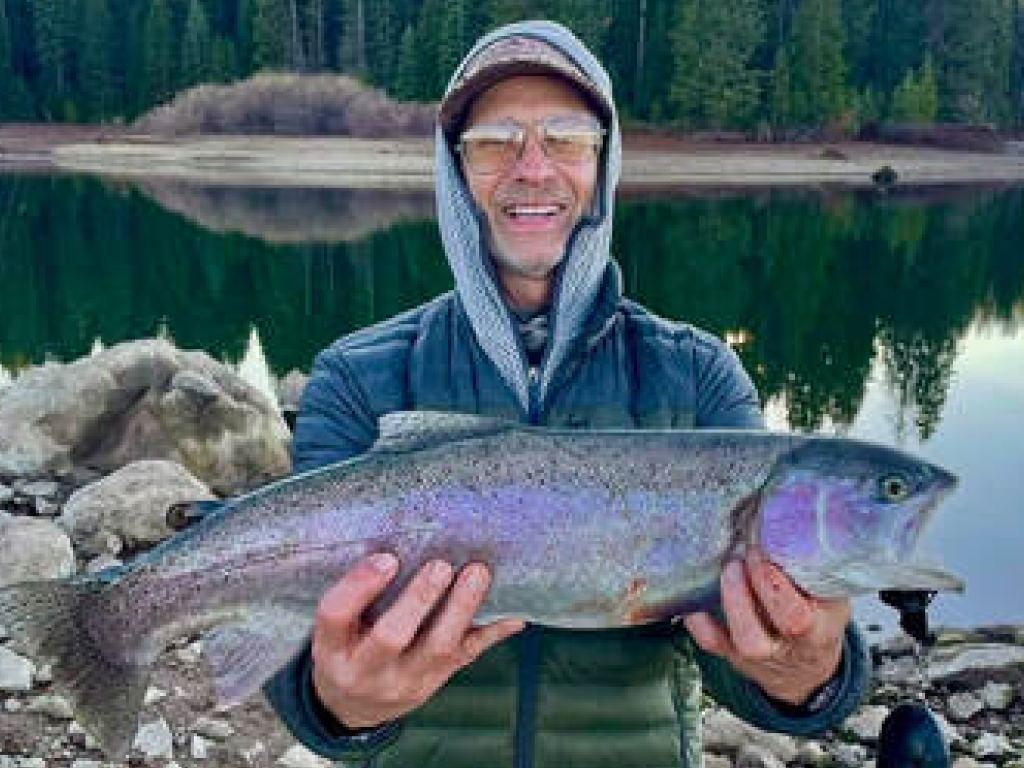
The weather has been incredibly mild in early December making conditions ideal for some December trout fishing. The current batch of storms may change things dramatically. Traffic on the Lake Almanor is light. The water level remains virtually unchanged with very little fluctuation and currently sits at 4483 or about 11 feet below full pool. Flows on all the lake’s tributaries have been below seasonal norms due to the lack of precipitation, but that is changing as we speak. Water temperature is now running in the mid 40’s and trending down. The trout are spread throughout the entire lake feeding on the pond smelt population. Much of the fishing focus has been on the east shore as well as both sides of the peninsula. Some pockets of fish on the west shore have been providing action as well. As in weeks past, and really throughout the year, trout have been caught on a wide variety of offerings recently for trollers. Slow trolled worms, plastics and trolling flies are all solid choices especially in baitfish patterns. Fast trolled spoons have also connected on breezy days, but with flat calm conditions, slow is the way to go. The cooler water temps have opened up the entire water column to the fish which now can be caught at all depths from the surface down to 30 feet. The catch is a mixed bag of Rainbows and Browns ranging from small to very large. Smaller aggressive Rainbows provide almost constant action at times and will need to be picked through to get the nicer fish. Remember to release these smaller guys responsibly, they are future big fish. Bait fishermen have been netting some impressive fish from 3 to over 5 pounds, mostly Rainbows, at several locations along the west shore from Prattville to Canyon Dam. Mice tails scented with garlic are out preforming the crawlers this week. Again, the cooler water temps have the fish moving in close. Fly anglers suspending flies under indicators as well as stripping pond smelt imitating flies on sinking lines are continuing to hook fish focused on the forage minnows. Canyon Dam boat ramp is open and should continue to be available throughout the winter subject to access being blocked by snowfall. The USFS west shore ramp north of Prattville is currently open but look for this dock to be pulled and ramp to be closed at any time. Get out and enjoy these conditions, keep an eye to the weather and be prepared for changes. Report courtesy of Almanor Fishing Association
Lake Amador Trout Lead Winter Angling Parade
IONE – The trout bite has shifted into high gear at Lake Amador as the lake management continues planting trout on a weekly basis.
“We released 800 lbs. today, which had the first set of 100 tagged trout to start our annual derby,” reported Lee Lockhart at the Lake Amador Resort. “Some were Blues but most were Golds and had a few Cutbows mixed in.”
“The last storms brought in enough precipitation to bring the lake up 6 feet putting us at 14’ from full and still rising. Yes, this also came with some muddy water and debris so the clarity isn’t what it was and there’s a bit of floating matter in areas,” Lockhart stated.
The lake level is 12’ from full, the surface water temperature is 53 degrees, the water clarity is 2’ and the oxygen level is 8mg/L
Then on December 31, the lake management made another plant of trout. “We released 500 lbs. at the Dam,” said Lockhart.
Big fish honors go to Tony with a huge Cutbow weighing 10.24 lbs. that he caught on the spillway using rainbow PowerBait.
Successful anglers also include Elijah Payne, who caught a 6 lb. .and 2 lb. Gold using a mini jig on the Dam, and Mason Lingse, who bagged a quality channel catfish using PowerBait near the boat launch cove.
Patrick Chand and Richard Gilmour teamed up to land four trout weighing a total of 14.68 pounds. The biggest fish was just under 6 pounds. They fooled the trout while fishing grubs and crawlers in the middle of the lake near the spillway!
Nick Cardenas had a great day when he caught 9 total trout, keeping 5. He used F&B baits to entice the fish.
Ray and Christian Eshima used green and gold Power Eggs from the spillway to catch 5 trout weighing up to 5.68 lbs.
Finally, Mitchell and Ryan used PowerBait near the spillway to catch a stringer quality Lake Amador trout.
Dan Bacher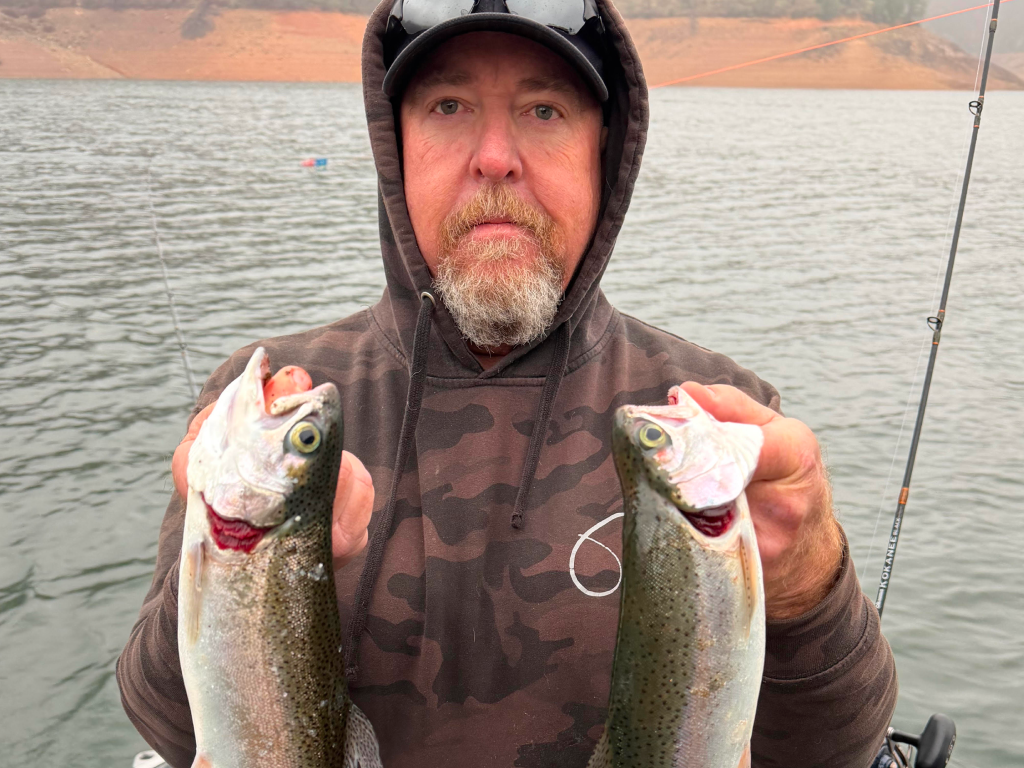
Lake Berryessa
Fast Trolled Lures Yield Top Rainbow Action
SACRAMENTO – Rainbow trout fishing was superb in December, with an occasional slower day mixed in. But with rising water levels from recent storms, the lake waters have muddied up., with high flow going into the reservoir from Putah Creek as the New Year began.
In a recent report, Nate Kelsch of Big Nate’s Guide Service reported tough fishing one day and limit fishing the next two trips.
“Yesterday I had Joe and his crew out on Berryessa for what I’d call a scratch bite yielding 10 hookups with 7 trout and a crappie making their way home with us,” said Kelsch. “We covered some serious water and just couldn’t get anything consistent going. I went home scratching my head trying to come up with a game plan for today.”
“Long story short: I devised a plan, and my crew scored 3 limits by 11 a.m. this morning,” he stated. “We used the same presentations as yesterday, but we got an earlier start and I sped up, forcing the fish to make a decision. This is the time of year that you’re looking for a reaction bite.”
“There is so much bait in the water for the fish to eat, that you have to give them something erratic and fast. There’s nothing better than pulling Catch America Trix Minnows, Trigger Spoons, Trigger spoon Jrs, Optomizers or Stickbaits smothered in Chrome Killer scent When I say fast, I mean speeds of 2.8 to 3.5 mph. Give the fish something that’s out of the ordinary! These are the best presentations that you can run right now.”
“The lake is getting closer to turning every day that passes with surface temps right at 57°. The target zone is now the top 25 ft,” he advised.
On another day, Kelsch reported he headed back to the dock with a couple more limits of quality rainbows. “Rough weather was an understatement,” he noted.
Then on December 31, Kelsch again reported tough fishing again on a consult trip.
“Yesterday I was invited out on Craig’s beautiful Duckworth for a consult trip and we experienced a very erratic bite,” Kelsch stated. “We fished the entire main body of the lake and found good water south with water clarity drastically changing as we worked out way north.”
“We did have some good flurries of beautiful trout and huge crappie, however ,and the Catch America Trix minnows and Trix XLs from my Kits and a new prototype XL color (hopefully we can release it before the ISE show but no guarantees just yet) we’ve been working on, smothered in Chrome Killer Scent. It was by far the best presentations from the surface down to 20 ft. Not only did the new prototype catch the first fish, but it caught the most fish This minnow will be on at least 2 of my rods every day. If we had more than 2 downriggers, I believe we would have caught limits of trout.,” he tipped.
Kelsh will be doing seminars at the International Sportsmen Expo on trolling Berryessa on Thursday 1/15 at 5pm and Saturday 1/17 at 3pm. He will be sharing a lot of tips and tricks that will help put more fish in the box.
Reclamation now requires all boats launching at Lake Berryessa to participate in a seal program to prevent the spread of invasive golden mussels. All vessels wishing to launch at Lake Berryessa will be inspected, according to the Bureau of Reclamation:
A red quarantine seal will be applied for 30 days during which the vessel will not be permitted to launch. Vessels that have finished the 30-day quarantine may return to the lake and have the seal removed by authorized staff and will be allowed to launch.
For questions about this new protocol and vessel decontamination, contact BOR-Berryessa@usbr.gov.
Lake Berryessa is holding 1,403,887-acre feet of water, 88 percent of capacity and 119 percent of average.
Dan Bacher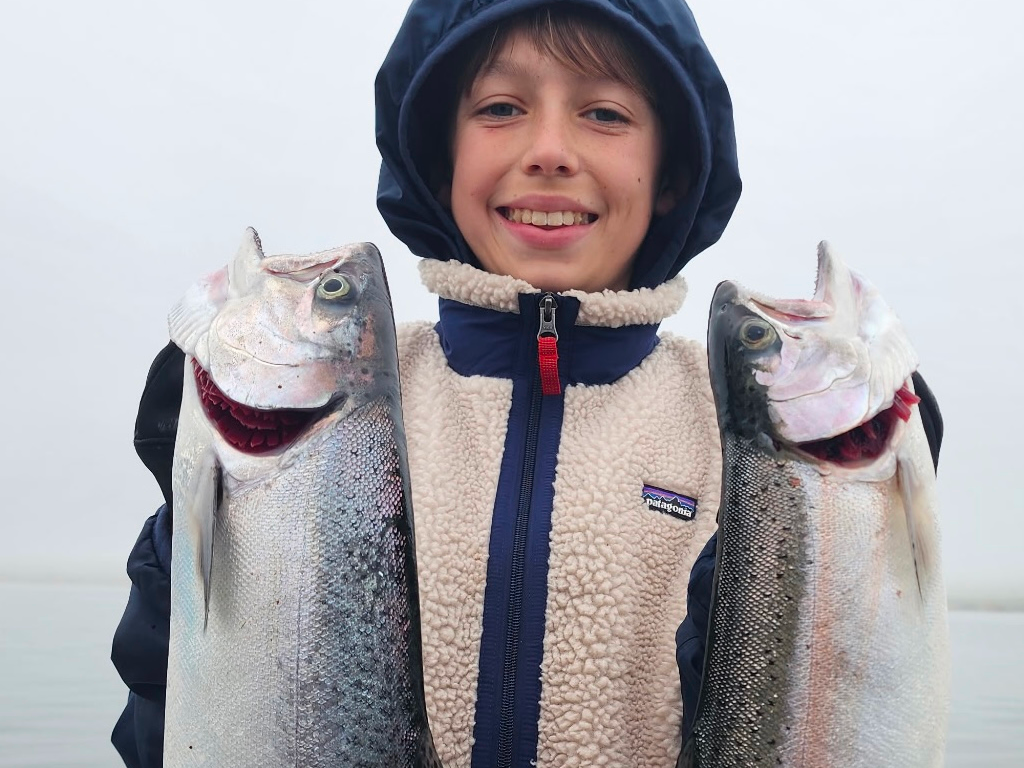
Camanche Lake
EBMUD to reopen boat launches for 2026 season
BURSON – The East Bay Municipal Utility District (EBMUD) plans to reopen boat launches on a limited basis at two of its reservoirs in 2026, following a yearlong closure. The closure provided the EBMUD the time needed to evaluate the threat from the invasive golden mussel and devise a plan to protect the East Bay’s public water supply and billions of dollars in public infrastructure. The EBMUD Board of Directors unanimously approved the reopening plan at its regular meeting on November 12, 2025.
To date, the destructive species has not been detected at any of EBMUD’s reservoirs. However, detections have spread quickly throughout the state since the golden mussel was first identified in the Sacramento-San Joaquin Delta in October 2024, and the mussel’s presence has been reported near EBMUD’s vital infrastructure.
The reopening plan requires inspection of all trailered vessels and a mandatory 30-day quarantine and banding before they will be allowed to launch at Camanche Reservoir South Shore in the Sierra foothills and San Pablo Reservoir in the East Bay. The plan also allows EBMUD the ability to close the launches if conditions change.
Pardee Reservoir, which collects 90 percent of the drinking water supplied to EBMUD’s more than 1.4 million customers, will not reopen to recreational boats in 2026.
EBMUD’s plan requires that boaters clean, drain and dry their vessels prior to inspection. At the inspection, a tamper-proof band will be attached to the boats that have been cleared for a 30-day quarantine. The plan also addresses unique customer demands and resources at each reservoir:
San Pablo Reservoir: Boat launches will open from February 8 through October 31, 2026.
Camanche Reservoir: Boat launches at the South Shore will be open from May 1 through October 1, 2026. The North Shore boat launch will not open in 2026.
Car-top: Vessels that cannot be banded, such as car-top boats, kayaks and canoes, will be inspected and cleared prior to launch at Camanche, San Pablo, Lafayette and Chabot reservoirs.
Boat rentals are available at the following reservoirs: Pardee (16), Camanche (30), San Pablo (53), Lafayette (40), and Chabot (75).
EBMUD is working to create an appointment schedule for boat inspections and quarantines at Camanche Reservoir where demand is highest. Inspections and quarantines at San Pablo Reservoir will be on a first-come, first-served basis during regular boat launch hours. More plan details here.
The golden mussel originated in Asia and was first detected in North America – in Stockton, Calif. – in late 2024. EBMUD closed its boat launches soon after to prevent golden mussel introduction to its reservoirs by boat, which is among the most likely ways mussels spread.
The mussel presents a significant threat to the environment, ecosystems and infrastructure. They reproduce quickly, attach themselves to hard surfaces, clog pipes and pumps, and feed on plankton that fish rely on, disrupting the natural food chain. An invasive species risk analysis shows that the mussel would thrive in EBMUD waters due to favorable calcium levels and temperatures.
The mussel has since spread throughout the Sacramento-San Joaquin Delta and to southern California. View the California Department of Fish and Wildlife detection map. Meanwhile, Lake Camanche continues to produce rainbow and lighting trout for anglers as trout plants continue.
During the latest plant, 1,000 pounds of trout went into the pond, 1,000 pounds at the South Shore Ramp and 1,000 pounds at the South Shore Ramp.
EBMUD and Dan Bacher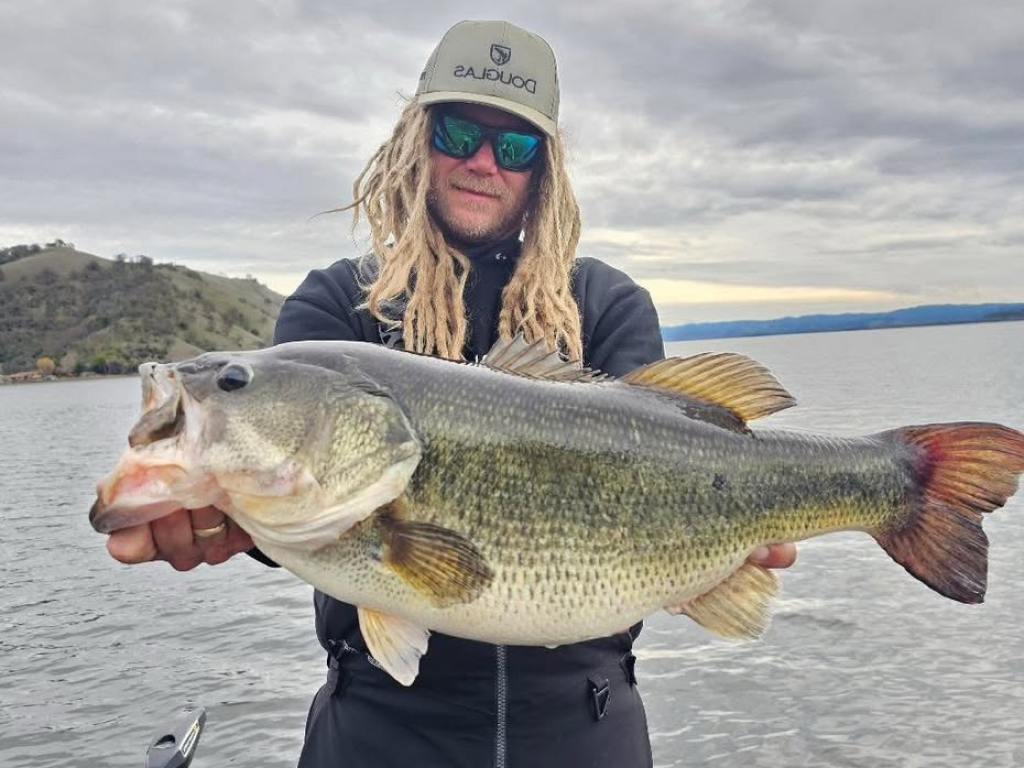
Collins Lake Heavy Trout Plants Boost Angling Success
OREGON HOUSE – With over 13,000 pounds of trout already planted since Mid-October and fog and rain keeping fishing pressure reduced for a few weeks, the lake is well stocked and trout action has been good! The lake level is currently only 6 feet from full and the surface water temperature is 53.4 degrees. The water is murky because of recent storms. Johnny, Johnny and Dave caught a triple limit of Rainbow Trout fishing the North Channel near the 5 MPH signs using Orange Salmon Flavored PowerBait! The surface temperature has been fairly stable in the neighborhood of 56°F, which means that many trout are cruising the surface, great for shore fishing! Keng Her and family were proud to show off a first fish, caught at Collins Lake, using PowerBait near the Rental Dock…. and also, some famous Collins Lake Ice Creams! They used green and yellow PowerBait. Tricia & Levi brought in four, including a monster-jawed 3.75lb lightning trout! Great catching! Luke and Jamie maxed out the stringer with a double limit of rainbow trout, not a single small fish hanging there. The brought in their haul using PowerBait and trolling flies. If you’ve been reading Collins Lake fishing reports for more than a minute this is a familiar angler - Trent Z, first with an 8 lb. lightning trout caught up North by the bridge. He was back a couple days later to catch another trophy sized fish- a six pounder; Both fish caught on mini-jigs. Who says lightning doesn’t strike twice??? Angling Wes” Wes Ward send in some picture of what he and his clients have been up to- looks like smiles and fun and lots of fish! Wes reports recently 8 to 10 fish most days up to 5 pounds- lots of surface action with Garlic PowerBait in 3′ to 12′ of water. He notes that trolling had dropped off but can pick up quickly as soon as the weather turns (AnglingWes.com or 916-342-1217). Long time Collins Lake guide Cal Kellogg is also reporting prime fishing at Collins Lake and he’s got recent videos on his Facebook page to prove it! He’ll introduce you to refined well practiced techniques and great local knowledge (fishcalkellogg.com or (530) 320-0368). If it’s your first time here and you want to hit ’em hard, going with a guide is a great way to discover the lake, what catches and when or where to use which technique. If you’re just looking to relax by the water I suggest you grab some PowerBait and a bobber and find a spot on the shoreline. If you catch us with the fog lifting and the afternoon sun shining through you’ll be in for a real treat— and more than likely some trout! If you’re looking to stay a few days it’s a great time of year to rent a cabin and typically there are LOTS of RV campsites with hookups are available. Give us a call! 530-692-1600.
Ed Palma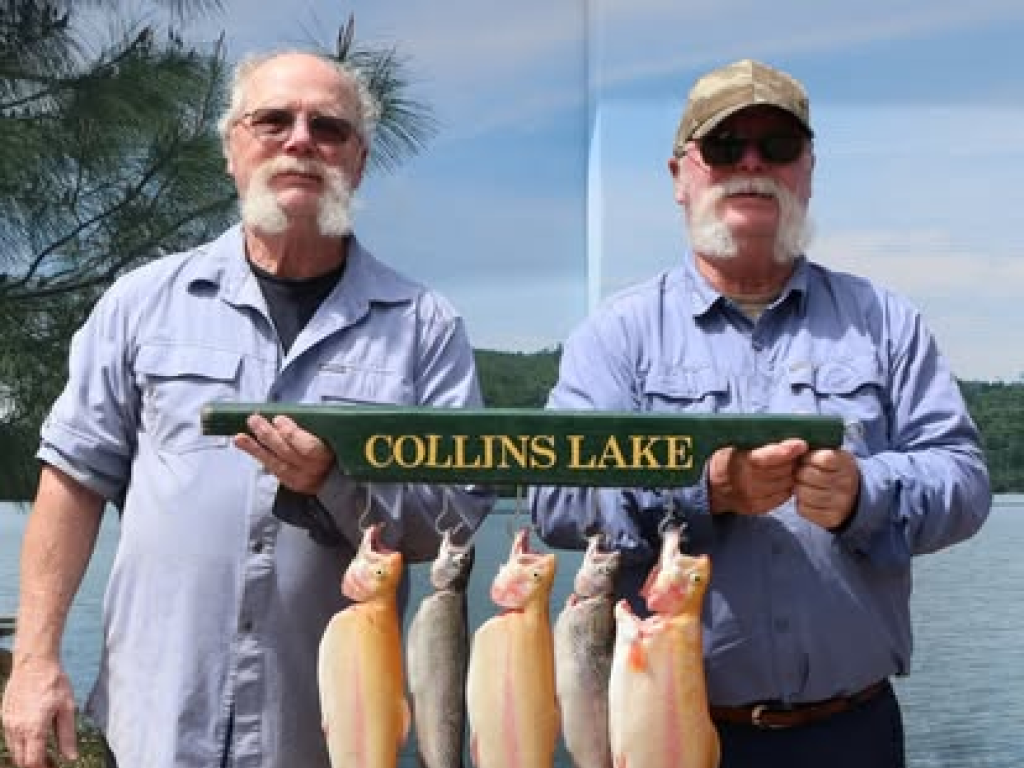
East Bay Lakes Roundup
Local angler in the spotlight!
ALAMEDA COUNTY – I’m going to add a bit of color to these weekly reports and spotlight local anglers. I’ll continue to highlight the EBRPD lakes, but this approach makes it a bit more colorful and may stir up a little more interaction with our local anglers. There are striper in the EBRPD lakes. Contra Loma anglers post the occasional fish, but Lake del Valle has the largest population and while anglers do target them, shakers are more common than keepers, and larger fish get most of the fanfare. This past week while trout fishing, I had the pleasure of meeting Matt Fuson from Pleasanton. Matt is a kayak angler and fishes a Native Watercraft Titan 10.5. It’s a well rigged boat and he uses a Lowrance Helix 7 set on side scan to find rock piles, lay downs and other structure that fish can relate to. On this particular day, he was focused on largemouth and was fishing the far side of the narrows when striper started to feed just outside the no wake marker. Striper love eating trout and on plant days it is not uncommon to see fish on the surface doing their best to put a dent in the population. Fusan had recently purchased a Balama 245 8-inch surface swim bait in a trout pattern. These lures are pricy and even though he had a Daiwa Kage 8-6 heavy swim bait rod onboard, it was only rigged with Bass Pro XPS 14-pound fluorocarbon, and he was hesitant to cast his new lure into the breaking fish. In 17-25 feet with 58 degree water, he was using a 4-inch sub-surface fast retrieve when he hooked up. First cast…first fish. Landing a big fish in a normal boat can be challenging, landing a big fish while solo fishing in a kayak, well, more fish are lost boatside than most anglers care to admit. After a lengthy fight that towed him around the lake, the fish came to the net. So, focused on largemouth, he casts his new bait to breaking stripers, manages to hook and land one and discovers, that low and behold…no pliers. This is when we met. The fish had devoured his bait, and the trebles were well down the fish’s throat, with no pliers, Matt came ashore and borrowed a pair. Of course, I had none and we drew a few more anglers into the action. While on the beach, we weighed the fish, Matt posed for some photos, re-tied his bait and went out again. Hooked up…again! Same drill, tire the fish, land the fish, head to the beach. The second fish was smaller but had the bait down it’s throat to the second hook. It’s amazing how big a bait these fish will take. Matt’s first fish weighed in at 11.6 and was over 30 inches long. The second was a bit smaller and came in at just under 10. Obviously “big baits get big fish”. Quarry Lakes Park including Horseshoe Lake, Rainbow and Shinn Pond – Ryan Lee has been trolling the lake in his kayak and has seen mixed action. He has graphed fish along the shoreline adjacent to the swim beach and on the far shoreline across from row. Water temperatures are now in the low 50’s, and the bite has been better mid-day when the water warms up just a bit. Despite some challenges, he’s still been able to bag the occasional fish to 3 pounds. Shoreside anglers have seen similar action with the occasional fish to 3-pounds. Conditions are good, but the water is low. Lake del Valle – Received a 1,000 Lassen plant this past week but it’s been a bit of a grind. The water level is way down and finding deep water can be a bit of a challenge. The East Swim beach is very low, and wind driven algae has been piling up along the shoreline. The shoreline beyond the marina has been fair and if you can find the deeper pockets of water, that’s where the fish are holding. Action has been fair, further down the shoreline out to the campground, but again, you’ll have to scout around for the deeper holes. Despite conditions Joaquin Gutierrez landed a 7.3-pounder taken on a green- white tube jig. The water drawdown is just about over and once complete, the fish should settle into a bit more predictable routine. Lake Chabot – Received 800 pounds of Lassens and has been fishing well. It must be the weather, but there have been a good number of bows to 3-pounds as well as several holdover lightning. There is still some algae and the coves on the windward side will get dirty but otherwise conditions are good. Shadow Cliffs – Received a 1,000-pound plant and this week and the “bigs” were hungry. There were several bows taken over three pounds including a 6 pounder, as well as several holdover lightning trout also up to 6-pounds. Contra Loma – Received 800 pounds of Lassens this past week and action has been pretty good. The lake is low, but the fish have gotten a bit more active. The recent plant should help. Lake Temescal – Has been closed on and off over the past week due to water quality issues. There is a DFG plant scheduled for next week, and if we’re lucky, maybe some Lassens. There are also plenty of Volunteer Opportunities, that are a good way to get deeper into park operations, clean up your local park, lake or shoreline. For teens looking for community service opportunities, or if you want to provide your own service proposal for consideration, check out the EBRPD Volunteer web site at: https://apply.ebparks.org/custom/501/opp_search. NOTICE: Golden Mussels have been detected in Contra Loma Reservoir! Due to the detection of Golden Mussels in Contra Loma, know that if you launch your boat in Contra Loma, your boat will be quarantined for 30 days from other lakes. There are additional boat inspections at Del Valle, Shadow Cliffs, Lake Chabot and Quarry Lakes. Prior to launching on any water body: clean, drain, and dry your vessel. Boat bands will only be honored from the Lake they were issued. KNOW BEFORE YOU GO, visit the Invasive Mussels Page for more information on current inspection procedures. I am really looking forward to the upcoming season. I try to fish these lakes regularly, hitting 1-2 per week but may miss a lake or two as I move around. If you have a report on conditions, have a good fish pic, or just want to discuss fishing in general, please drop me a text at 571-481-8040, or e-mail me at: ctw1930@gmail.com. My reports go in on Thursday of each week.
Chuck Wolf, EBRPD Angler’s Edge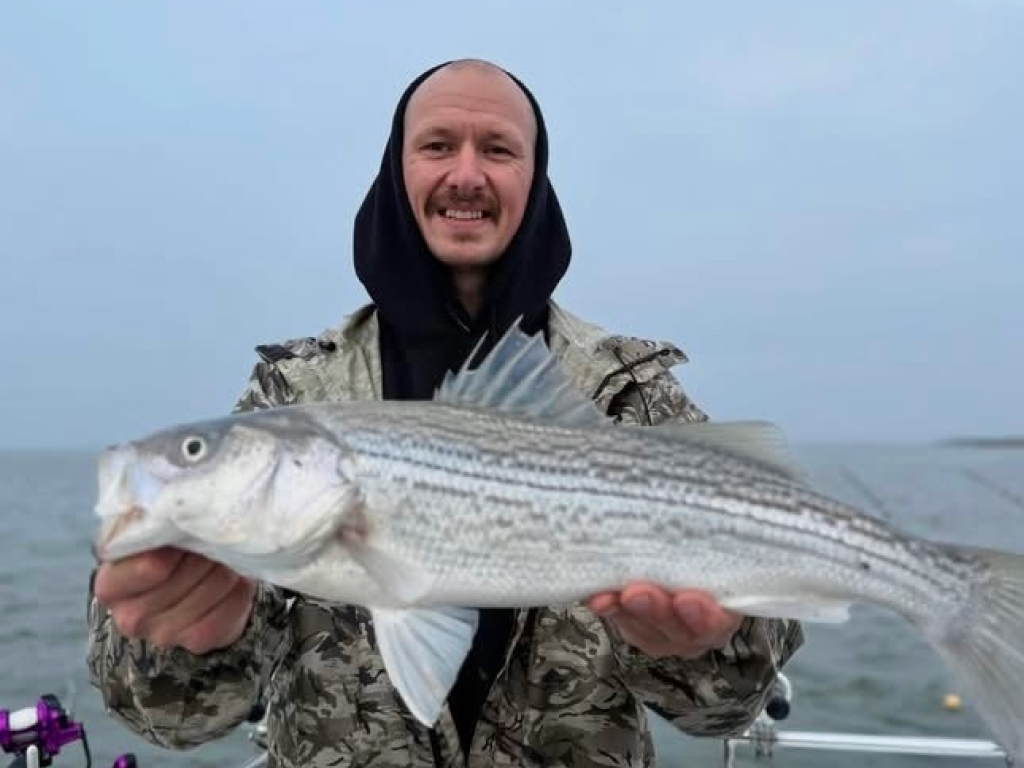
Folsom Lake Find the Bait, Find the Bass
FOLSOM – The black bass are hitting on Folsom Lake, but anglers need to adjust their techniques to the winter water and weather conditions.
“Stable weather, manageable water clarity, and minimal debris made for solid winter bass fishing conditions at Folsom Lake on my latest trip,” reported Chris Nelson of RB Outdoors during his most recent trip to the lake. “Bass were grouped up and feeding on bait, rewarding anglers who focused on locating baitfish and fishing methodically in the 5–20-foot range. Fish were willing to bite but required slower, more deliberate presentations.”
“Effective baits and techniques include slow rolling umbrella rigs along the bottom. Mid-strolling soft plastic minnows produced consistent bites, while jerk baits were also effective when worked patiently in the strike zone,” he tipped.
One pair of anglers, Mike Morgan and Jim Mckeand, reported decent trout fishing on a recent trip on the Folsom Lake Fishing Report Facebook page. “We only caught four rainbows, but we had multiple hook-ups while trolling,” Morgan said. “Overall, we say pretty good fishing in front of the dam, of course away from the buoys.”
The Granite Bay boat ramp is open, but with no docks in the water. Brown’s Ravine is open with one dock in the water and three lanes open.
The lake level is 423 feet in elevation., 45 feet from maximum. The lake is holding 552,232 acre-feet of water, 57 percent of capacity and 138 percent of average. Water clarity is approximately 5 feet. There was very little debris in the water despite recent rains.
Dan Bacher
Klamath River 2025 Was a Very Tough Year for Steelhead Fishing
SOMES BAR – The basic summary for sport fishing here in the Middle Klamath is that there were NOT the historical numbers of steelhead in 2025 that I have personally seen in the 32 years of guided fishing I have done here in the middle Klamath. The last two years of steelhead sport fishing were completely lost after dam removals, and the visible sediments suspended in the river were horrific. The 2025 season had an improved level of reduced visible sedimentation, but the early Fall periods were continuously loaded with floating globules of moss that would clog up a terminal tackle item after every cast. The early Winter fishing dates continued with acceptable river clarity and with reduced floating moss globules, but there still were no significant numbers of steelhead in this section of the Klamath. Most of the guided days were “skunked” with zero netted half pounders and zero adult steelhead. There were a few dates with a maximum of one and occasionally a total of two fish brought to the net. We now have an extremely small number of local licensed guides for our home turf. Some have sadly passed away and others have moved on to other carrier paths and fishing locations. My hope for the local fishing industry remains…hoping that each year we can recover more of what has been lost. Local hospitality suppliers such as Air BNB rentals, local grocery sales, and all other subsidiary businesses that gain from outside recreational cash flow into our community have suffered. But I hope this is improved for our 2026 fishing season. This is my last report / comment until we again approach the traditional fishing season at our home here in the middle Klamath. As an additional observation, each larger atmospheric river event will continue to put more flows into the Klamath and hopefully clean out more potential spawning locations here at our home turf.
Doug Cole, Marble Mountain Ranch fishing lodge and guide service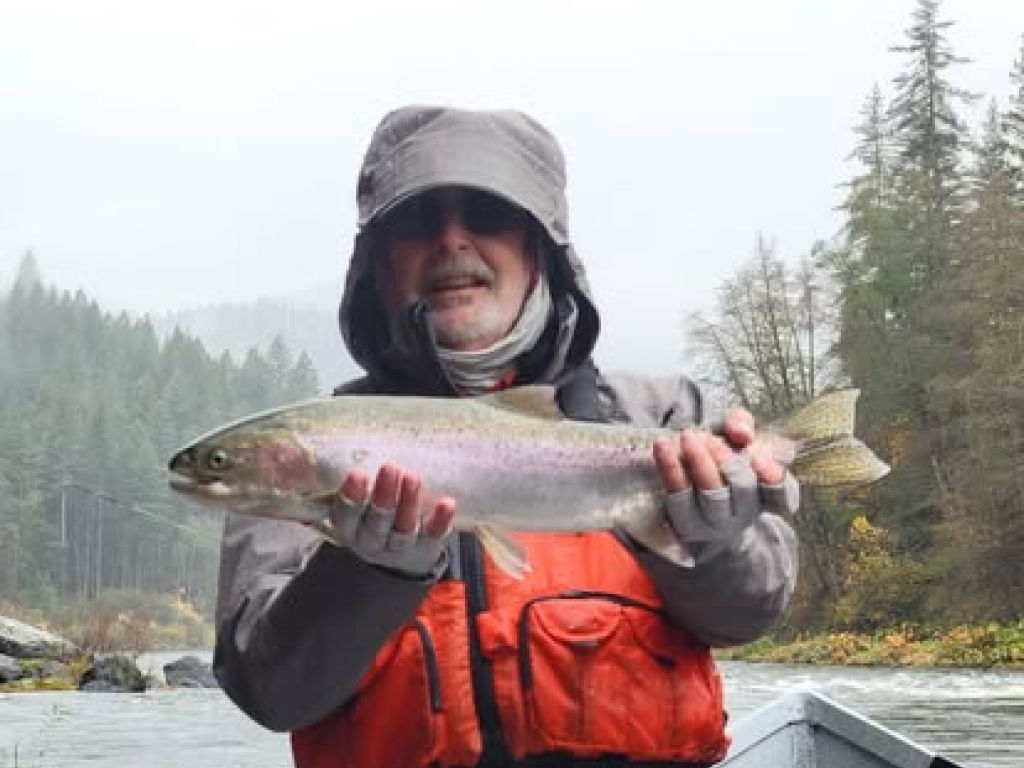
New Melones Lake Rainbow Trout, Bass Highlight Winter Fishing
ANGELS CAMP – Fishing pressure has tapered off at New Melones with the recent round of winter storms muddying up the water, but anglers in boats are catching good numbers of rainbow trout when they find clearer water to fish.
“New Melones doesn’t disappoint,” said Kyle Wise after his final fishing trip of 2025 on December 30. “We made the run this morning with four clients to find some clean water to fish. after looking for a bit we found some greenish water and set gear and had consistent action to fill our 20 fish limit by 11:00 am. Most fish were caught in the top 25’ pulling spoons and wiggle hoochies.”
On his previous fishing adventure on New Melones, he also reported top notch trout action.
“We had fun morning on New Melones before the storm hit with Tony and his son Titas plus his cousin from Texas,” said Wise. “They made quick work of their limits pulling T-spoons and Rapalas down to 20’ with Pautzke’s Fire Gel in herring.”
The trout fishing along the shoreline in Glory Hole and other areas on the lake is expected to pick up. Anglers should toss out PowerBait, nightcrawlers, Kastmasters, spinners and other offerings for the rainbows. Chartreuse and other bright colors are the best colors to use in the stained water conditions.
The Bureau of Reclamation requires that all boats launching at New Melones Lake participate in a seal program to prevent the spread of the new invasive mussel species, the Golden Mussel that was found in the Sacramento-San Joaquin Delta.
Any boats wishing to launch at New Melones must be left out of the water for 30 days with a documented wire and Red seal attached through the bow eye of their boat and wrapped around their trailer, effectively tying the two together. After 30 days, the boater can return, have their wire/seal cut, and launch. Upon exiting the water, the boat and trailer will once again be banded together, but with a Green seal and wire.
This marks the end of their 30-days, and that they can return any day during the hours listed. The seal/wire must remain intact to launch (a New Melones staff member must cut the seal/wire allowing the boater to launch), and any boats found with tampered seals must restart their 30-days. Boaters can stay overnight, but must be off the water by the given time frame to be resealed.
Valid seals are applied by staff at open boat launches during the hours of operation. This seal program only works for New Melones Lake. New Melones Lake is not accepting other seals or sealing for other lakes currently.
New Melones Lake Marina is decontaminating boats for same day access at a fee. Find more information and make an appointment on their decontamination website, or call (209) 785-3300.
Hand-launch vessels such as kayaks, paddleboards, canoes, etc. do not need to participate in the banding process if they are hand operated or use an electric trolling motor. No gas-powered motors allowed. For hand-launch vessels with trailers, the trailer cannot touch the water.
Current launch hours are 8 a.m. to 4 p.m. at Glory Hole Point. The Tuttletown ramp is now closed.
New Melones is holding 1,632,799 -acre feet of water, 68 percent of capacity and 126 percent of average.
Lake Oroville Black Bass Fishing Was Great Before Latest Storms
OROVILLE – Ahead of forecasted storms continuing through the weekend, the Department of Water Resources (DWR) has increased water releases to the Feather River from the Oroville-Thermalito Complex to maintain flood protection for downstream communities.
“With runoff into Lake Oroville projected to range between 50,000 to 70,000 cubic feet per second (cfs) by early next week, DWR also expects to start using Oroville dam’s main spillway on January 5 for additional flood control releases,” according to the DWR Lake Oroville update on January 2, 2026.
The current Oroville Reservoir level is 826 feet elevation, 70 percent of capacity.
Fishing for king salmon and rainbow trout has slowed down, but the fishing for black bass was excellent before the recent storms. And bass anglers are picking up an occasional rainbow and salmon.
“Before the storms rolled in, some experienced anglers were catching 40 to 60 bass per trip while slow rolling jigs and tossing out Huddleston lures,” said Terry Basham at Johnson’s Bait and Tackle. “The fish were holding at 20 to 25 feet deep.”
Harley E Matney reported solid bass action on his latest fishing adventure at Oroville. “The wife and I fished Oroville this evening from 3 to 5:30 p.m.,” Matney stated on the Lake Oroville Fishing Reports Facebook page. “We caught and released 15 spotted bass and she nailed a beautiful 4 lb. rainbow trout.”
DWR is reminding the public that boat ramps at Lake Oroville are no longer open 24/7. Watercraft must be out of the water by ramp closing time or they will be locked into the facility overnight. Please plan ahead. More details about DWR’s mussel inspection program are available at water.ca.gov/mussels.
Watercraft Inspection Location/Decontamination Services, North Thermalito Forebay at Garden Drive and HWY 70 in Oroville. Hours of operation: Daily from 8:30 a.m. to 4:30 p.m.
Sealed Vessel Launching at Lake Oroville is available at the Spillway, Bidwell Canyon, Lime Saddle and Loafer Creek/Loafer Point.
The only live map of every public and private fish plant in California. Free forever.